
Knock Shrine guide | History, pilgrimage and key sites to visit
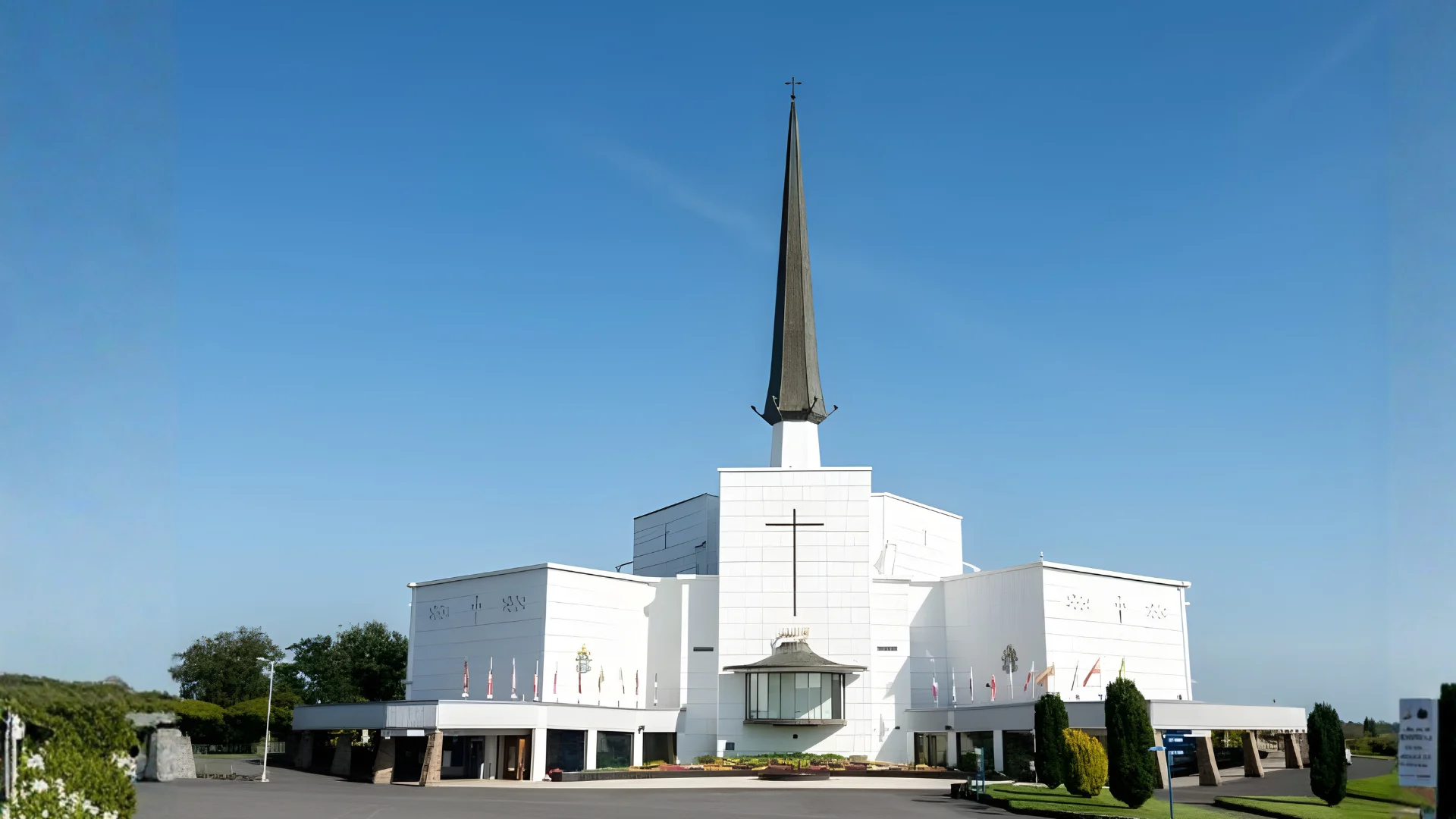
The Knock Shrine in the village of Knock, County Mayo, Ireland, is one of the most important Catholic pilgrimages in the world. It is profoundly spiritual and historic. Its history dates back to a silent apparition that was witnessed here in 1879. This place is a crucial religious hub as it attracts about one million pilgrims per year, and it is the pillar of Mayo tourism and spiritual living.
This guide will present a concise account of this site, including its historical relevance and the important holy places. In addition, it will cover tips on practical planning for pilgrims when visiting the site. This guide also discusses the amenities for visitors and the experience of reflection within this International Eucharistic and Marian Shrine.
Quick Facts and Overview
The main facts concerning the County Mayo pilgrimage site:
- Location: Knock, Co. Mayo, Ireland.
- Date of Apparition: The first one was on 21 August 1879.
- Figures in the apparition: There were fifteen witnesses to the luminous apparition of the Virgin Mary, of St. Joseph, of St. John the Evangelist and of a lamb upon an altar.
- Pilgrims per annum: The pilgrims to the place are estimated to be 1 million annually.
- Grounds Size: It has expansive 100 acres of landscaped grounds and religious structures.
History and Significance
This great Marian shrine has a history that focuses on the event of the apparition, which happened on 21 August 1879. The silent vision was seen by fifteen individuals between the ages of five and seventy five at the south gable of the original Parish Church. This act resulted in a direct Church inquiry.
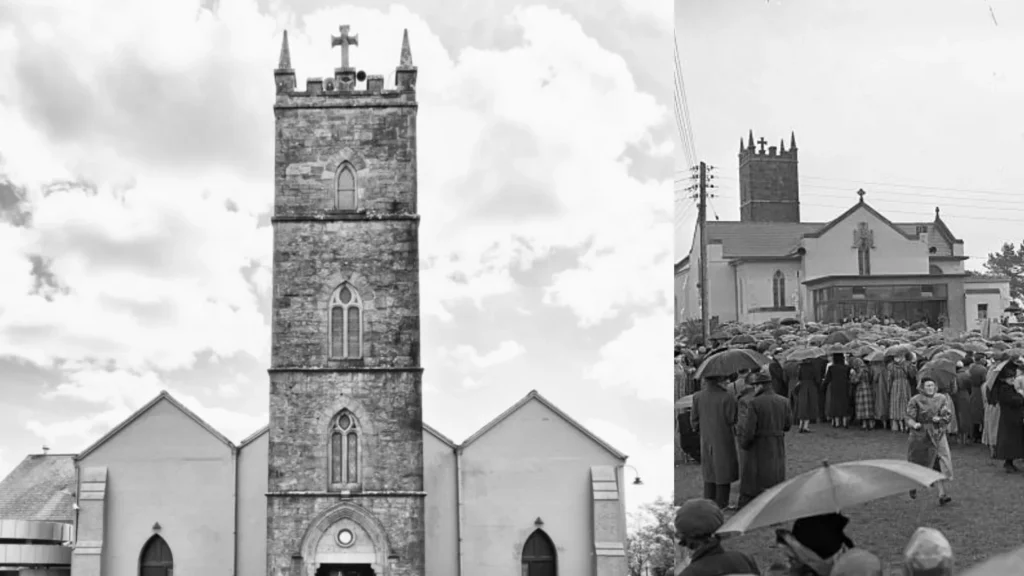
The witnesses were investigated by two official commissions of inquiry (1879 and 1936), which established that their testimony was consistent and truthful, and the official acknowledgement of the apparition was made.
The most important historical events have boosted the status of the shrine. Murrisk Abbey is another important religious site in the region. Monsignor James Horan had a central role in its modern development. He supervised the construction of the huge Knock Basilica. The shrine has been visited by great papal and ecclesiastical visits, such as Pope John Paul II (1979), Mother Teresa (1993), and Pope Francis (2018). It has now been given a prestigious status as an International Eucharistic and Marian Shrine.
Planning Your Visit
The holistic method of planning will provide a satisfying spiritual experience at the pilgrimage centre.
Opening Times and Liturgies
The site has a complete schedule of worship on a daily basis. Masses are conducted on a daily basis during the day, especially during the pilgrimage season (usually May to October).
The Sacrament of Reconciliation/Confession is very common and up to time. The Apparition Chapel and the Parish Church assist in having private prayer during certain hours.
Key Sacred Spaces
There are three main buildings that the pilgrim experience centre around:
- The Apparition Chapel: It is the most sacrosanct location on the site, and it was constructed around the original gable wall. It has a modern marble tableau with a vision of 1879.
- Parish Church of St. John the Baptist: It is one of the churches where the initial appearance was experienced, and it has the peculiar stained-glass windows and an outdated high-altar.
- Knock Basilica: Basilica is a modern architectural building which can accommodate large congregations. It has an interior, with a large, impressive mosaic of 1.5 million pieces of glass, special pilgrimage windows, and Stations of the Cross, devoted to it.
Outdoor Stations and Reflection
The external areas are contemplative prayer areas:
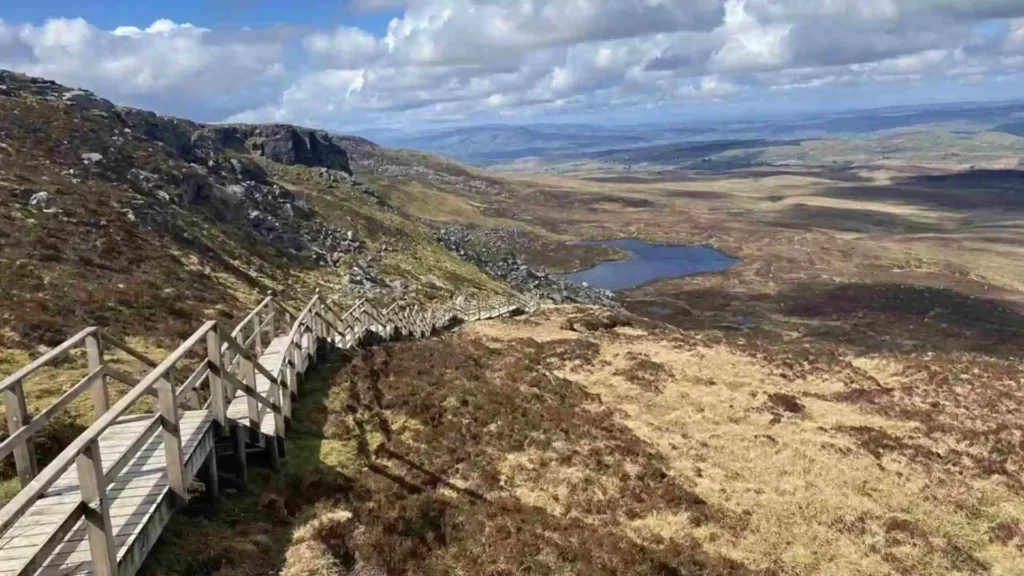
- Outdoor Stations of the Cross: A hike to California Hill to the prayer and meditation station.
- Gardens and Walking Paths: The grounds are 100 acres of well-tended gardens and quiet walks, which provide places of personal reflection.
Prayer, Sacraments & Special Services
Other than the Mass schedule, the shrine has more profound spiritual possibilities:
- Eucharistic Adoration: The Apparition Chapel or Chapel of Reconciliation has scheduled times of Adoration.
- Confession Times: There is also ample time to practice the Sacrament of Reconciliation, which is offered daily.
- Sacrament of Anointing of the Sick: This sacrament is also frequently administered, particularly when the is high pilgrimage season.
- Guided Prayer / Spiritual Direction: The information about the spiritual support or the guided prayer session can be received by contacting the central information office.
Practical Info & Visitor Services
The needs of the visitors are well-addressed at the grounds:
- Candle Lighting: Parish Church, the Basilica, and outdoor shrines are considered to be the candle lighting sites.
- EV Charging: There are Electric Vehicle charging stations in the main car park.
- Bookshop, Mass Cards, Petitions, Donations: The main point of buying religious supplies, placing petitions to be prayed, asking to receive Mass cards, and to make donations is the bookshop.
How to Get There
The pilgrimage site is accessible via several transport methods.
By Air
The closest airport is the Ireland West Airport Knock (NOC), which is about 20 km away. The visitors are also taken to the grounds in a shuttle service or local taxis.
By Car
The shrine is highly accessible through the major roadways. Its approximate distance by road is 220km from Dublin and 70km from Galway. The North Car Park should be used by the visitors. It is important to note that the site has limitations to renting out motorhomes and caravans overnight.
By Bus and Train
- By Bus: The village is served by Regional services, such as Bus Éireann, which offer direct stops at the village, linking the village to a great number of other Irish destinations.
- On Train: The nearest train station is Claremorris. The Knock site has connecting bus services, which run out of Claremorris.
Knock Museum and Key Sites
Knock Museum is essential to putting the event into perspective and the historical value of the Knock pilgrimage.
The exhibits of the museum are essential to the visitors who want to know more about the 1879 apparition. There are highlights such as a model of the village in 1879, true documentation, and eyewitness testimonies.
Audio guides are offered in 7 languages to help guide the international visitors. There is free admission to the museum. Near the museum, there is Café Le Chéile that sells refreshments and light meals. Must check its working hours upon arrival.
Reflection and Spiritual Experience
The atmosphere at the holy shrine is conducive towards spiritual renovation and self-contemplation. The reflective nature of the areas, including the garden walkways, the Creation Walk, and the availability of many holy water fonts, help to develop a meditative state of mind.
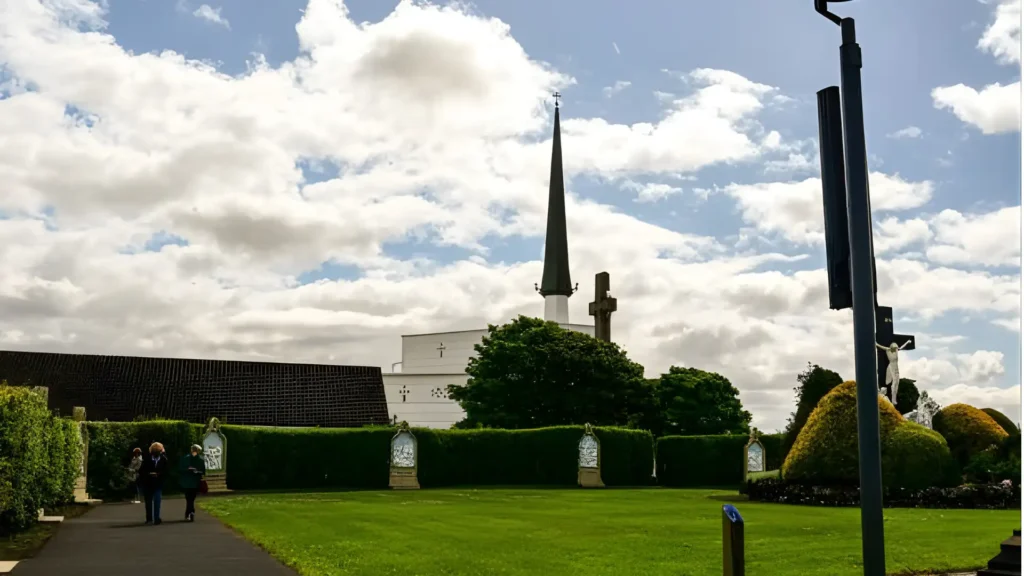
The pilgrimage aspect is the substance of the experience, which welcomes visitors to walk, pray specifically, and reflect internally.
Tourists who want to spend more time in spiritual attention can opt to use accommodation nearby including Croagh Patrick. It helps them to have a retreat-like time to engage more in the types of devotions that this Marian shrine provides.
Walking Routes and Surroundings
The 100 acre grounds offer a number of formal and informal walks. Recommended paths allow walking between the large religious buildings and outdoor places of worship, including the Rosary Garden. These paths have major loops and trails, which have reflection stops and scenic viewpoints.
Tourists must put on comfortable walking shoes. Most short devotional walks do not last more than an hour. But, others take much time to rest and pray at specific points.
Tips for Pilgrims and Practical Advice
Important considerations by pilgrims on the sacred areas:
- Season to Visit: The spring and summer period (May-October) is the most active in terms of the available number of services. Whereas the fall/winter seasons can be quieter and more philosophical.
- Dressing: Visitors must dress decently, wear comfortable shoes to walk around, and also bring anything special with them like holy water inside a bottle/container.
- Entrance: There is a hub and shuttle service that runs around the holy area. The area is wheelchair accessible, and wheelchairs are also available for the visitors.
- Facilities: It has toilets all over the holy grounds, most of which are well marked. There are wheelchair, baby changing facilities. The map shows the location of toilets, fonts, and other usability facilities.
- Respect: Visitors are encouraged to engage in a respectful silence in all sections at the church in order to respect the spiritual activities of other visitors.
Conclusion
Knock Shrine remains a significant place, welcoming visitors with a high degree of comfort, historical understanding and a moment to contemplate. It successfully blends a rich history, and lovely divine places with modern amenities to generate a meaningful experience for all.