
Seachtain na Gaeilge 2026 | Ireland’s Irish Language Festival
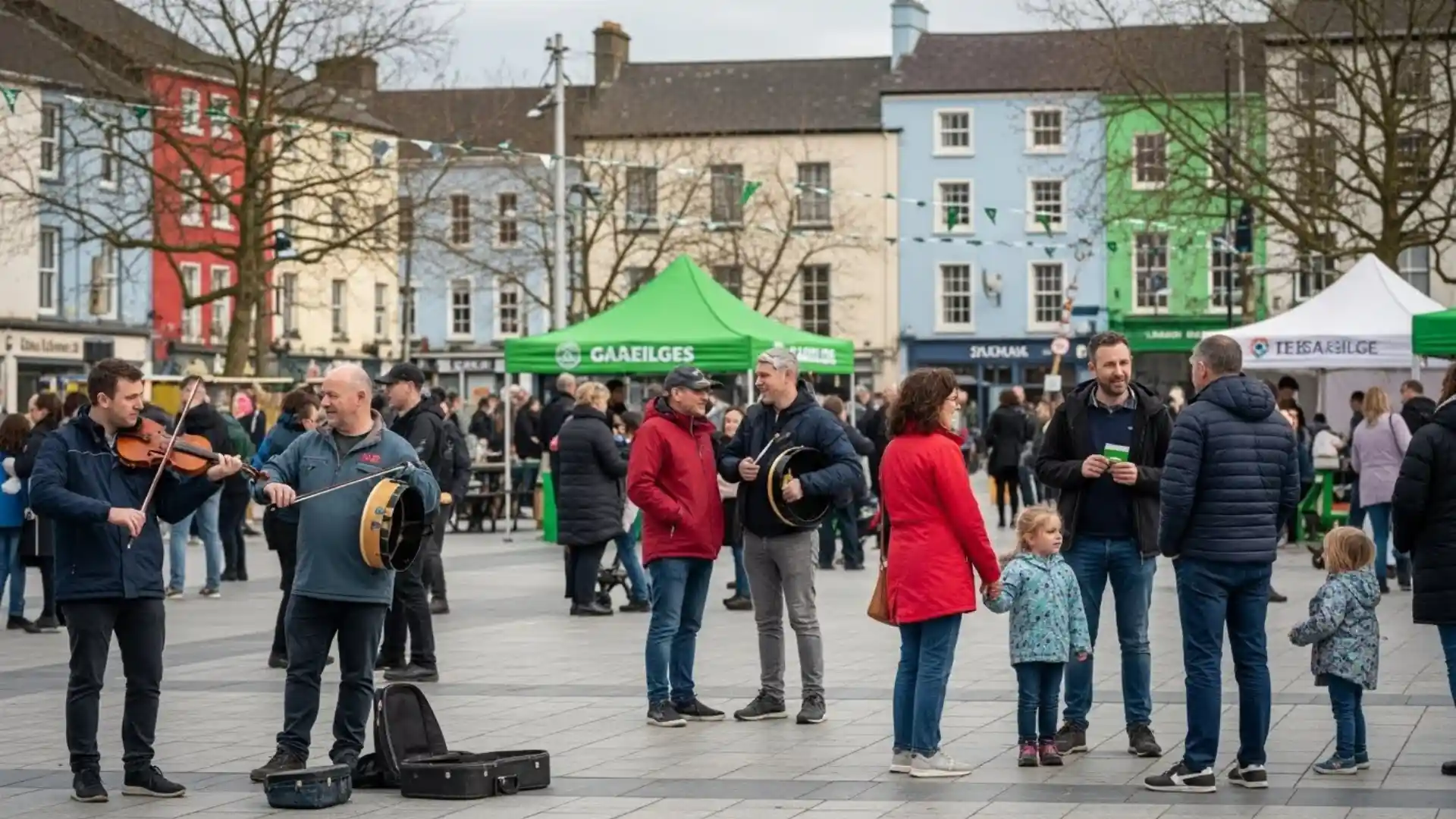
Seachtain na Gaeilge 2026 is the most popular international Irish language festival in Ireland, it is a very lively festival where everybody is welcome to take part in their native language. This festival will run between 1 and 17 March 2026 and include the gap between the traditional heritage and modern life.
It is mainly aimed at advancing the Irish language (Gaeilge) by means of inclusive Irish culture in Ireland as well as around the world. The festival is a friendly one (for fluent Gaeilgeoirs, local residents, or international visitors) where you can embrace whatever Irish character you possess.
The association with the national holiday of St. Patrick’s Day gives a strong 17-day period that can be used to experience the rhythm, soul, and community spirit of the living language in Ireland.
History of Seachtain na Gaeilge
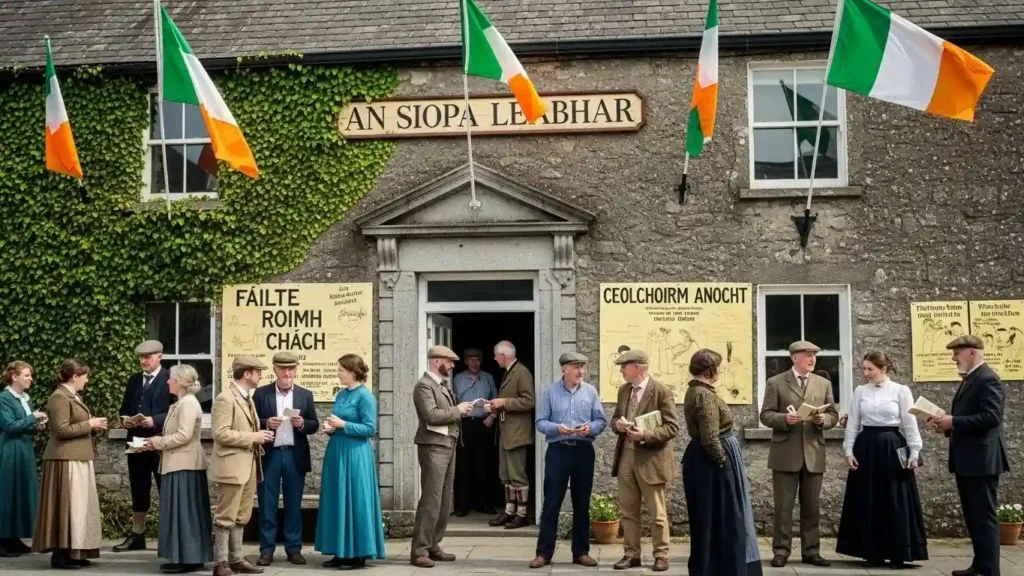
Seachtain na Gaeilge began in 1902, and it was set up by Conradh na Gaeilge (The Gaelic League). The start of an ambitious attempt to conserve the Irish language heritage has flourished in 120 years to become a giant global movement.
The festival, which started as one week of advocacy, was later extended to 17 days to accommodate its popularity and be completed on St. Patrick’s Day. The most important milestones are the transformation, which the event underwent to become a community-led festival towards the end of the 20th century, and the more recent so-called digital revolution.
It has seen the event reaching the Irish diaspora across the world through the help of social media. It is now a monument to the strength of the language and a legacy of the language. It was not only a struggle to survive but also a happy and celebrated world festival.
Dates and Key Facts for 2026
You should also mark the records of your calendar with the dates of Seachtain na Gaeilge 2026. The one who wishes to visit the Emerald Isle needs to make sure that he/she has the dates in their calendar so that in the spring he/she can plan the trip to the country.
The official festival will take place between 1 March and 17 March 2026. Such 17 days is a deliberate choice, which provides the celebrations with a build-up towards the early months of March. It leads directly to the climax of the Saint Patrick’s Day celebrations.
One of the annual schedules is generally on an increasing pattern. The first and the last week are mainly focused on school programmes, community workshops, and large-scale public performances and street festivals, respectively.
The festival is celebrated until 17 March, which ensures that the Irish language is at the centre of the most famous national holiday in the world. This is significant to the tourists, as the Irish language festival in March in Ireland can provide tourists with a more in-depth view.
It is a genuine cultural experience rather than the usual parades. A combination of free and ticketed events can also be expected, including small- and large-scale pop-ups of Gaeltachts in urban cafes and huge outdoor concerts.
What Happens During Seachtain na Gaeilge
The variety of Seachtain na Gaeilge events in 2026 ensures that there is something for every age group and interest level.
Irish Language Workshops
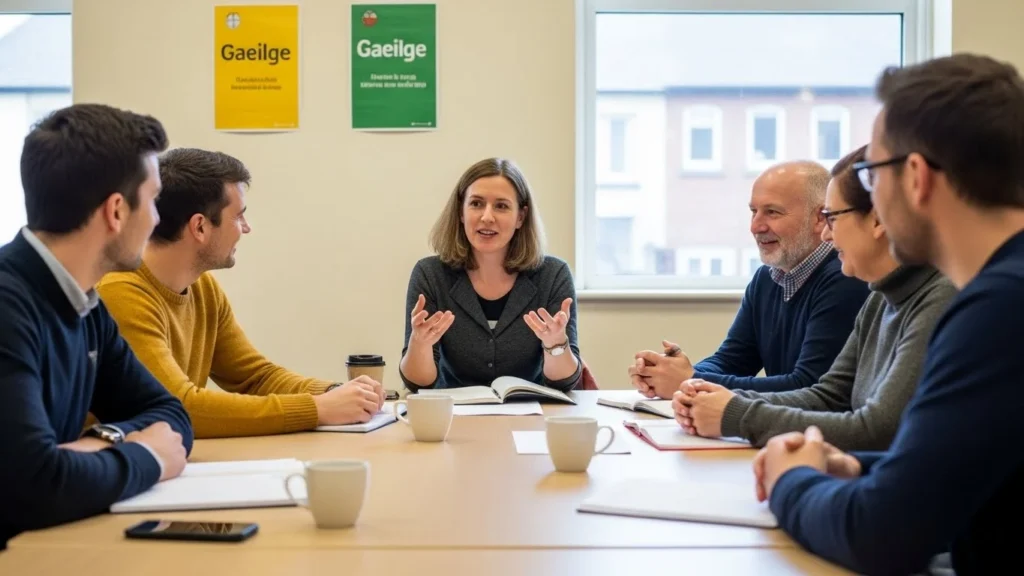
The festival revolves around education. Irish language workshops serve every category of the population, such as those who are referred to as absolute beginners, as they have never said a word in their lives, and those who are advanced learners who need help with refining their grammar.
In Irish, numerous towns have so-called Ciorcail Comhra (community of conversation), a gathering of like-minded people in the local pub or library; the only thing you are expected to do is to speak Irish as much as you can.
Music, Dance, and Céilís
An Irish festival cannot be held without music. The common night activities are ceilis (folk dances performed by groups) and the sessions, where the fiddles, tin whistles, and bodhráns are the main performers.
The events are very interactive, though you might not be aware of the steps to a dance. The callers usually give you both the English and Irish versions of the steps. So, it gives you the best place to start with the events in the Irish culture of Ireland.
Cultural Tours and Heritage
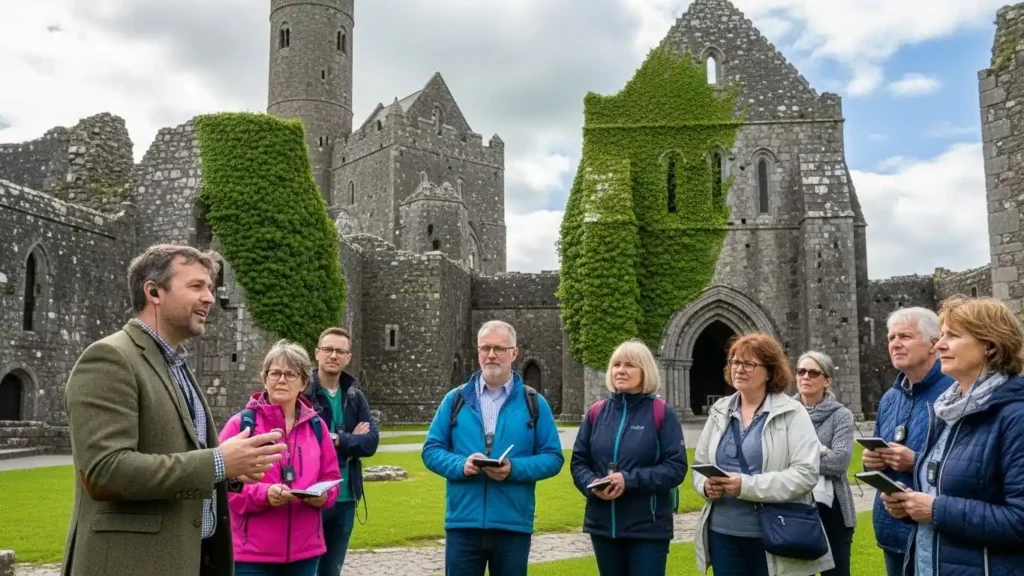
The Office of Public Works (OPW) does provide Irish-language tours of national monuments, especially during the festival. The country has libraries and museums offering Gaeilge-led tours that enable people to experience Irish history through the prism of the native language. The tours can offer an exclusive view of the archaeological and literary history of Ireland.
Family and Community Events
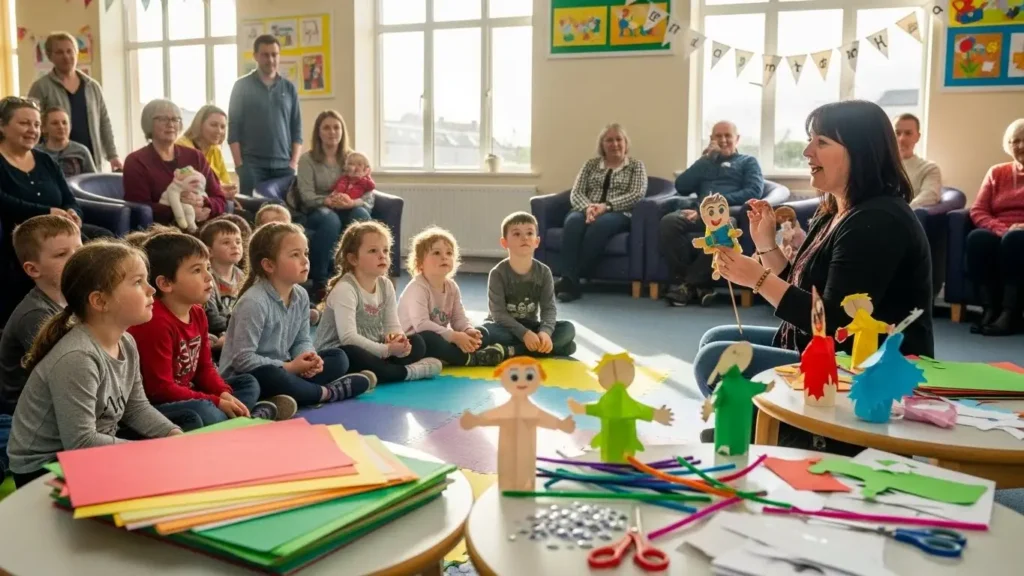
The festival has the community spirit as its support. Children’s crafts, puppet shows, and scealaiocht (storytelling) sessions are organised in local towns.
The events will be created in ways that will make the language of the next generation as fun so that it will be a living, breathing aspect of the family as opposed to a school subject.
County and City Highlights
The festival will be flooded with Seachtain na Gaeilge events in Ireland across every part of the country in 2026.
Galway Festival Highlights
Galway Seachtain na Gaeilge is always an event as a gateway to the Gaeltacht. You can look forward to the use of Eyre Square by colourful pop-up Gaeltachts and the Mick Lally Theatre to present Irish language drama. The fact that Galway is a UNESCO City of Film also contributes to the fact that there are a few screenings of Irish-language cinema.
Dublin and Leinster
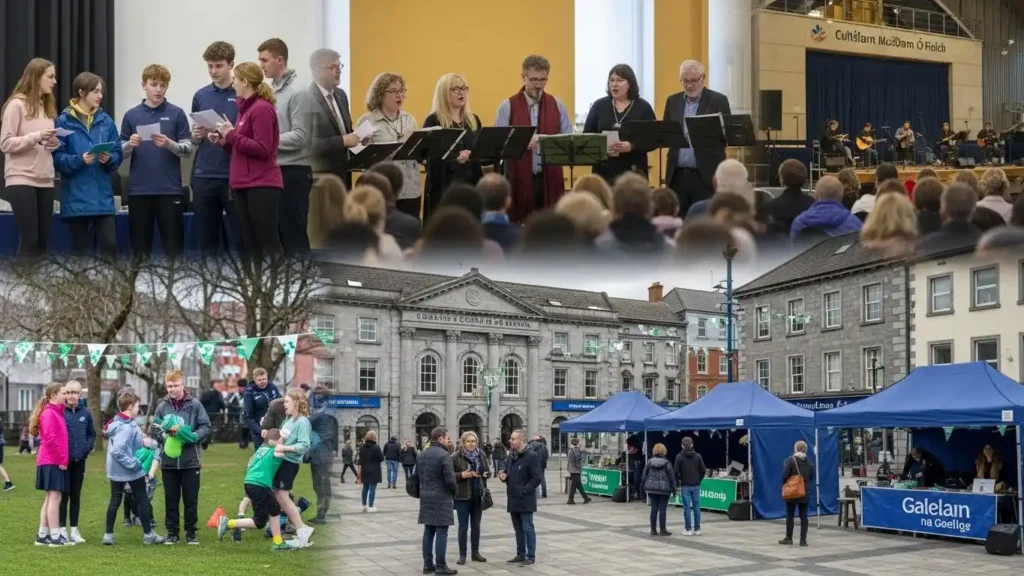
The Irish festival experience in Dublin is varied, and major outdoor events such as the city parks in Dublin are used to hold the La na nOg (Youth Day).
The libraries throughout Leinster offer a venue where literary discussions and book launches can be found, and moreover, Moore Street frequently has traditional markets with a Gaeilge touch.
Munster and Connacht Activities
Cork and Limerick are at the lead in the south and the west. The Munster events also centre on the Sean-nos style of singing. In Connacht, the rural community centres are the centre of interest where quizzes and sports matches (“sport tre mhean na Gaeilge” being sports matches) are organised that unite the entire parish.
Ulster and Northern Ireland
Belfast is a large centre of the festival, and one of the key centres is Cultúrlann McAdam Ó Fiaich. Programmes in this case may focus on the common heritage of the language, including cross-community workshops and high-energy music festivals, which attract provincial audiences.
How to Take Part
Wondering how to attend Seachtain na Gaeilge? It is not as difficult as you could imagine. The majority of the events are free, and no pre-registration is needed, although at some of the specialised workshops and concerts, pre-registration or a fee might be required.
The official site (snag.ie) or Peig.ie app, which has county-by-county events mapped out, is the best source to locate events near me, the Irish festival. You do not even have to take a formal membership; just by turning up at a planned event with a Cupla Focal (a few words), it is the best place to begin.
Tips for Learners and Visitors
To the people learning the Irish language at the time of festivals, there is no need to fear making mistakes. Tourists are advised to look into finding the so-called ‘Is Feidir Liom’ (‘I can) badges that help identify individuals who will talk Irish at an appropriate pace to a learner. Practical tips include:
- Learn greetings with the help of apps, such as Duolingo or Teanglann.ie
- Find cafes that have conversation hours.
- Go to a Ceili – the dancing and the songs will teach you to take the beat of the language without worrying about the correctness of your grammar.
Cultural Importance and Impact
The impact of the Seachtain na Gaeilge on the Irish language culture in Ireland cannot be overestimated. It is compulsory for the language revival, which is why the use of Gaeilge in shops, businesses, and streets becomes the norm.
Statistics give the fact that millions of people, whether directly or via digital broadcasts, attend the festival each year. It results in the unification of communities as it provides the communities with a sense of who they are. Irish is not a dead language but a living, contemporary medium of art, technology, and socialisation.
Conclusion
In summary, Seachtain na Gaeilge 2026 is more than just a date on the calendar. It is an invitation to experience the heart of Ireland. During the period between 1 and 17 March, the country transformed into a native tongue stage. The festival is a memorable cultural event regardless of the purpose of attending it to listen to music, to learn a new phrase, or to learn about the history of the nation. You need to start planning to visit to ensure you do not miss this great celebration of Gaeilge.