
Dowth Passage Tomb | Ireland’s monument older than the Pyramids
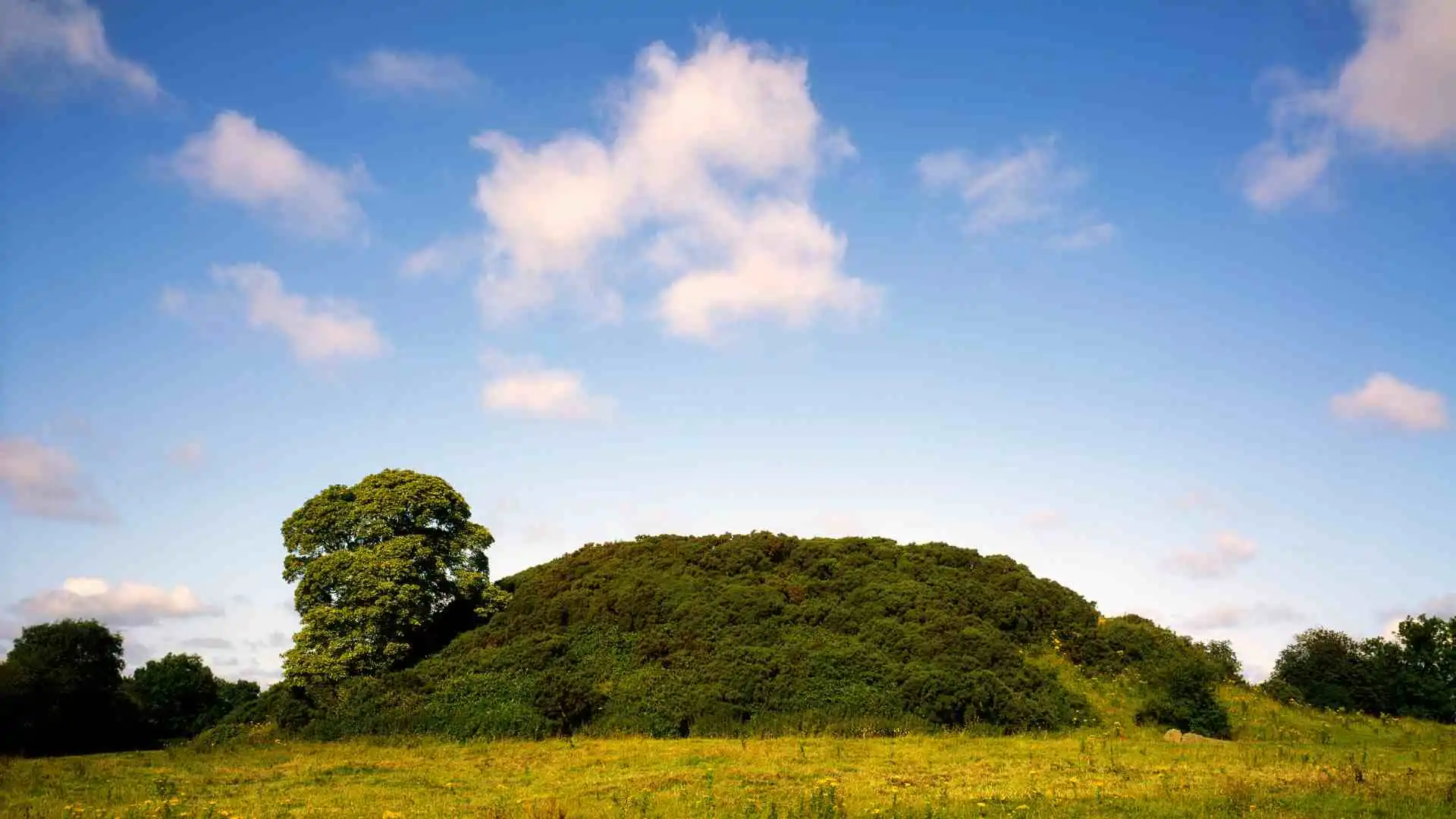
Ever wanted to be in the shadow of a monument older than the Egyptian Pyramids without the need to elbow your way through a sea of tourists?
If you’re planning a visit to Ireland’s renowned Boyne Valley, you’re likely to look for tickets to Newgrange or Knowth, but you’ll find that they are all sold out weeks in advance.
The Dowth Passage Tomb is a hidden gem that you’ve been looking for, and it’s a raw, authentic and unspoilt way to connect with the ancient past of Ireland and that’s exactly what you’ll experience.
What is the Dowth Megalithic Passage Tomb?
The Dowth Megalithic Passage Tomb is one of the three principal Neolithic passage tombs that form the UNESCO World Heritage Site of Brú na Bóinne. Dowth is an unspoilt and wild site whilst its sister sites have been extensively reconstructed. Best of all, it is 100% free to visit and does not require a ticket in advance.
This monument is different from the other monuments in the valley, as you won’t have to take an official shuttle to get here. Just drive directly to the location, and walk straight up to the large earthen mound.
Secrets of Dowth North and Dowth South Chambers
The impressive ancient mound at Dowth is 85 metres in diameter and has two separate stone-lined passages on its west face, known as Dowth North and Dowth South.
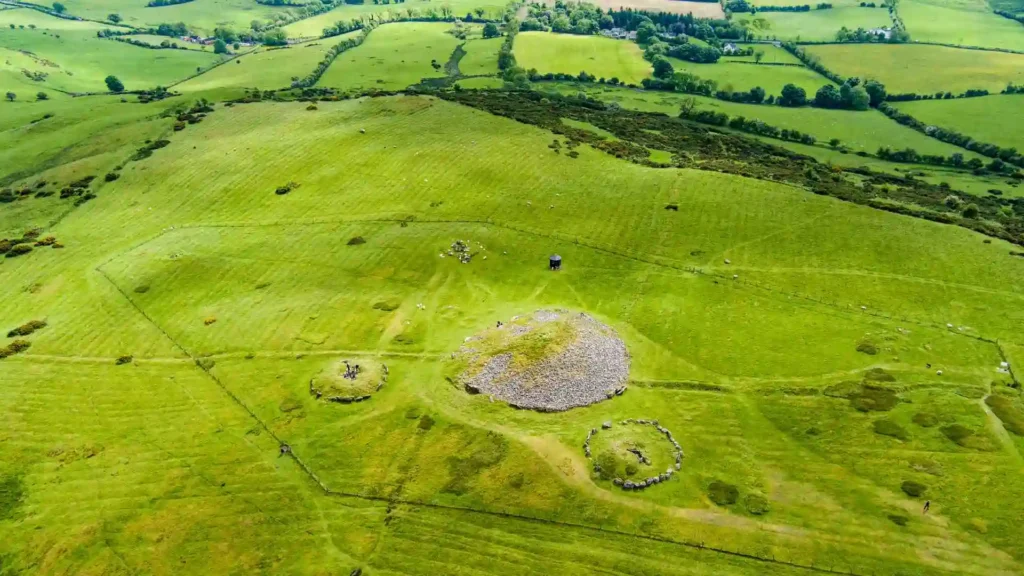
Dowth North is the bigger of the two, measuring 14 metres long and ending in a typical cruciform (cross-shaped) chamber. The sacredness of this prehistoric tomb was enhanced by early medieval Christian settlers who linked it to a stone souterrain, an underground hiding place and storage passage, in the 10th century.
Dowth South is considerably shorter, ending in a circular chamber which is of major importance in the field of ancient astronomy. Dowth South is the perfect spot for the winter solstice sunset, just as Newgrange is for the sunrise. The golden rays of the setting sun fall down the passage, lighting up the decorated stones in the dark recesses from November to February.
Spotting ancient Rock Art and decorated Kerbstones
The stones are arranged in a circle around Dowth, with 115 of them being large enough to be seen. Some have been partially buried, but visible prehistoric rock art can still be found on them, with deep spirals, concentric circles and cup-marks carved into them by Neolithic artists more than 5,000 years ago.
The best known of these carvings is Kerbstone 51, known as the “Stone of the Seven Suns”. It is a beautiful stone, with seven symbols radiating from its centre, and many archaeologists think they represent ancient solar calendars or astronomical observations of the sun’s seasonal cycles.
The curse of King Bresal and the Legend of Dubhadh
Prior to the modern science that deciphered the solar calendar of these Neolithic passage tombs, Irish mythology had a different explanation for the link between light and shadow at Dowth.
The medieval Dindsenchas (the lore of places) tells of a mythological king called King Bresal who compelled all the men of Ireland to construct a huge tower to reach the heavens in one day. Bresal’s sister cast a powerful magic spell to halt the sun in the sky to give them enough time.
But it was when Bresal committed a sacred transgression that the magic was broken. It became an early and deep darkness (dubhadh in Irish), and the sun was immediately obscured. The project was abandoned by the builders and ever since this place has been known as Dowth (the place of darkness).
Dowth vs. Newgrange and Knowth
Here’s how Dowth compares head-to-head with its celebrated sister monuments to help you make your travel choices in County Meath:
| Feature | Dowth | Newgrange & Knowth |
| Crowds | Virtually none; highly peaceful | Very high; peak seasons book out months in advance |
| Cost | Free to visit | Paid ticket required |
| Internal Access | None (passages are securely gated) | Guided entry into the reconstructed chambers |
| Excavation State | Mostly unexcavated (features an 1847 crater) | Extensively excavated and structurally restored |
What the official guides don’t tell you?
Dowth has been left in a natural and rugged state, which means a little preparation is required to make the most of a self-guided tour.
There is no official monument visitor centre, public toilet and no standard car park at the actual monument. There is a very narrow and steep roadside lay-by (parking) on the N51, so drive slowly as you near it.
Secondly, both Dowth North and Dowth South have been fitted with secure iron grilles over their entrances to help safeguard the fragile archaeology. No walking is allowed inside the passages, but the external grass walk around the mound is peaceful and you can walk at your own speed and admire the amazing kerbstones at your own pace.
How to combine Dowth with a Boyne Valley tour?
The official Brú na Bóinne buses do not stop here, and therefore it is highly recommended to visit Dowth as part of a self-drive tour or a customisable private day tour of County Meath.
To visit, follow directions to the north bank of the River Boyne and park nearby to explore the mound in approximately 30-45 minutes.
For a break at the Newgrange Farm and its coffee shop, which is located nearby, to enjoy a warm drink and a highly rewarding and atmospheric journey through the Ancient East of Ireland.
More to discover in historical County Meath
Douth is a perfect place to experience the ancient history of Ireland as you can plan a day of exploration from there.
Old Mellifont Abbey, Ireland’s first Cistercian monastery, and the historic Hill of Slane are only a short drive away. For a full historic experience, consider hiring a special day tour from Dowth to the Hill of Tara, the legendary seat of Ireland’s High Kings.