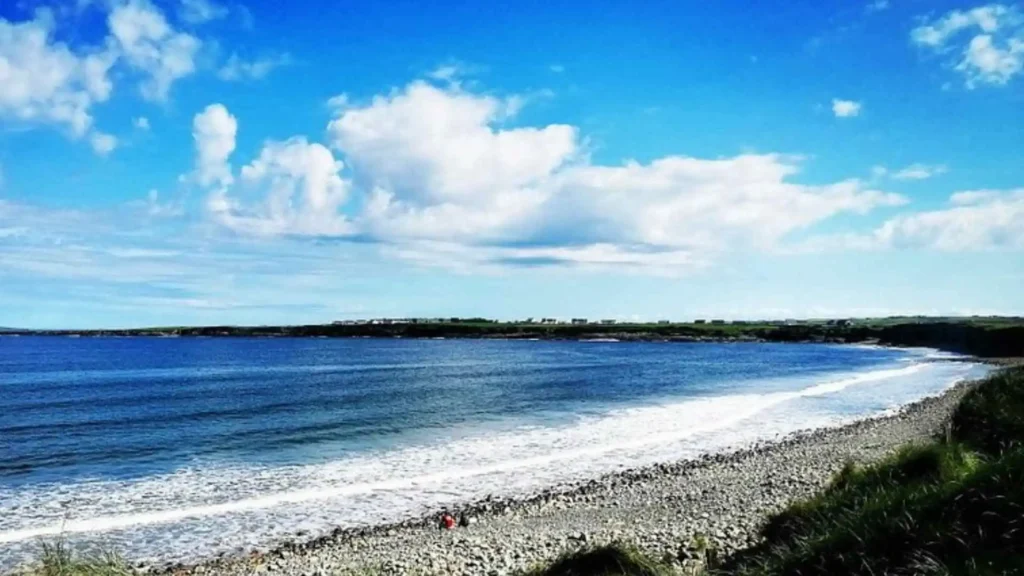

Céide Fields | Walk through the world’s oldest farming landscape
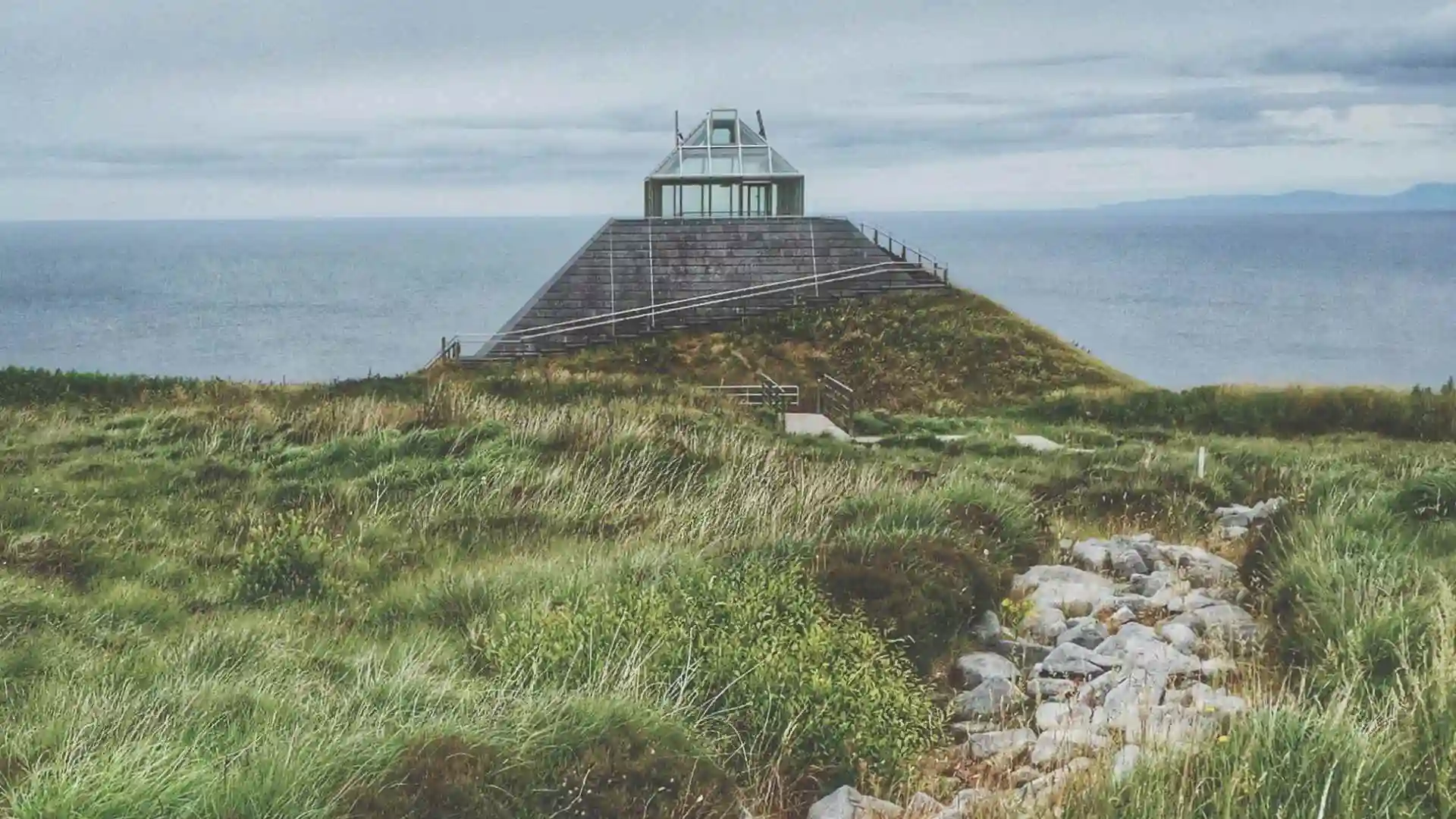
The Céide Fields, occupying high ground on the steep cliffs of County Mayo, are the oldest known field system in the world, almost 6,000 years old.
When you’re about to go on a trip along the Wild Atlantic Way, the logistics of this Stone Age landscape can seem daunting, as can its ancient history.
This article provides you with all the essential information to make your trip memorable including the historical context, admission fees, guided walks and other coastal sites.
History of the Céide Fields
Who lived at Céide Fields?
The native pine forests were cleared and farmlands established by a flourishing Neolithic settlement around 4000 BCE.
The early communities raised cattle, tended crops and constructed stone-walled fields over hundreds of hectares.
With changing local climate conditions, the settlement was overlaid by blanket bog and their stone walls and megalithic tombs have been left intact for thousands of years.
The discovery of the Céide Fields
It was found in the 1930s when peat was being cut for fuel by the local schoolteacher Patrick Caulfield, who spotted structured stone walls.
His son Seamus Caulfield, a trained archaeologist, carried out systematic research throughout North Mayo decades later.
More than 100 kilometres of concealed stone walls were mapped by carefully probing through the peat with long iron rods, and a complex prehistoric landscape emerged.
Things to see and do at the Céide Fields visitor centre
The visitor centre and panoramic viewing platform
The Céide Fields Visitor Centre is a glass-roofed, pyramid structure set in the peat terrain and has won architectural awards.
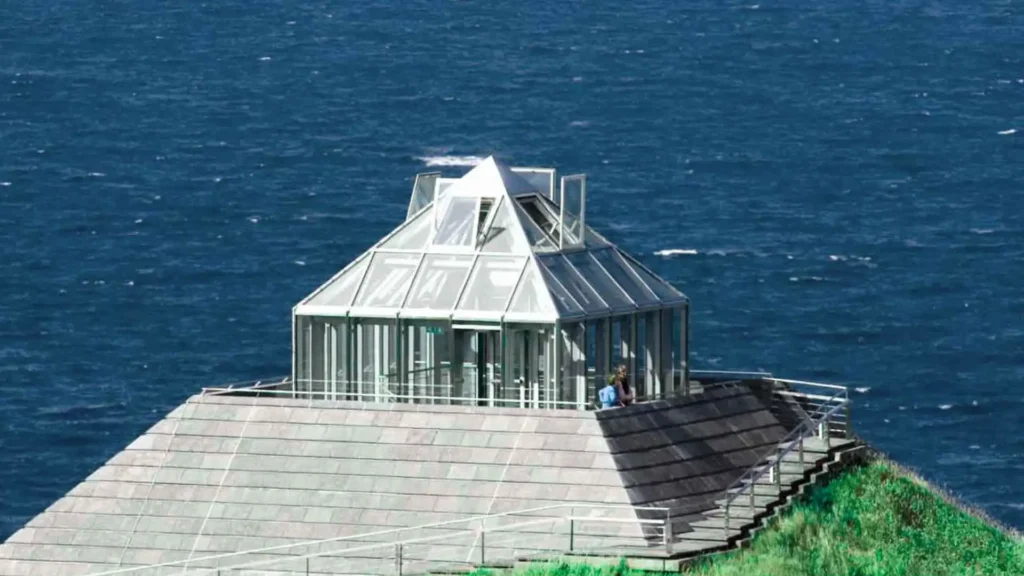
There are interactive audio-visual displays inside that explain the local geology, botany, and feature a tree that was pulled from the bog that is 4,300 years old.
On the outside a glass observation tower and cliff-side viewing platform stand 110 metres above a roaring Atlantic Ocean with panoramic views of the coastal terrain.
Guided tours and hands-on experiences
There are guided tours available at the time of admission, and they are held throughout the day.
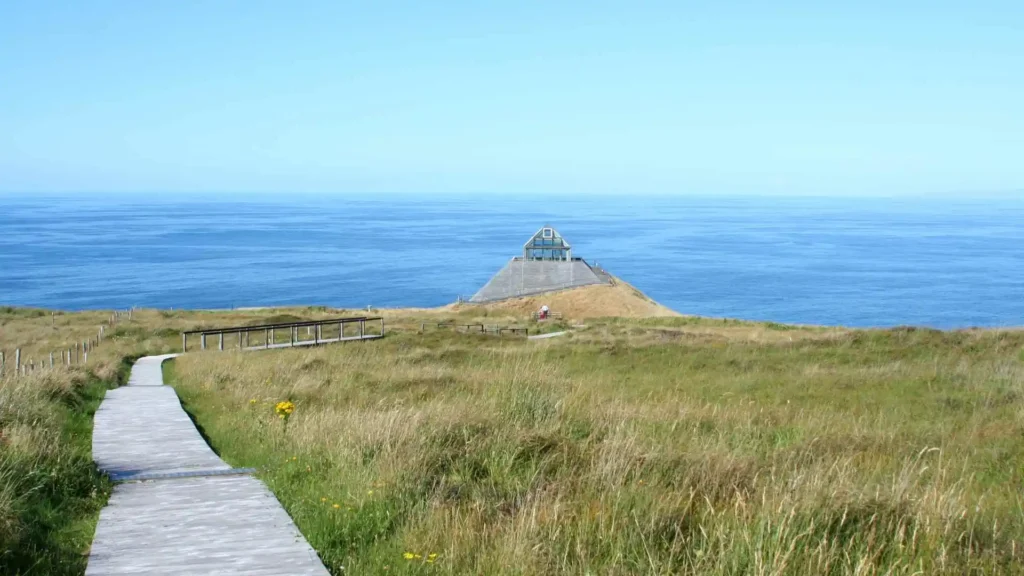
Visitors are guided on designated boardwalks over the bogs, with care taken to avoid the natural bogland, and ancient enclosure walls and unusual plants are identified.
Guests can even get a chance to feel the solid stone walls buried beneath the bog by using the traditional T-shaped iron rod which is used to probe the bog.
Opening hours, admission fees, and getting here
Opening times and admission fees
It opens seasonally from mid-March until early November with daily hours from 10.00 to 18.00 (last entry at 17.15). In the winter months, access is available only through pre-booked group tours.
The normal admission fee is as follows:
- Adult: €5.00
- Senior / Group: €4.00
- Child / Student: €3.00
- Family Ticket: €13.00
Note: The first Wednesday of each month is a free admission day and part of the OPW Heritage.
Directions and transportation links
The site is situated on the picturesque R314 coast road in County Mayo about 8 km west of Ballycastle, County Mayo and 34 km northwest of Ballina.
It is a 1-hour, 15-minute drive from Ireland West Airport Knock.
There is no charge for on-site parking (for cars, campervans or tour buses).
Facilities, accessibility and visitor restrictions
The centre has a café that provides warm lunches and baked goods, baby changing rooms and accessible toilets.
Wheelchairs are available in the main exhibition halls and observation areas, but there are still uneven walkways throughout the natural bog area.
Only registered assistance dogs are allowed on the site, as there is sensitive wildlife and a farming environment. It is important that visitors have waterproof clothing and suitable footwear, as the weather on these exposed cliffs can be very variable.
Nearby sites to visit
Enjoy a day of coastal adventures with a Wild Atlantic Way tour:
- Dún Bríste sea stack and blowholes are located at Downpatrick Head, which is 14 km east.
- A neighbouring research centre specialising in early human habitation and local bog ecology – the Belderrig Valley Experience.
- Further west, on the Mullet Peninsula, there are unspoiled beaches and hiking trails.