
Irish Traditions You Can Still Experience Today
A goat gets crowned king in Kerry every August, and nobody in the town blinks. That is how Irish traditions work: strange to outsiders, perfectly ordinary to the people who keep them going.
You probably searched this because you want to understand what Ireland actually does, not just what the postcards promise. Maybe you are planning a visit, tracing your roots, or writing a school project, and you do not want to repeat the same clichés about leprechauns.
This guide walks you through the customs that are alive in Ireland today, from music sessions and Gaelic games to St Brigid’s Day, Samhain and the Christmas Day swim. You will know what each one is, when it happens and how to join in respectfully.
Irish Traditions at a Glance
| Tradition | When | Where |
| St Brigid’s Day | 1 February | Nationwide, with Kildare at the centre |
| St Patrick’s Day | 17 March | Nationwide |
| Puck Fair | 10 to 12 August | Killorglin, County Kerry |
| Samhain and Halloween | 31 October | Nationwide, strong in Derry |
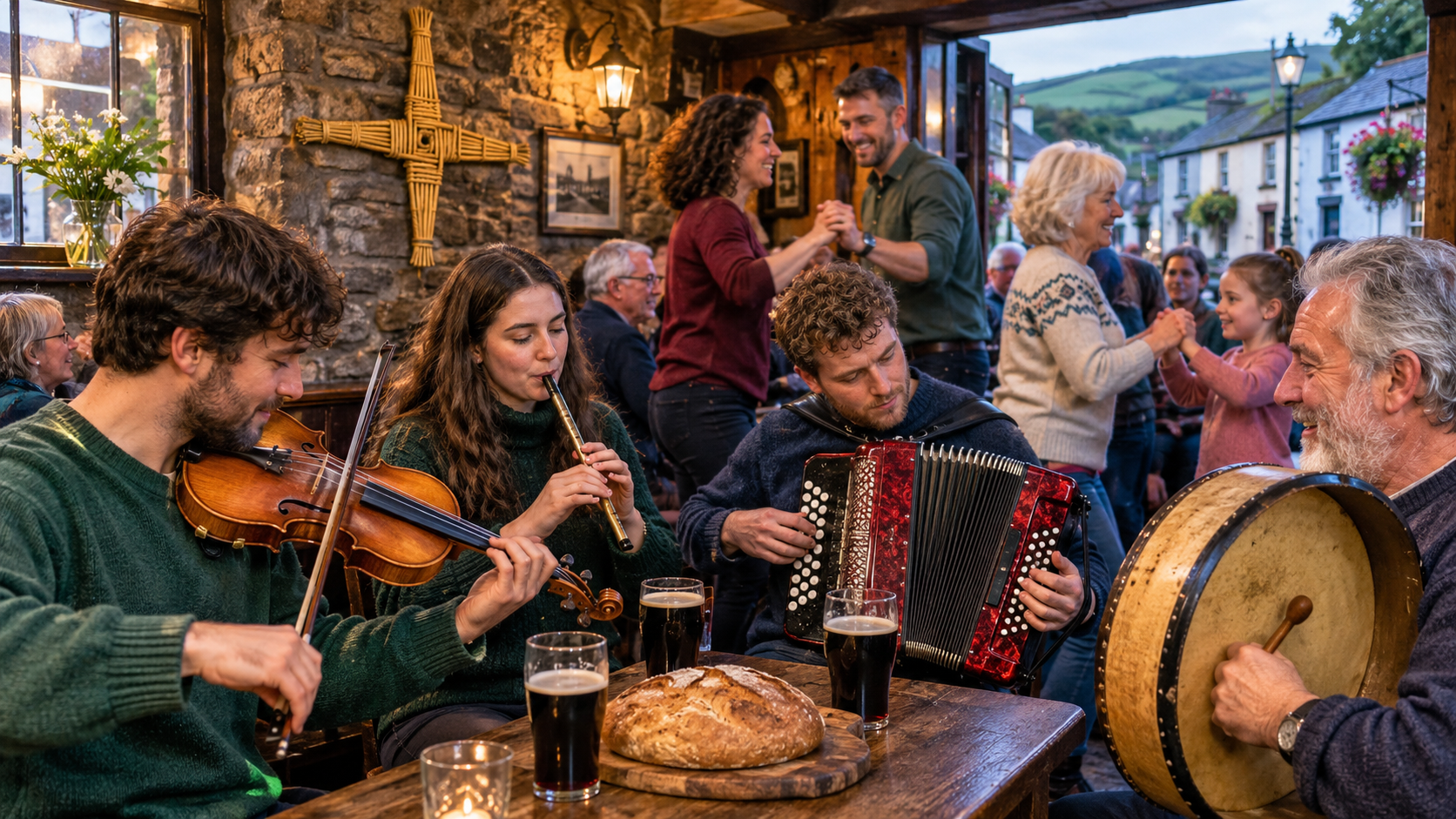
| Christmas Day swim | 25 December | Coastal towns |
| Nollaig na mBan | 6 January | Homes and pubs nationwide |
Where These Customs Come From
Most customs here sit on top of older ones. Festivals from before Christianity, such as Imbolc and Samhain, now live inside St Brigid’s Day and Halloween, and the Church shapes much of the rest of the calendar.
Later arrivals add their own layers. Vikings, Normans, English settlers and the Ulster Plantation all leave marks, and Irish Travellers keep their own fairs and horse traditions going.
Britannica describes Ireland as a country of several distinct regional cultures rather than one national culture, so expect customs to change from county to county.
Music, Dance and Storytelling
Sound carries Irish tradition better than anything else. Three forms stand out: sessions, céilí dances and stories.
Trad Music Sessions
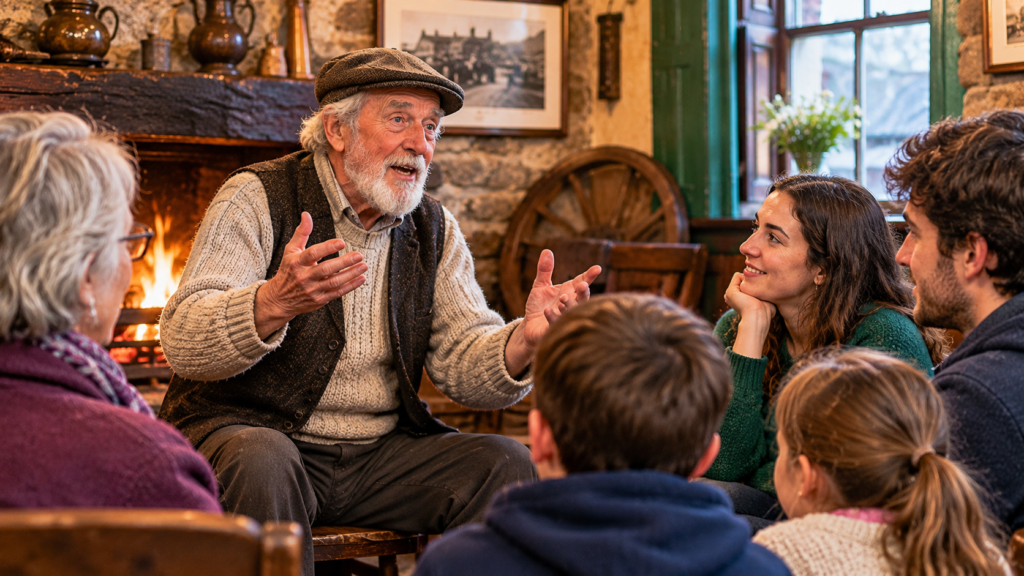
Locals call traditional music “trad”, and you hear it in pubs every week of the year. A session is an informal gathering where musicians play tunes on the fiddle, flute, tin whistle, accordion and bodhrán, with no stage and no set list.
Sit nearby and listen, and keep conversation low during the tunes. Applaud between sets, and buy a drink if you stay a while. Many sessions have a regular lead player, so let them start and end the tunes. Check the pub’s social media for session nights, because they vary by venue and season.
Céilí Dancing
A céilí is a social dance night where everyone joins in, from children to grandparents. Britannica describes it as a traditional musical gathering and an enduring part of Irish social life.
An MC usually calls the steps as the night goes on, so you do not need experience. Expect lines, circles and sets of couples, plus plenty of laughter at your own mistakes. Irish dance schools across the country also teach the more formal competitive style that many people know from stage shows.
Storytelling
Ireland produces a surprising amount of literature for its size, and the habit starts around the kitchen table. Britannica points to writers from Jonathan Swift onwards, and to the Abbey Theatre in Dublin, which opens in 1904 and stages new and classic plays in Irish and English.
For a living example, look for a seanchaí, a traditional storyteller, at heritage centres and festivals.
Seasonal and Religious Customs
The Irish calendar mixes saints’ days with ancient seasonal festivals. Each one below has its own date and habits.
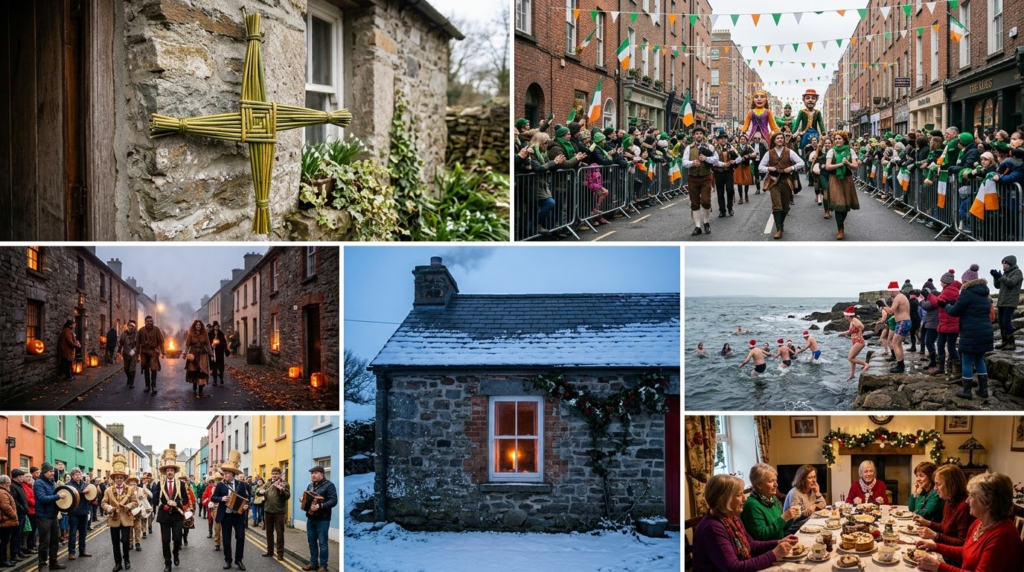
St Brigid’s Day
St Brigid’s Day falls on 1 February and marks the start of spring. Since 2023 it is a bank holiday, which moves to the first Monday of February, or stays on 1 February when that date lands on a Friday.
People weave Brigid’s crosses from rushes or straw and hang them in the house for protection. The date also matches Imbolc, the old festival of the goddess Brigid. Tradition links the saint to a 5th century monastery in Kildare.
St Patrick’s Day
St Patrick’s Day on 17 March honours Ireland’s patron saint, and it has been a public holiday since 1903. At home it is quieter than overseas: Wilderness Ireland notes that many celebrations are bigger in the diaspora than in Ireland itself.
Parades run in towns nationwide, and Dublin’s St Patrick’s Festival is the most prominent. Wear a bit of green if you like, but skip the novelty leprechaun hat.
Samhain and Halloween
Halloween starts as Samhain, the festival that marks the end of the harvest and the start of the dark half of the year. The National Museum of Ireland’s folklife collection records the belief that the spirits of the dead return home that night, which is why people avoid travelling alone.
Costumes and trick or treating trace back to disguises that imitate those spirits, according to ireland.ie. Derry hosts a large Halloween festival, and Dublin runs the Bram Stoker Festival.
Christmas Traditions
Christmas here runs from 24 December to 6 January, and four customs reward a closer look.
Candle in the Window
Families place a lit candle in the front window on Christmas Eve. The custom welcomes travellers and emigrants coming home. Many households light it at dusk.
Christmas Day Swim
Swimmers at coastal spots, including the Forty Foot in Sandycove, plunge into the sea on Christmas morning, and many raise money for charity. Hot drinks wait on the shore. If you join, bring a towel, a warm coat and a friend who stays dry.
Wren Day
On 26 December, St Stephen’s Day, groups called wrenboys dress in straw costumes and play music from house to house, asking for donations. The custom survives in pockets of the country, with Dingle in County Kerry among the best known.
Nollaig na mBan
Nollaig na mBan, or Women’s Little Christmas, falls on 6 January. Traditionally the women of the house rest while others take over the cooking and housework. Today friends gather for meals and nights out.
Puck Fair
Every August, Killorglin in County Kerry crowns a wild goat as King Puck and lets him reign for three days. Puck Fair runs from 10 to 12 August, with a horse fair, a street market, live music and fireworks on the final night.
A royal charter of 1613 gives the fair its legal footing, though locals link it to the much older festival of Lughnasa. Entry to the streets costs nothing. Estimates put crowds near 100,000, so book rooms early. Some people question the goat’s welfare, so read both sides before you go.
Weddings, Wakes and Family Life
Life events keep the oldest customs alive. Four everyday traditions show how.
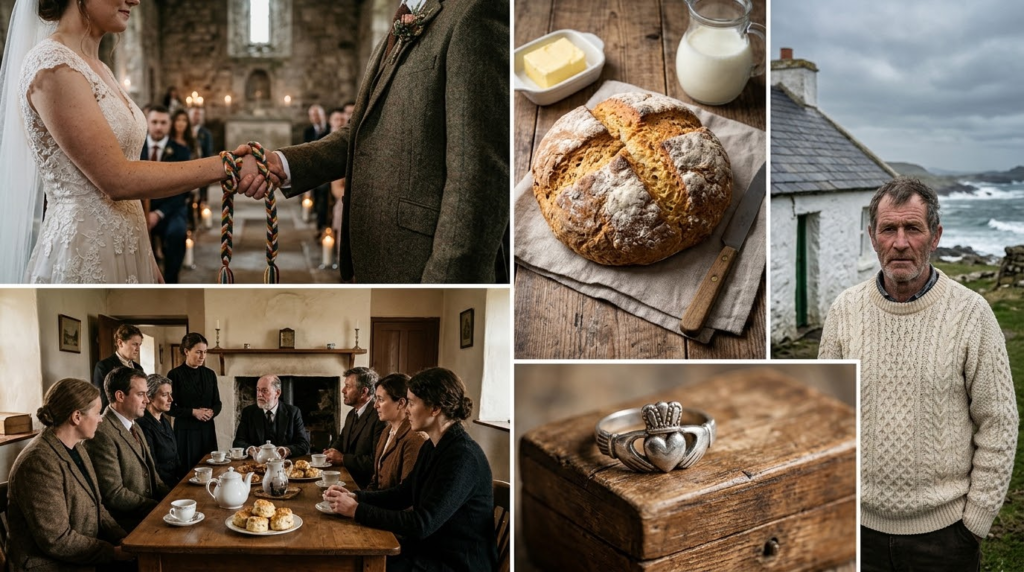
Handfasting
Handfasting is a ceremony where a cord, ribbon or strip of fabric binds the couple’s hands. Many people link it to the phrase “tie the knot”, although the link to Celtic ceremonies stays unproven. Couples today add it to civil or church ceremonies as a symbolic moment. Some choose an Aran crios, a woven wool belt, instead of a ribbon.
The Irish Wake
At a wake, neighbours and family visit to pay respects and say prayers beside the coffin before burial. People share tea, sandwiches and stories, and they celebrate the life as much as they mourn it.
Attending is a mark of respect. Shake the family’s hand and say “sorry for your trouble”, the classic phrase. The Irish Wake Museum in Waterford city explores the history of these customs.
Soda Bread and the Cross
Soda bread needs only flour, baking soda, buttermilk and salt. Bakers cut a cross into the top of the dough. Some say it lets the fairies out, others say it wards off evil, and practical cooks point out that it helps the loaf bake through. Serve it warm with Irish butter.
Aran Jumpers
Aran jumpers take their name from the Aran Islands off the west coast, where fishermen wore the heavy wool knits. Popular stories say each stitch pattern carries a clan meaning, but treat those claims with caution, because the evidence stays thin.
Claddagh Rings
The Claddagh ring shows two hands holding a crowned heart, symbols of friendship, love and loyalty. Tradition links its design to Richard Joyce, a Galway man, though the story remains a tale rather than a documented fact.
Sport and Social Life
Two places tie communities together every week: the pitch and the pub.
Gaelic Games
Hurling, camogie and Gaelic football sit at the heart of community life, and the Gaelic Athletic Association (GAA) runs clubs in almost every parish. Camogie is the women’s version of hurling, which uses a stick and a small ball called a sliotar.
Club membership often runs through families. Catch a county championship match to feel the atmosphere, and look out for the All Ireland finals at Croke Park in Dublin during the summer.
The Local Pub
The pub remains the social hub in many towns and villages. It hosts sessions, quizzes, chats after matches and family gatherings, often during the day too. One social networks encyclopaedia calls the pub an important, if somewhat clichéd, hub of Irish social life.
Rounds matter: when someone buys you a drink, you buy the next one.
How to Join In Respectfully
Join in as a guest, not a spectator.
Ask before you photograph a wake, a funeral or a private family moment. Listen first at a session, and wait to be invited if you want to play or sing. Say “St Patrick’s Day” or “Paddy’s Day”, never “St Patty’s Day”, which many Irish people dislike. Check dates with the organisers, because festivals shift year to year. Finally, treat folklore as a story you enjoy, not a fact you repeat as history.
Why Traditions Still Matter
Customs here keep changing. The government added St Brigid’s Day to the holiday calendar in 2023, and new events appear alongside the old ones.
The National Folklore Collection holds the Schools’ Collection, where primary school children wrote down local customs in the 1930s. Researchers and families still use it to trace how a practice looks in their own parish. Ask an older relative or neighbour what they remember, because every parish keeps a few customs that no guidebook records.
Final Words
Irish traditions survive because people keep using them: in kitchens, pubs, pitches and the sea at Christmas. Choose one custom that interests you, check the date with the organisers, and turn up with curiosity. Try a trad session near you this month, then plan a trip around Puck Fair or St Brigid’s Day. Tell us your own family custom in the comments, and share this guide with someone planning a first visit to Ireland.
FAQs
What are the most famous Irish traditions?
Traditional music sessions, St Patrick’s Day, Halloween, Gaelic games, Christmas customs and Puck Fair top the list. Most blend Celtic roots with Christian practice, and they vary from county to county, so ask locals about their own.
Is St Brigid’s Day a bank holiday?
Yes. St Brigid’s Day has been a public holiday since 2023. The holiday falls on the first Monday of February, or on 1 February itself when that date lands on a Friday. Check Citizens Information for this year’s exact date.
What do Irish people do at Halloween?
Children dress up and go trick or treating, families light bonfires in some areas, and many people bake barmbrack, a fruit loaf with small objects hidden inside. The festival grows from Samhain, an ancient celebration of the end of harvest.
Why cut a cross in soda bread?
The cross helps heat reach the centre of the loaf, so it bakes evenly. Folklore adds a second reason: it lets fairies out or keeps evil away. Both explanations survive in kitchens across Ireland today.
What happens at an Irish wake?
Neighbours and family visit to pay their respects, say prayers by the coffin and share tea, food and stories. People remember the person’s life with warmth and humour, and the funeral Mass and burial follow. The Irish Wake Museum in Waterford explains the history.
When is Puck Fair held?
Puck Fair runs from 10 to 12 August each year in Killorglin, County Kerry. Locals crown a wild goat as King Puck on the first day, and the fair also includes a horse fair, street market and fireworks.
What is a céilí?
A céilí is a social gathering with traditional music and dancing, open to everyone. Dancers form sets, lines or circles, and callers guide the steps, so beginners join in easily. Britannica calls it an enduring expression of Irish social life.