
The Immaculate Collection: The Story Behind Madonna’s Biggest-Selling Album
Thirty-five years on, Madonna’s The Immaculate Collection still gets pulled out at every hen do, wedding and 80s throwback night in Ireland. It’s not just a greatest hits record. It’s the album that took fifteen of her biggest singles, reworked them, added two brand new tracks, and turned into one of the best-selling compilations of all time.
Here’s the full story: what’s actually on it, how it performed on the charts (including a No. 1 run right here in Ireland), and why it’s stuck around this long.
What Is The Immaculate Collection?
The Immaculate Collection is Madonna’s first greatest hits album, released on 9 November 1990 through Sire Records and Warner Bros. It pulls together fifteen of her most successful singles from 1983 to 1990, all newly remixed, plus two previously unreleased songs recorded specifically for the album: “Justify My Love” and “Rescue Me.”
The title is a play on the Immaculate Conception, keeping with the religious imagery Madonna leaned into throughout that era, most visibly in the “Like a Prayer” video and the Blond Ambition tour.
The Immaculate Collection Tracklist
All fifteen archive tracks are presented in chronological order, from her 1983 debut single right through to 1990.
| # | Track | Original Release Year |
|---|---|---|
| 1 | Holiday | 1983 |
| 2 | Lucky Star | 1983 |
| 3 | Borderline | 1984 |
| 4 | Like a Virgin | 1984 |
| 5 | Material Girl | 1985 |
| 6 | Crazy for You | 1985 |
| 7 | Into the Groove | 1985 |
| 8 | Live to Tell | 1986 |
| 9 | Papa Don’t Preach | 1986 |
| 10 | Open Your Heart | 1986 |
| 11 | La Isla Bonita | 1987 |
| 12 | Like a Prayer | 1989 |
| 13 | Express Yourself | 1989 |
| 14 | Cherish | 1989 |
| 15 | Vogue | 1990 |
| 16 | Justify My Love | New for this album |
| 17 | Rescue Me | New for this album |
“Lucky Star” and the Early Hits That Made the Cut
“Lucky Star” sits at track two, right after “Holiday,” and it’s easy to forget how important that single was. Released in 1983, it was one of Madonna’s first genuine radio hits and helped establish the visual identity, the lace, the layered jewellery, the belly-baring tops, that would define her early 80s image before “Like a Virgin” made her a household name.
Including it here, remastered and sitting alongside her bigger 80s smashes, is part of why The Immaculate Collection works as a listen rather than just a chart-driven cash-in. It tells the story of how Madonna actually built her career, one hit at a time, rather than skipping straight to the famous stuff.
The Two New Tracks: “Justify My Love” and “Rescue Me”
Rather than release the album as a straightforward hits package, Madonna and her team added two brand new songs to give fans a reason to buy it.
“Justify My Love” came first, and it caused a genuine stir. The music video, all shadowy hotel-room imagery and BDSM undertones, was banned by MTV, which only made it more famous. The single went to number one in the US and number two in the UK. A songwriting dispute followed too, with poet Ingrid Chavez later claiming she’d written part of the lyrics alongside credited writer Lenny Kravitz.
“Rescue Me” followed in early 1991 and became her highest-debuting US single at the time, landing in the top ten on both sides of the Atlantic.
Chart Performance: An Irish No. 1
This is the part most write-ups skip entirely, and it’s arguably the most interesting bit for an Irish audience. The Immaculate Collection didn’t just perform well internationally, it went straight to number one on the Irish albums chart on 16 November 1990, holding the top spot for three weeks over that Christmas run. It went on to spend an extraordinary 213 weeks on the Irish charts in total, including a fresh re-entry that peaked at number two in 2000, a decade after its original release.
Internationally, the record fared just as well. It became Madonna’s second US album to be certified Diamond by the RIAA, denoting shipments of more than ten million copies, and it spent nine consecutive weeks at number one in the UK, the second-longest run for a female solo artist there. In the US, it settled at number two on the Billboard 200.
What’s Missing from the Album
For all its success, The Immaculate Collection isn’t a complete snapshot of Madonna’s 80s output. Several genuine hits didn’t make the final quindecim, including “Angel,” “Dress You Up,” “True Blue,” “Who’s That Girl” and “Causing a Commotion.” There simply wasn’t room on a single disc for everything.
Worth knowing too, if you’re buying it for the “correct” versions of the songs: nearly every track was remixed for this release using an early stereo-enhancement technology called QSound, so a good few of these versions run faster, fade earlier, or sound noticeably different to the original singles and album cuts.
Why It’s Still Worth Listening To
The Immaculate Collection remains the easiest way to hear why Madonna dominated pop for the entire decade. It’s not just a nostalgia piece, it’s widely regarded as one of the tightest, most listenable hits compilations ever put together, and it’s still the album most people reach for first when they want to introduce someone to her early work.
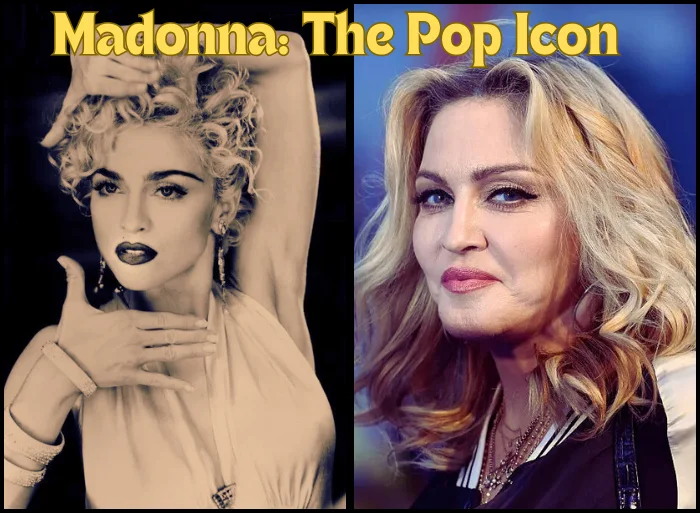
Madonna’s Impact Beyond Music
Madonna’s career stretches beyond her music career. The pop icon has worked in twenty-seven feature films along with ten short films. She appeared in sixteen commercials and performed in ten television episodes.
With James Bond in “Die Another Day” and as an all-female baseball team member in “A League of Their Own”, her acting performances are still remembered as a telltale sign of grace and swagger.
Her entrepreneurial ventures are also the talk of the town. Madonna launched five brands, which include the Material Girl clothing line, fitness clubs and beauty lines.
| Brand | Category | Launch Date |
|---|
| Maverick | Entertainment (Record Label, Film Production) | 1992 |
| Material Girl | Fashion (Clothing Line) | 2010 |
| Truth or Dare | Fragrance and Fashion | 2012 |
| MDNA Skin | Skincare | 2014 |
| Hard Candy Fitness | Fitness (Gyms) | 2010 |
Also, her philanthropist involvement in “Raising Malawi”, a non-profit organisation that Madonna and Michael Berg founded in 2006 did not go unnoticed. She donated $1 million for the construction of a compound in 2006 that would have fed more than 1,500 orphans.
View this post on Instagram
Madonna’s Legacy and Influence
The reasons for calling her a music legend have already been explained above but the fact cannot be ignored that she was the only female pop star that took some bold stances at a time which were politically, religiously and socially orthodox.
Making them a little unorthodox with acceptance of sexuality and expressing herself freely were the special pieces of art that only Madonna could have exhibited. It was her way of paving roads for future artists like Lady Gaga, Beyonce and Rihanna to embrace their sexuality and break down the barriers.
Being a feminist icon, she raised the bar for advocacy of special issues and set her foot right in the fashion industry at the same time. The ongoing dialogue about her relevance in modern music culture is intricate but she does remain relevant. She is the one that could change with any trend at any time. She could embrace change easily with her constant evolutional skills.
Wrapping Up
he Immaculate Collection isn’t just a hits compilation, it’s the record that proved Madonna’s 80s run wasn’t a fluke, and it’s still the definitive entry point into her early catalogue more than three decades later. From “Lucky Star” to “Vogue,” it captures an artist who was constantly reinventing herself while somehow staying completely, unmistakably Madonna.