
Cú Chulainn | The Hound of Culann in Irish Legends
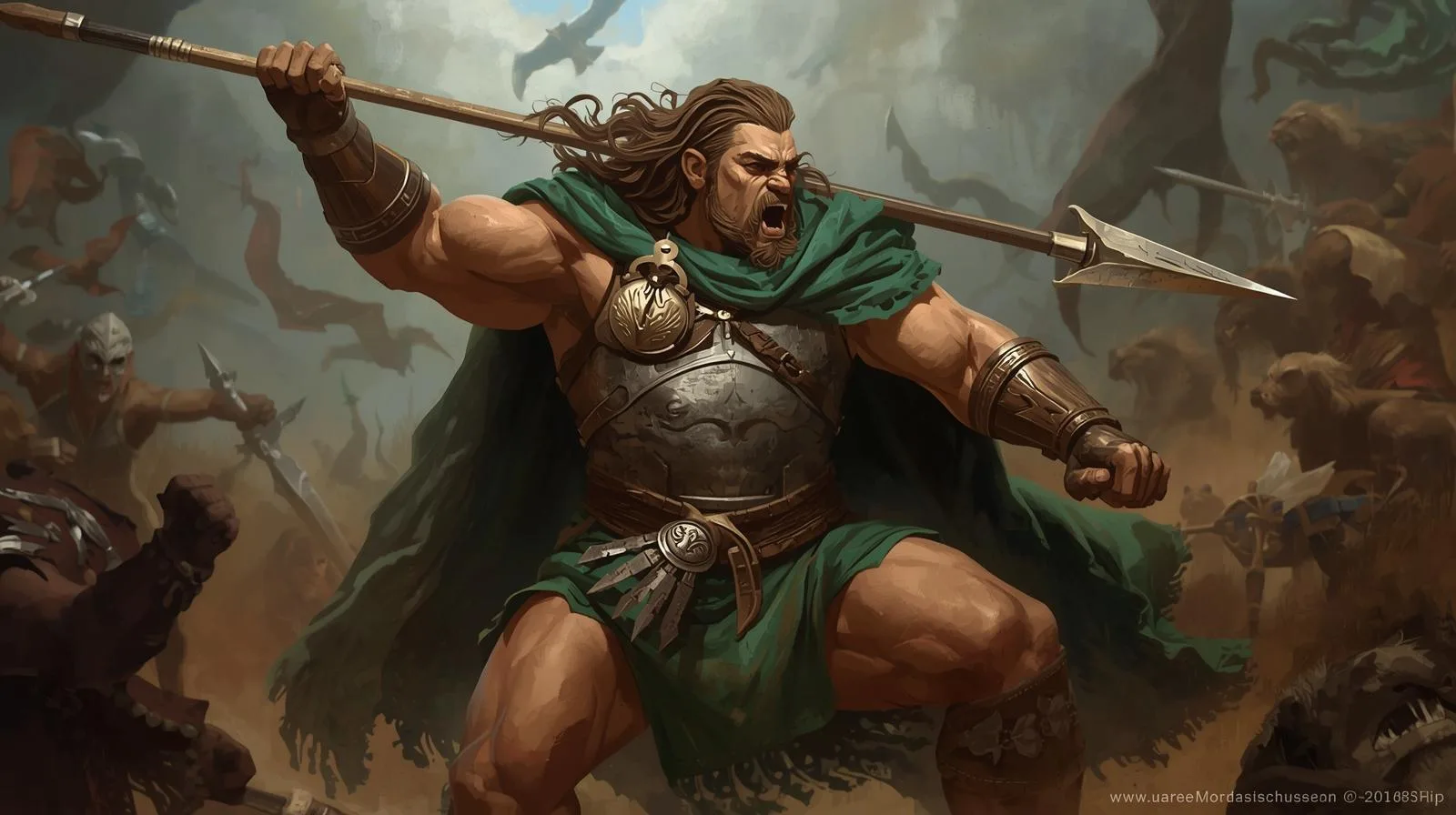
There are few names in Irish mythology that carry as much weight, blood and glory as Cú Chulainn. The central hero of the Ulster Cycle is often called the Irish Achilles. He stands at the heart of the heroic stories that define the warrior ethos of ancient Ireland. Whether written as Cu Chulainn, Cú Chulainn, or Cuchulainn, this demigod hero represents Celtic heroism and the doomed destiny of those blessed by the gods.
His name translates as The Hound of Culann and is often pronounced Koo Kullen. He earned this name through a shocking display of youthful strength rather than birth.
As a hero of the Ulster Cycle, he defended the province of Ulster and protected King Conchobar mac Nessa against overwhelming odds. His life was shaped by divine intervention, terrifying transformations and extraordinary martial skill.His stories bridge the human world and the supernatural, placing him among the legendary beings found in Irish mythological creatures.
Origins and Early Life of Cú Chulainn
Before becoming the Hound, he was known as Setanta. His mother, Deichtine, was the sister of King Conchobar. His true father was believed to be Lugh of the Long Arm, one of the great gods of the Tuatha Dé Danann.
This blend of mortal and divine heritage gave young Cú Chulainn strength beyond grown warriors in Emain Macha.

A turning point came in his childhood. Setanta arrived late to a feast hosted by the smith Culann and was attacked by Culann’s massive guard dog, a creature feared by many. Setanta killed the hound in desperate self defence.
Seeing Culann’s grief, the boy promised to guard the smith’s home until a new hound could be trained. From that moment he became Cú Chulainn, the Hound of Culann. He was no longer just a boy.
The Ulster Cycle and Major Legends
The Ulster Cycle is a collection of epic prose and verse centred on Cú Chulainn and the Ulaid people. These stories go beyond simple legend and explore honour, sacred vows known as geasa and the certainty of destiny.
Táin Bó Cúailnge Explained
The greatest story of the cycle is the Táin Bó Cúailnge, or the Cattle Raid of Cooley. It begins with a dispute between Queen Maeve of Connacht and her husband Ailill over their wealth. When Maeve discovered she lacked a great white horned bull equal to her husband’s, she set her sights on Ulster’s famous Brown Bull of Cooley.
As Maeve marched with her army, a curse struck the men of Ulster, leaving them helpless with labour pains. Only seventeen year old Cú Chulainn remained unaffected. He defended Ulster alone through a series of single combats at the border.
These battles lasted for months and ended in a tragic duel with his foster brother and friend Ferdiad. The Táin is not just a war story. It shows both the endurance of Cú Chulainn and the heavy sacrifices demanded of heroes.
Other Famous Tales
Beyond the cattle raid, Cú Chulainn’s life is filled with emotional and tragic stories. One famous tale is his courtship of Emer, a woman known for beauty and intelligence. To win her hand, he had to complete difficult tasks and train with the warrior woman Scáthach in Scotland.
During his time abroad, he fathered a son, Connla, with the warrior Aífe. Years later, Connla travelled to Ireland but strict warrior customs and misunderstandings forced him into combat with his own father. Cú Chulainn killed him, only learning his identity as the boy lay dying. These tales show that even an almost invincible warrior could suffer under the very codes he defended.
These heroic tales remain central to many Irish folklore stories still told across the country.
Powers, Weapons, and Battle Frenzy
Cú Chulainn’s most terrifying ability was the ríastrad, or warp spasm. During this battle frenzy his body twisted and transformed.
One eye sank deep into his skull while the other bulged outward. His muscles swelled grotesquely and heat radiated from his body. In this state he became an unstoppable force, unable to distinguish friend from enemy.
His weapons were equally feared. His main weapon was the Gae Bulg, a barbed spear given to him by Scáthach. It had to be cast using the foot while standing in water. Once it entered a body, barbs spread inside the victim, making removal impossible without cutting the body open.
This terrifying transformation and deadly weapon made him the most feared warrior in Irish legend, representing the wild and violent energy of the Celtic warrior.
How Cú Chulainn Died
The death of Cú Chulainn is one of the most tragic moments in Irish mythology. Enemies led by Lugaid used trickery to force him to break his sacred geasa. One taboo forbade him from eating dog meat, yet he was tricked into doing so, weakening his power.
Mortally wounded in battle, Cú Chulainn refused to die lying down. He tied himself to a standing stone called Clochafarmore so he could face his enemies standing.
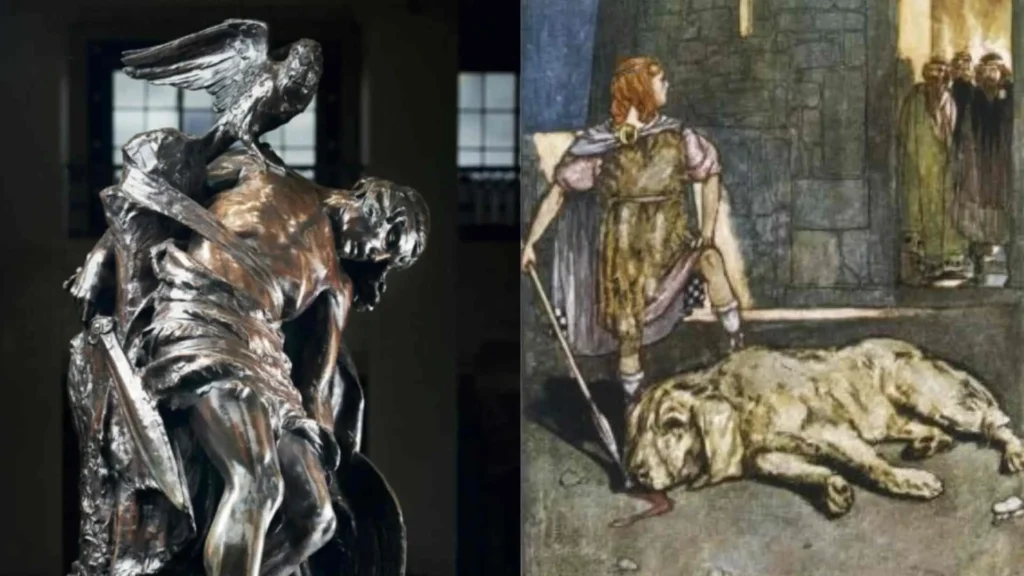
His enemies approached only after a raven, symbol of the war goddess Morrigan, landed on his shoulder. Only then did they know the great hero had finally died. The image of him bound to the stone remains a powerful symbol of resistance and courage in Ireland.
Places Linked to Cú Chulainn You Can Visit
Ireland has a number of sites of Cú Chulainn to those wishing to follow in the footsteps of the legend. Cú Chulainn Trail is mainly located in County Louth and the Cooley Peninsula.
- Dundalk: It is said to be his native place and centre.
- The Tain Way: It is a gorgeous long-distance walking route, and it follows the route of the army of Maeve.
- Clochafarmore Standing Stone: This is a stone near Knockbridge, and is believed to be the stone upon which the hero exhaled his last breath.
- Emain Macha (Navan Fort): This was the seat of the King of Ulster, located in County Armagh, and it is here that the young Setanta first demonstrated his merit.
It is a physical experience to go to these sites and connect the Irish mythological legends (interlink after the other article is published) with the voices of the old war cries and the natural charm of the Irish scenery.