
The story of Rosserk Abbey | Late-Gothic architecture by the River Moy
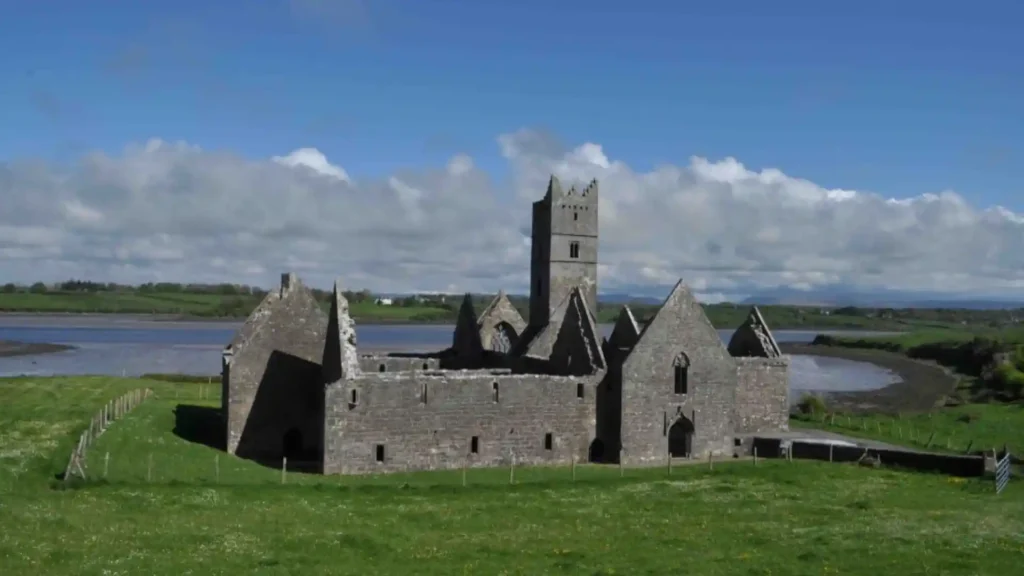
Rosserk Abbey sounds like something straight out of a historical novel. Right? Well, it absolutely is. It is a 15th-century friary hidden amongst the banks of the River Moy, with the beautiful Killala Bay in County Mayo. It is one of the most magical heritage County Mayo sites you may ever have the privilege to visit.
You want to know what all the hype is about, then you are at the right place. We’ll discuss the interesting history of this place (it has had quite an adventure), which architectural marvels you must watch out for. We’ll also discuss all the perfect things that you should explore to make your visit to the Rosserk Friary memorable. Ready to step back in time.
What Makes Rosserk Abbey So Remarkable?
Why then should this particular heap of ruins interest you? Here’s why. Rosserk Friary is a Franciscan friary of the middle of the fifteenth century, on the banks of the river Moy, near Killala Bay, County Mayo. It contains a very fine late-Gothic architecture, and a quiet environment.
It truly is a gem. Established for the Franciscan Third Order Regular, this Mayo friary is known as one of the best-preserved medieval sites in Ireland.
This is what makes its place, right on the side of the river. It is close to the sea, so, is peaceful and almost forgotten. The ruins of the church, family buildings, and cloister have also been in an incredibly good condition. This allows you to literally imagine what the life of the friars was like.
It is an impressive sight of late-medieval religious life in the West of Ireland, which is tightly connected with the strong local Joye family. It is like a place that speaks of history, and the place is full of vibes once you step in.
Have you encountered ruined friaries in Ireland before that amazed you?
A Brief History of Rosserk Friary
The best history of every wonderful ruin consists of an even better one. This beautiful Mayo friary of the 1440s has definitely undergone its share of history, destruction, and restoration.
Foundation (c.1440)
The most common version of the story is that the friary was established in the year 1440 or so by one of the members of the local member of the Joye family. Richard de Burgh, although occasionally it is alleged to be one of the Joye family friary founders.
It was devoted to St. Patrick and was the residence of Franciscan Third Order regular, which is a group concerned with active service in the community. So, imagine the bustle when this beautiful Gothic edifice was in progress.
Active Years and Franciscan Third Order
For over a century, the friary was an active centre of religious and community life in the area. Franciscans were a popular order, characterised by humility and charity.
The location was strategic, providing access to both the Moy River and nearby Killala Bay. It makes it significant both spiritually and geographically for the local region.
Decline and burning (1590)
Sadly, like many religious houses in Ireland, the Rosserk Friary’s good times ended with the Tudor-era suppression of monasteries. Though it survived the initial closures, it was eventually burned by the English forces, led by Sir Richard Bingham, in 1590.
The Franciscans, even after this destruction, apparently attempted to use it again, but its destiny as a working monastery was doomed. Fortunately to us, the ruins have been preserved and unified in later centuries, and their beautiful appearances are preserved.
What You’ll See at Rosserk Abbey
You should expect to be amazed. The architecture of this beautiful Franciscan friary in Ireland is what really sets it apart. The layout is easy to explore, and every corner holds an intricate detail.
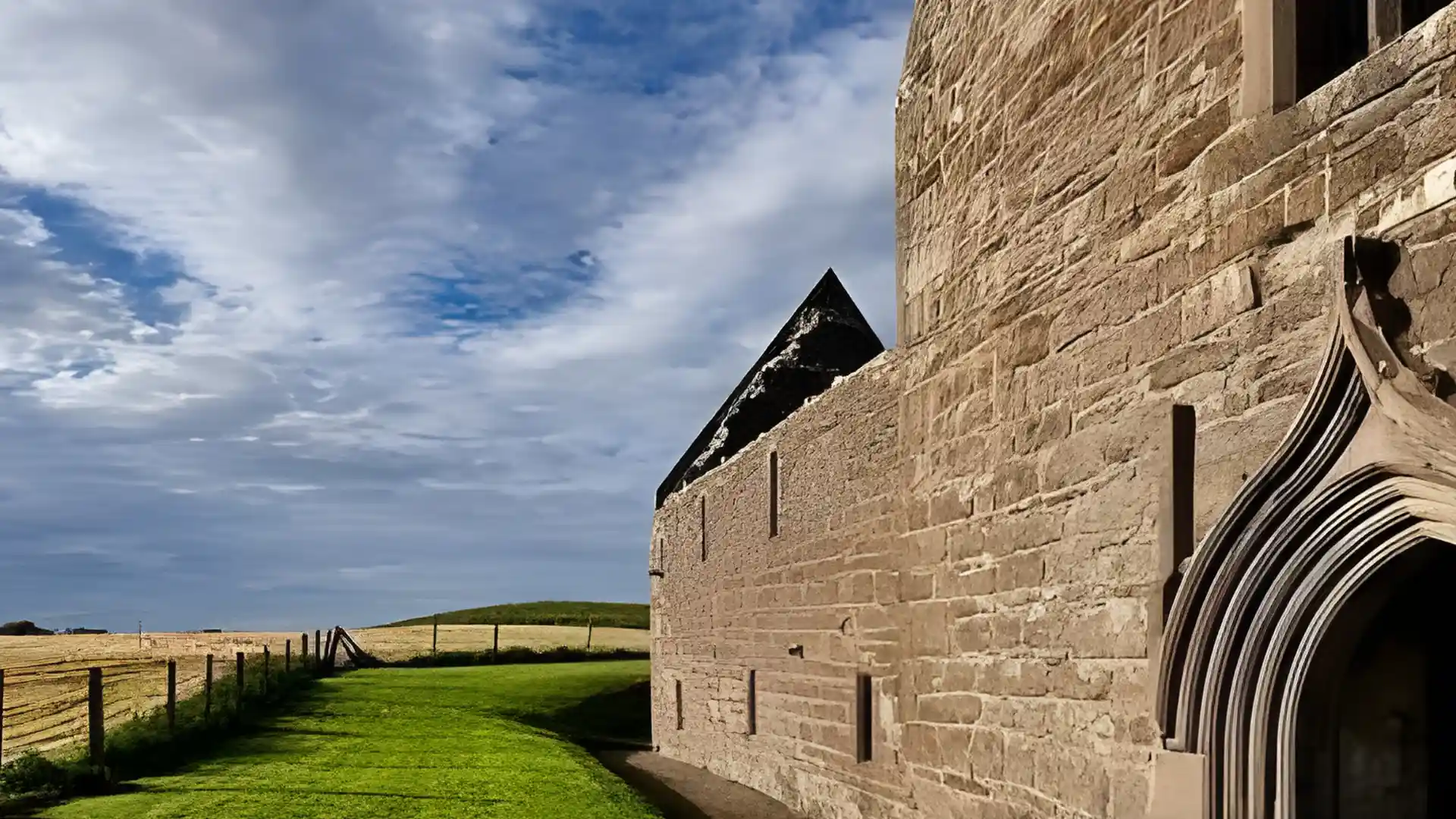
- The West Doorway and Late-Gothic Tracery: This is often the first thing that captures your attention. The highly carved entrance is an excellent illustration of the late-Gothic fashion that makes you enter the past.
- Single-Aisle Church and Bell Tower: Walk through the main church space. The different division between the nave (where people were) and choir (where friars were) is also very evident. The Mayo skyline has a distinctive square bell tower.
- Doubled Piscina with Angel Carvings: It is a must-watch. A piscina is a basin in which sacred vessels are washed, and here this is an exquisite one. The wonderful angel, and the ornamental carvings are some of the best carvings of any kind in all Ireland.
- Cloister and Dormitory Remains: You can explore the cloister–the sheltered courtyard where the friars would walk and meditate. The arcade walls are well-preserved, and you can visualise the chapter house, refectory, and dormitory buildings that once stood around it.
Visiting Rosserk Friary – Access, Opening Hours and Tips
Then, when you are willing to see this wonderful Killala Bay heritage site, it is a simple and gratifying visit.
- Location: The Rosserk Friary site is situated in a beautiful place of Mayo County, just about 4 km or so south of the lovely town of Killala.
- Access and Cost: It is great news that it is a Heritage Ireland site, which is free of charge and is open during the day. There is no worry about tickets as one can just drive up and explore.
- Facilities: This is a remote and unguided location so you should know that there are no large facilities such as toilets or cafes on the site. You should prepare before you come to avoid any inconvenience.
- Time and Parking: The majority of individuals take approximately 45 minutes to one hour to explore the site. Access is usually not very difficult as there is a small, designated car park.
- Combine Your Visit: You are in the area, but can you think of another place to visit nearby? Another great friary ruin nearby is the gorgeous Moyne Abbey, or there is the Round Tower and St. Patrick Cathedral in Killala town.
Final Thoughts
Visiting the ruins of Rosserk Abbey is just like discovering a hidden place in the gorgeous West Coast of Ireland. This distinct location encapsulates the excellently rich heritage on Killala Bay shore. It gives the visitors an opportunity to view some of the best preserved late-Gothic structures within the country, such as that extremely intricate double piscina.
We highly recommend the stop as it is so easy and free to visit near Killala, County Mayo. The best way to spend your time in this historical region is to visit the other historical sites within it to have a full history day trip along the Wild Atlantic Way.