
Trees in Ireland | Irish Tree Species You See Everywhere
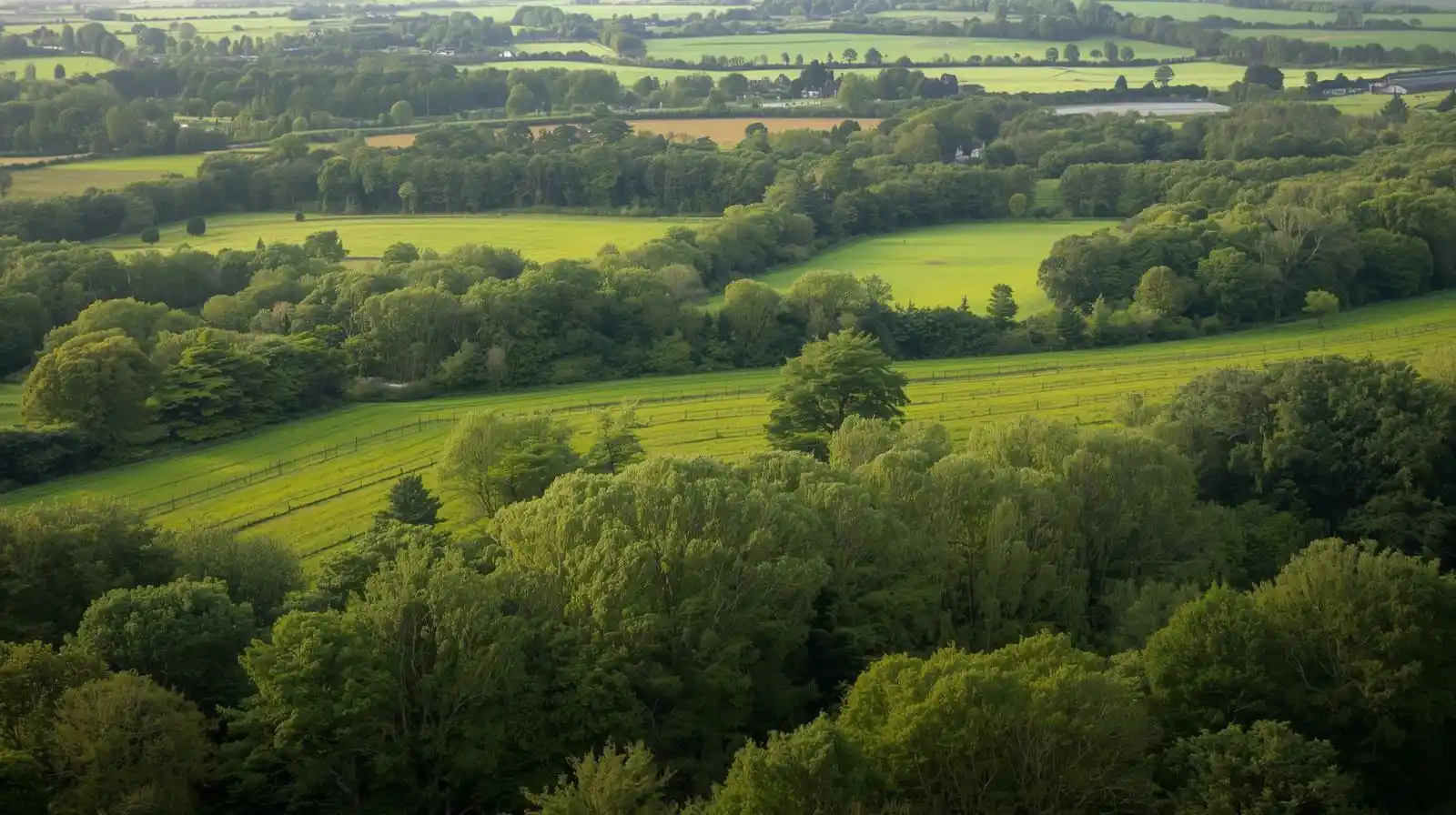
The Irish landscape reflects how closely people in Ireland remain connected to nature. Trees shape much of the rural horizon, forming the framework of hedgerows, old woodlands, and open countryside. From the windswept Atlantic coast to the drumlins of the Midlands, trees are part of the character of the island.
Ireland has its own mix of native species that arrived naturally after the last Ice Age, along with introduced varieties that have since become part of the landscape. Knowing these species helps you better appreciate the biodiversity and heritage of the island.
Most common native trees in Ireland
Native trees became established in Ireland before it separated from mainland Europe around 12,000 years ago. These species adapted naturally to Irish soil and climate and remain the foundation of local ecosystems.
The most common native species include oak, birch, hawthorn, rowan, hazel, willow, and ash. These trees dominate many Irish woodlands because they suit the country’s high rainfall and varied soils. Some thrive beside rivers and wetlands, while others are better suited to limestone landscapes such as those found in the Burren.
Quick list of native Irish trees
The principal native tree species in Ireland include:
Oak: Known as the king of the forest.
Ash: Traditionally valued for making hurls.
Birch: Recognised by its pale bark.
Hazel: Common in the understorey of native woodland.
Hawthorn: A defining tree of Irish hedgerows.
Rowan: Also called mountain ash, known for its red berries.
Willow: Common in wetlands and along riverbanks.
Oak trees in Ireland
Oak is regarded as the most significant native tree in Ireland and is officially recognised as the national tree. It is valued for its longevity, often living for several centuries, and for its ecological importance. A mature oak can support hundreds of insect, bird, and fungal species.
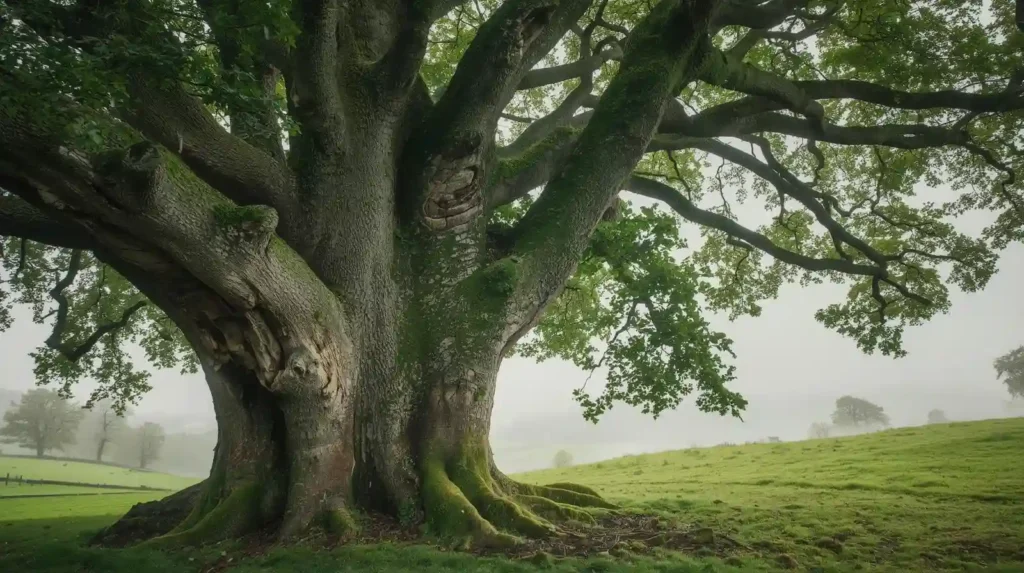
You can identify an oak by its lobed leaves and acorns. Ireland has two native species, Sessile Oak and Pedunculate Oak. Sessile Oak is more common in upland areas and acidic soils, while Pedunculate Oak prefers fertile lowland ground.
Birch trees in Ireland
Birch trees are pioneer species, which means they are often among the first trees to colonise open ground or cleared land. Ireland has two native species, Silver Birch and Downy Birch. Downy Birch is more common in wetter soils.
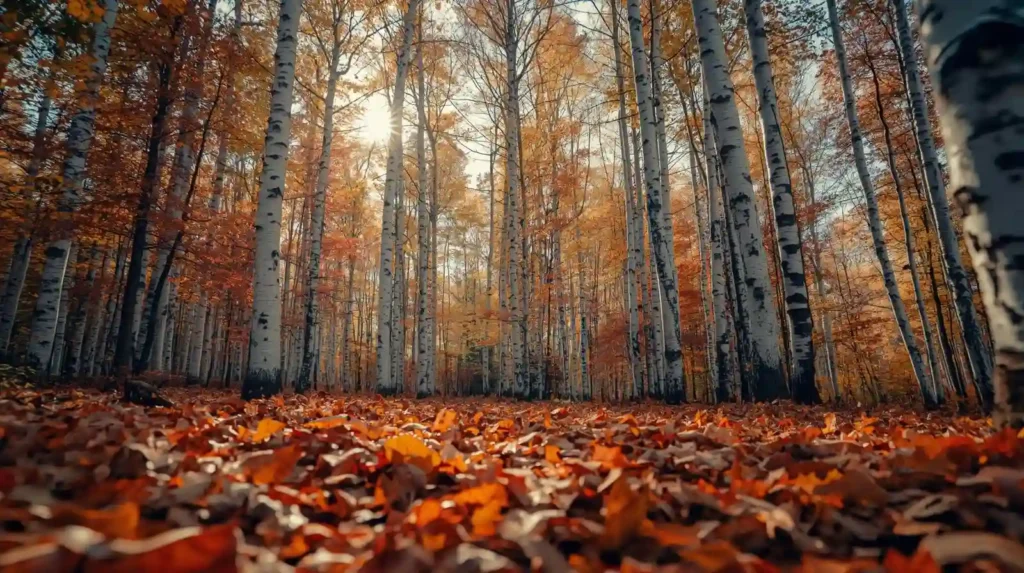
Birch is easy to recognise by its thin bark. Silver Birch has bright white bark that peels in layers, while Downy Birch usually has darker grey bark. The leaves are small, triangular, and toothed, creating a light canopy that allows sunlight to reach the woodland floor.
Hawthorn and Rowan in Irish landscapes
Hawthorn and rowan are two of the most closely linked trees to Irish folklore. Both are known for white spring blossom and bright red autumn berries. Hawthorn, often called the fairy tree, is thorny and dense, and has long been used to create stock proof field boundaries.
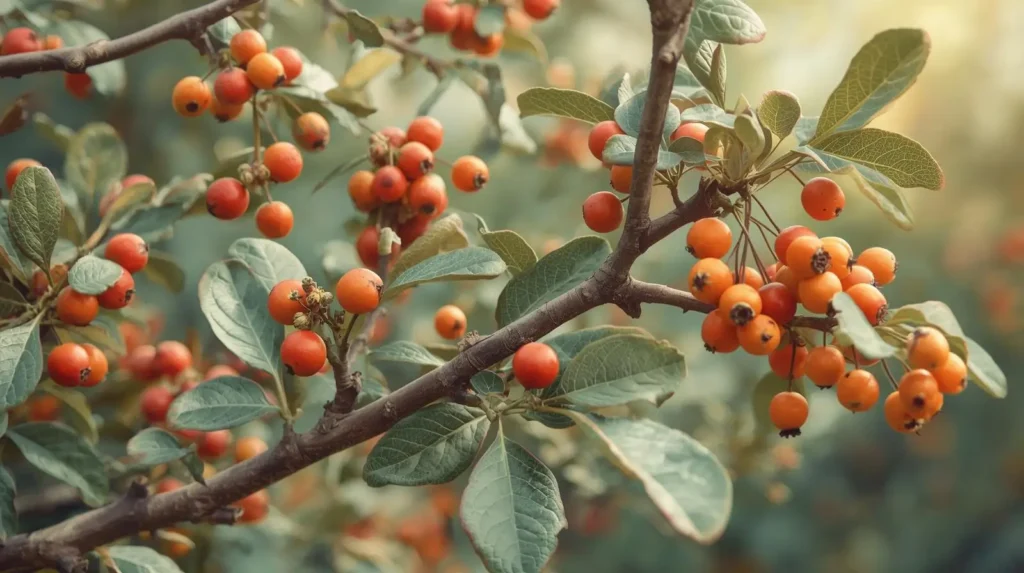
Rowan, or mountain ash, is not part of the ash family. It takes its name from the similar shape of its leaves. It is a hardy tree that grows well at higher elevations. Rowan was traditionally planted near homes for protection, while hawthorn was often left untouched in fields out of respect for folk belief surrounding the fairies.
How to identify trees in Ireland?
The easiest way to identify trees in Ireland is by looking at four main features: leaves, bark, fruit, and seasonal changes. In summer, leaf shape is usually the clearest guide. In winter, bark texture, bud shape, and branch structure become more important.
Ash is easy to recognise in winter because of its black buds arranged in opposite pairs. Beech has smooth grey bark that often resembles elephant skin. A tree’s location also helps, as some species are more common in hedgerows while others prefer woodland.
Quick identification tips
Oak: Look for lobed leaves and acorns.
Birch: Look for white or silvery peeling bark.
Rowan: Look for clusters of red berries and compound leaves.
Hawthorn: Look for sharp thorns and small lobed leaves.
Ash: Look for winged seeds and black buds in winter.
Why native trees in Ireland matter for wildlife?
Native trees are essential for Irish biodiversity. Because they developed alongside local wildlife, they provide food, shelter, and habitat that native species depend on.
Rowan and hawthorn berries are important winter food sources for thrushes and waxwings. Native woodland also supports fungi, insects, and pollinators in ways that non native plantations often do not. Planting native trees helps restore ecological balance across the landscape.
Are all trees in Ireland native?
Not all trees in the Irish countryside are native. Many species were introduced over the centuries for timber, shelter, or ornamental planting. Beech and sycamore are two of the most widespread examples.
Beech is widely planted and commonly used for hedging, although it is not native to Ireland. It was likely introduced in the medieval period. Sycamore arrived in the 17th century and spread rapidly because it self seeds easily.
Other introduced species include horse chestnut and conifers such as Sitka spruce, which is widely used in commercial forestry.
Best places to see native trees in Ireland
If you want to experience native woodland in Ireland, several ancient woodland sites still support rich native tree cover. Killarney National Park contains some of the country’s best surviving oak and yew woodland.
Other notable places include:
The Burren: Known for hazel scrub growing across limestone terrain.
Glenariff Forest Park: A scenic area of mixed woodland and waterfalls.
Knockbarron Wood: Noted for native woodland and spring bluebells.
Portglenone Forest: Known for ancient woodland vegetation.