

Bog of Frogs Loop: Hike Howth Head Walk and Hiking Guide
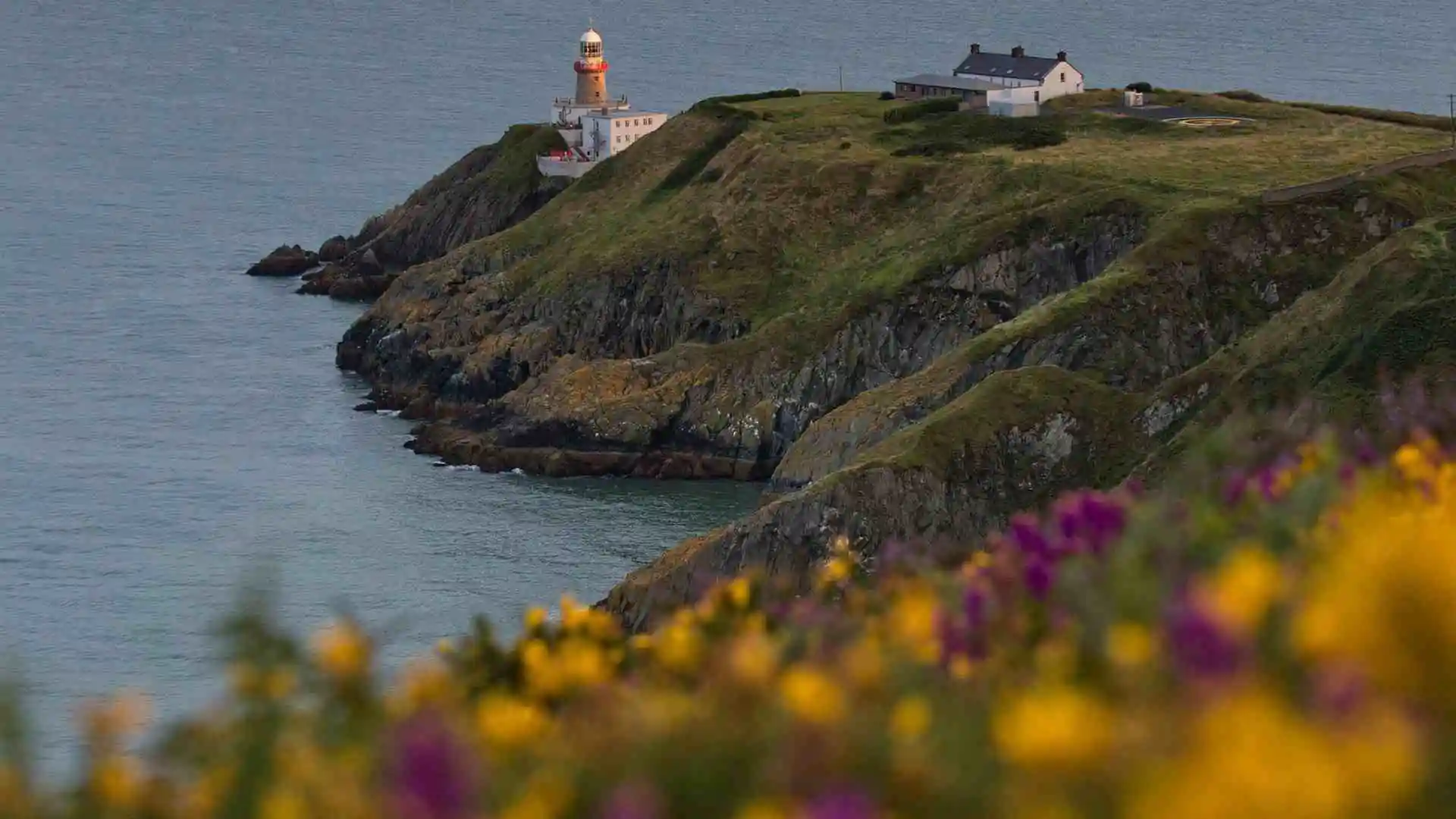
The Bog of Frogs Loop Howth Dublin is one of Ireland’s best coastal hikes. It combines hill top cliff perspectives, inland heath and a lighthouse, and the beauty of a delightful little fishing village. If you’re after a trail that is close to the capital but still wild, this is your trail.
This walk will take around 3-4 hours at a reasonable pace. It is about 12-13km. You will climb in excess of 200 m. At times you go over clifftops with views of seabirds.
When you arrive here you will see why it is incredibly popular with both Dublin residents and visitors alike. There are great views of the rugged sea. You will find historical significance and wildlife. The loop also gives a satisfying sense of completion.
Quick Facts at a Glance
Here’s everything you need to know before stepping onto the trail.
Distance, Duration, Ascent, Grade
- Distance: 12-13 km full loop
- Duration: 3-4 hours walking time
- Ascent: approx. 220 m total climb
- Grade: Moderate – mix of cliff paths, lanes, and upland tracks
The Bog of Frogs Loop is manageable for fit walkers but you can expect uneven surfaces and a few steep climbs.
Start/end point, Public transport, Parking
- Trailhead: Howth Harbour
- Public Transport: DART from Dublin to Howth, 30 minutes
- Parking: Limited near Howth Harbour and Summit car park
This Howth walk loop starts and ends in the village. Public transport is easiest; parking fills early, especially weekends.
Best Months And Weather
- Best months: April-September for daylight and calmer seas
- Winter: Short days, strong winds on cliffs
- Always bring waterproof clothes
The Dublin Ireland hiking trails around Howth Head are exposed. Conditions can change quickly, so pack layers even in summer. Autumn offers great birdlife.
Why You Should Walk the Bog of Frogs Loop
The walk along Howth Head has clifftop trails. It leads you with spectacular views of Dublin Bay and the Irish Sea. You might see seabirds, seals, on a clear day the Wicklow Mountains across the bay.
The loop takes in the distinctly famous Baily Lighthouse. It is one of Ireland’s most photographed coastal points. Inland, you climb onto heathland. Here gorse and heather paint the hills purple and gold when they are in bloom.
The historic headland once defended Dublin and still carries traces of forts and signal towers.
Unlike shorter routes, the Bog of Frogs Loop combines cliff walk Houth, village streets, quiet bogland, and upland viewpoints. That mix makes it the most varied of all the Howth Head walks. Here, you walk through the landscapes layered with history and sea air.
How to Get to the Trailhead from Dublin
Getting to Houth walk is simple. The area is well-connected through bus, train and road, making it easily accessible for both locals and visitors.
By DART And On Foot From Howth Station
The DART is the fastest way to the trail. Trains run every 15-20 minutes from central Dublin. It takes about 30 minutes to reach Howth station. From there, walk 5 minutes to the harbour, where the Howth walk starts.
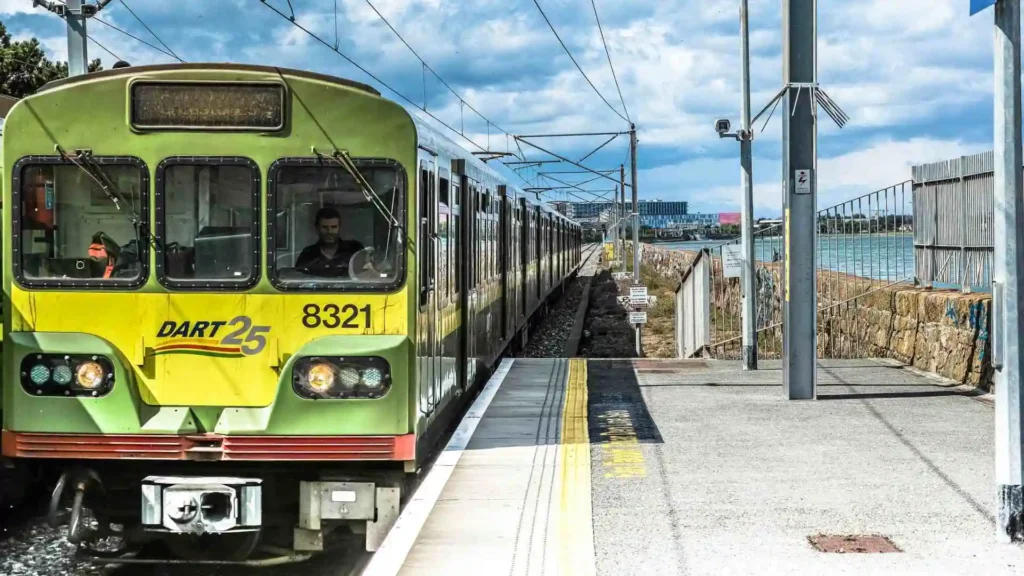
Check the latest schedules of the Irish Rail DART. It’s reliable, affordable, and avoids parking stress.
By car and parking
Driving from Dublin city takes about 35-40 minutes via the R105. You can park in Howth Harbour (limited) or at the Summit Car Park for direct cliff access. Both spots fill quickly on weekends and sunny days.
Street parking in the village is restricted and heavily checked. If you are planning to explore Dublin Ireland hiking trails, get there before 10 a.m. For this, you should use public transport.
Bog Of Frogs Loop Route Overview and Turn-by-Turn Plan
The Bog of Frogs is divided into clear stages that guide you from Houth village. Each part of the loop provides different highlights. These include seaviews, lighthouses and quiet bog paths.
Stage 1: Howth Village To Nose Of Howth, Balscadden
Start in Howth Harbour. Head east past the yacht club and follow signs for the cliff walk Houth. Soon you’ll reach Balscadden Bay, a small cove perfect for early photos.
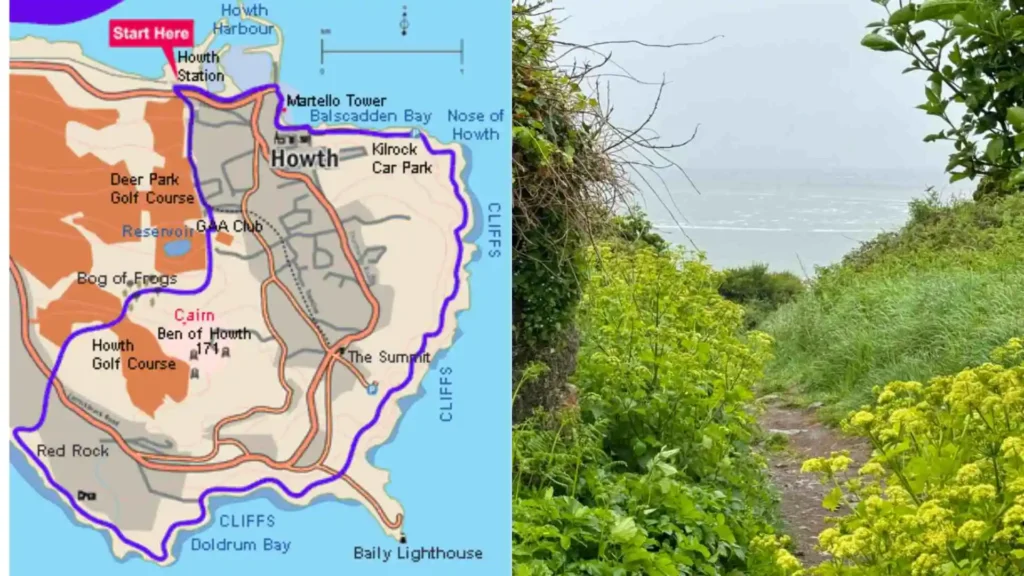
The path climbs gradually toward the Nose of Howth, the headland’s eastern point. Expect sea views from the start, with Dublin Bay behind you and the open Irish Sea ahead.
This stage is about 3 km, taking 45 minutes. The path is narrow but firm underfoot. You will see seabirds on the cliffs and, in summer, wildflowers along the trail.
Stage 2: Cliff Path, Baily Lighthouse
Continue south along the cliff edge. This is the highlight of the cliff walk Howth. The path undulates above sea stacks and dramatic drops. Always keep right on marked paths, as erosion can make edges unstable.
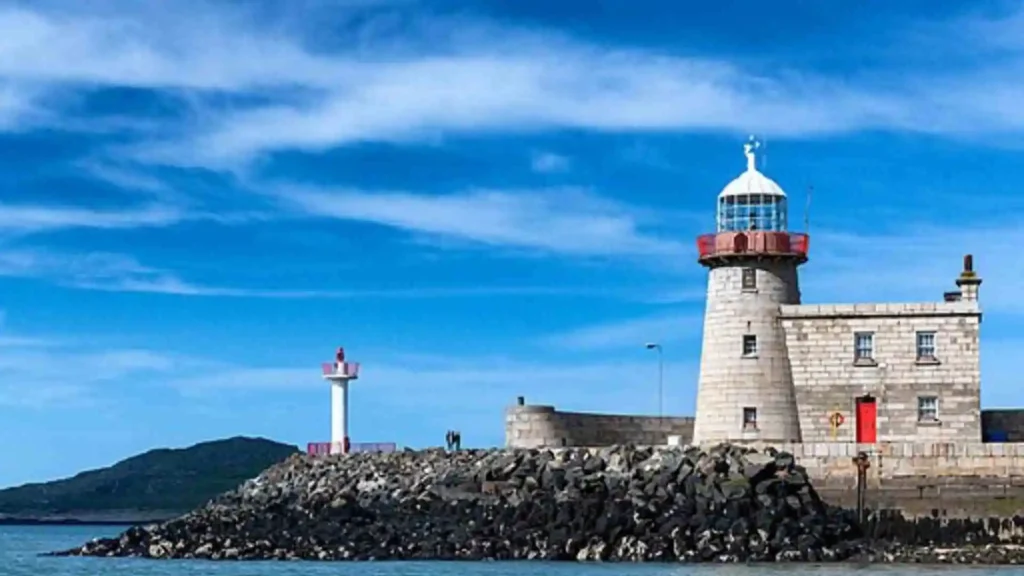
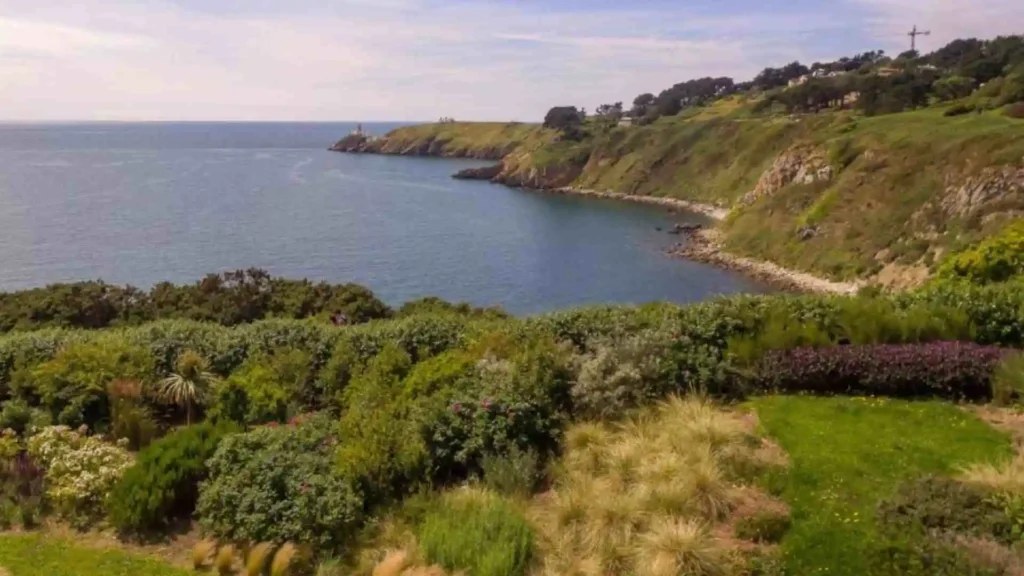
About 5 km from the start, you’ll see the white Baily Lighthouse, still active today. It is one of the most photographed landmarks on the Howth Head walk.
You can take time for a break here. There are seating and viewpoints overlooking the sea. This stage takes around 1 hour. The ground is rocky in sections but generally clear.
Stage 3: Inland Climb, Ben Of Howth Return
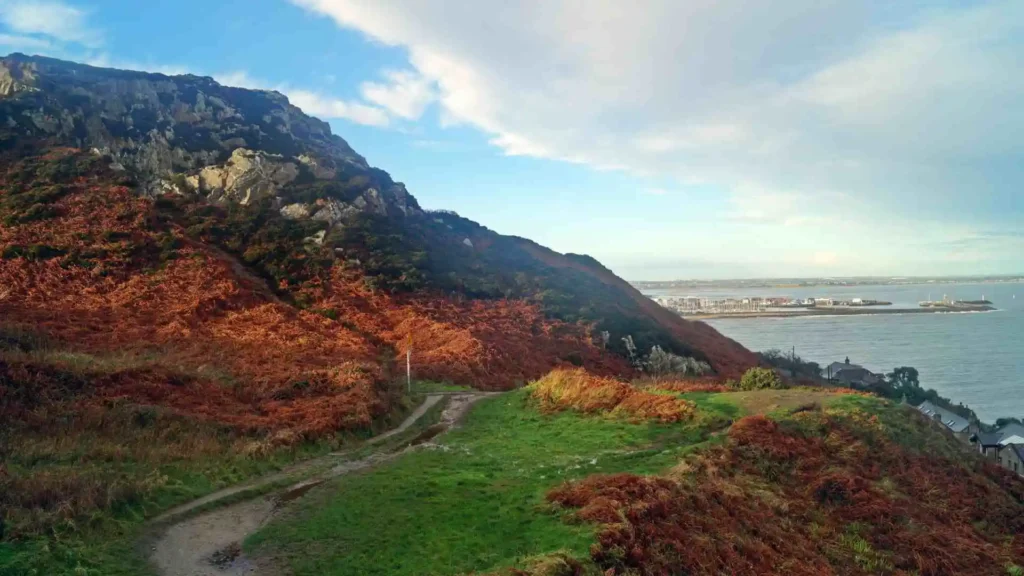
After the lighthouse, the route turns inland near the Summit car park. Here you climb gently onto heathland leading toward the Ben of Howth. This upland section is from where the trail earns its name. Boggy ground, frogs in spring, and a wilder feel.
You can expect panoramic views over both Dublin Bay and north toward Ireland’s Eye. The track is softer here, sometimes muddy after rain. Allow 1-1.5 hours for this inland loop of 5 km.
From the Ben of Howth, the route descends back toward the harbour through quiet lanes and housing.
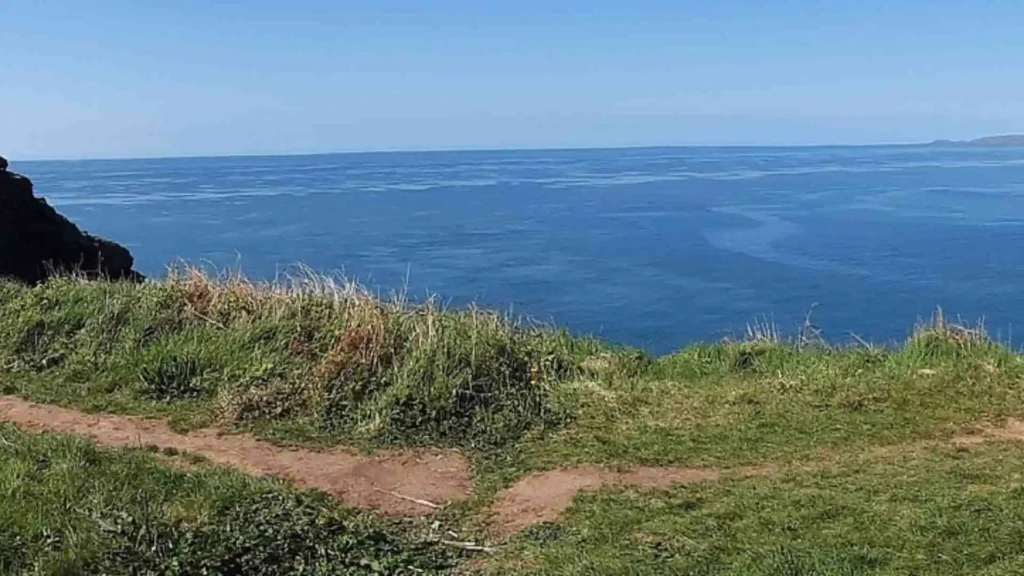
Waymarking And Map Notes
The Bog of Frogs Loop is marked with purple arrows on black posts. While mostly clear, some junctions near the golf course and heath can be confusing. Carry a paper map as backup.
Terrain, Difficulty and Gear Checklist
The loop covers mixed ground including paved paths, steep cliffs, village streets and bogland. Knowing what to expect along the way helps you prepare properly.
Gear To Bring
- Bring sturdy walking boots; cliff paths and inland bog can be slippery. Waterproofs are essential; coastal weather changes fast.
- Carry at least 1 litre of water and snacks, as there are no shops mid-route.
- For Dublin Ireland hiking trails like this, add sunscreen and a hat in summer, plus gloves in winter.
- A small first-aid kit and phone with a charged battery complete the kit.
Hazards And Safety Notes
- Stay away from cliff edges, sections of the Bog of Frogs Loop are eroded.
- Keep dogs on leads, the cliffs and livestock areas are risky.
- After rain, the inland bog gets muddy, so expect wet boots.
- Paths can be busy near the harbour, so walk single file.
- Always tell someone your plan if walking solo.
- Remember, weather changes fast on exposed headlands.
Time-Saving Tips and Alternative Options
Frankly speaking, not everyone has time for a 12-13 km loop. There are some shortcuts to suit your plans. So you can adjust the route to pair it with a meal in Houth village.
Red Rock Cutoff, Green Route
If you are short on time, cut the loop at Red Rock. This reduces the walk to about 8 km and 2 hours, still with great cliff views. The Green Route is another shorter option at 6 km.
Both let you sample the Howth walk without committing to the full loop. You miss the inland section but still see cliffs and lighthouses.
Combine With Lunch In Howth Or Train Timings
Finish your walk with seafood or pub food in Howth village. Many hikers plan the Howth Head peak with lunch stops. Check DART times before walking. Trains run every 15–20 minutes, but Sundays may be less frequent. If driving, time your finish before peak traffic.
Weather, Safety And Emergency Info
Weather on Howth Head can shift quickly. Also it is also useful to know what to do in case of an emergency.
Fast Weather Changes On Howth Head
The Bog of Frogs Loop is fully exposed. Sea mist, fog, and strong winds arrive quickly. Even on sunny starts, carry waterproofs and warm layers.
Avoid the cliff walk Howth in stormy weather as gusts are strong and visibility poor. Summer offers safer, longer daylight, but always check forecasts before heading out.
Emergency Contacts, RNLI, DART Access
In emergencies, dial 112. The RNLI station at Howth responds to sea incidents. For land issues, mountain rescue teams assist.
If the weather turns bad, the DART at Howth station is your fastest way back to Dublin. Keep local taxi numbers in case you finish at the Summit car park instead of the harbour.
Nearby Points Of Interest And Extensions
If you want more after the loop, several additional points are worth exploring.
- Baily Lighthouse viewpoint for sunset photos.
- Ireland’s Eye, an island you can boat to from Howth Harbour. It is an extremely popular trip for birdwatchers.
- The inland Jamestown Bog walk is an ideal quieter loop with less tourist foot traffic, more wildlife, and less people.
- To climb the Howth Head peak hike has some stunning views of the surrounding city and bay.
The supplementary outings present an interesting part of a single half-day hike or excursion. They also connect you to the broader cultural histories of the Howth peninsula.
Suggested Itinerary
Here’s a simple plan you can follow:
Start: From Howth DART Station, walk through the village toward the harbour.
Stage 1: Pass Balscadden Bay with views of Ireland’s Eye.
Stage 2: Climb the cliff path, taking in panoramas of Lambay Island.
Stage 3: Continue past the Bailey Lighthouse, one of Howth’s highlights.
Stage 4: Cross heathland and boggy tracks that define the loop.
Stage 5: Descend toward Howth Summit, enjoying wide coastal views.
Stage 6: Return via woodland paths and residential lanes back to the station.
Finish: End at the village for food, coffee, or a pint.
Resources, Maps and Downloads
Good navigation makes the Bog of Frogs Loop Howth Dublin much easier to enjoy. The official map shows the complete marked route with the junctions and elevation.
A GPX file can be downloaded and uploaded onto a GPS watch or phone app for digital navigation. The trail is well sign posted but inland boggy trails can be hard to navigate with mist.
It is always wise to have a paper map for Dublin Ireland trails no matter what time of year. If you plan ahead, you will hopefully stay on course. Thus you have more time to enjoy the sights of the cliffs and surrounding headland.