

Dublin Castle Visitor Guide: What to See and How to Plan Your Visit
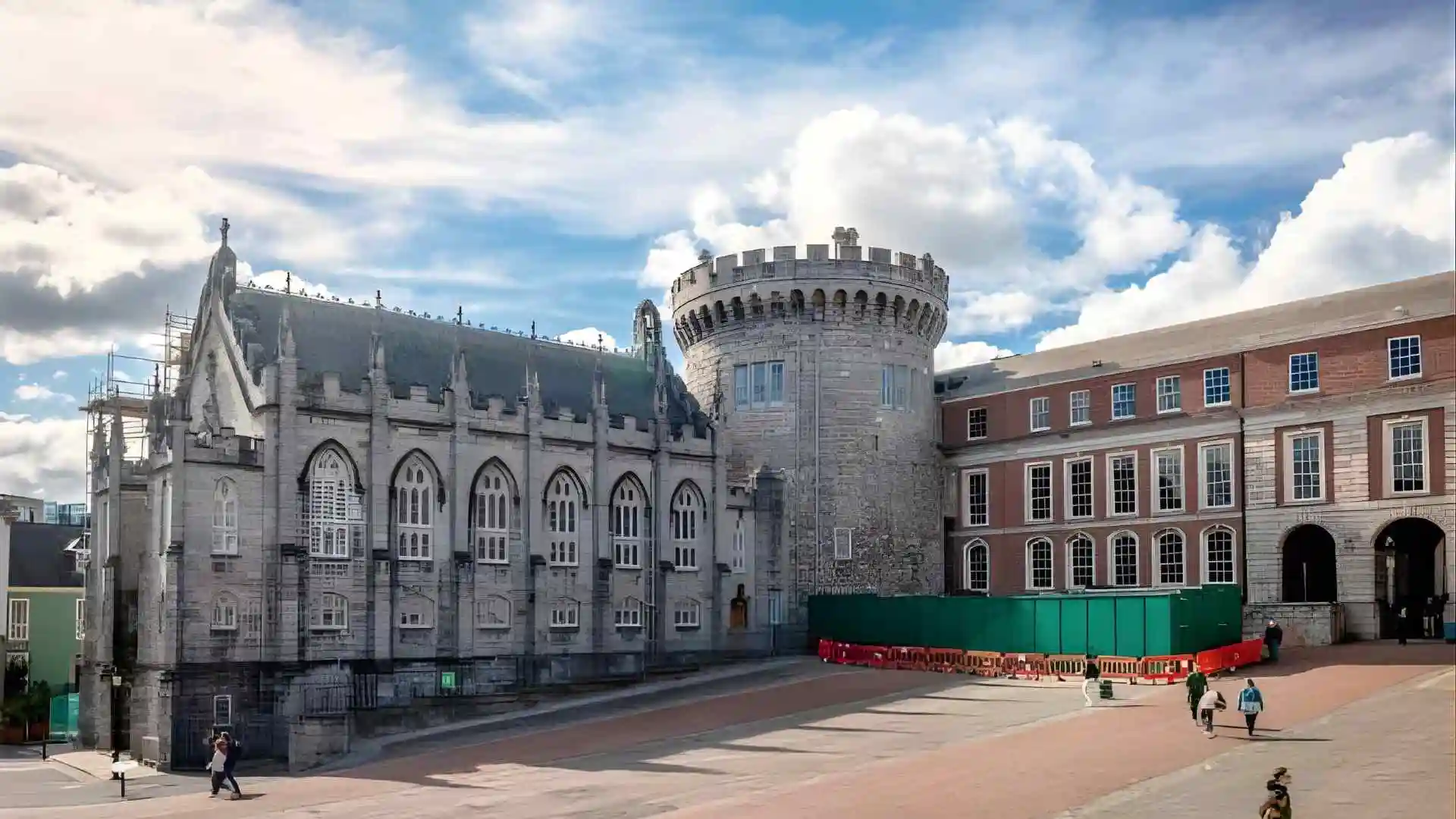
Located in the very centre of the metropolis, Dublin Castle is much more than a historical monument. It is the physical representation of the complex Irish way. Since its establishment as a Norman fortress till today, it has hosted state ceremonies.
This article summarises why the castle is important and what secrets you will get to know in its wonderful State Apartments and Mediaeval Undercroft. It also includes all the practical information you will require to pay it a visit, including tickets, times, and necessary tips for first-time visitors. You can read our guide on other castles in Ireland if you like.
Why Dublin Castle Matters
Dublin Castle has significance because it served as the seat of the English and then British rule in Ireland over the centuries. It has been more than 700 years since it became the tangible symbol of alien rule and control.
Its political existence reached its climax with the symbolic handover of the castle to Michael Collins and the Provisional Government by the last British Viceroy on January 16, 1922. This non-violent transfer of power served as a turning point in the history of Irish independence.
Dublin Castle’s history is still relevant today, as it is a prestigious location. It is the venue where presidential inaugurations, state dinners, and EU meetings are held. You must visit it in order to gain a deeper insight into the current dynamics of modern Ireland. Also, you can find other things to do in Dublin here.
A Timeline Through the Ages
The history of the site goes back to a settlement made by Vikings called “Dubh Linn” (Dark Pool). Construction actually started in the year 1204 under the orders of King John of England, making Dublin Castle a formidable mediaeval fortress.
Significant fires caused the rebuilding, especially after the fire in 1684. It completely changed it from a defensive building into the magnificent Georgian palace that we can see nowadays.
This architectural development, a Norman garrison to the seat of the administration of the Lord Lieutenant, is an important part of the Dublin Castle history timeline up to the modern age.
Architecture and Layout: From Fortress to Palace
The Dublin Castle layout is an indication of its historical progression and transformations. The old building foundations are combined with the grandeur of the 18th century.
However, very little of the mediaeval Norman castle is preserved, which is almost wholly in the form of the mighty tower of records and the undercroft dug out beneath the state apartments.
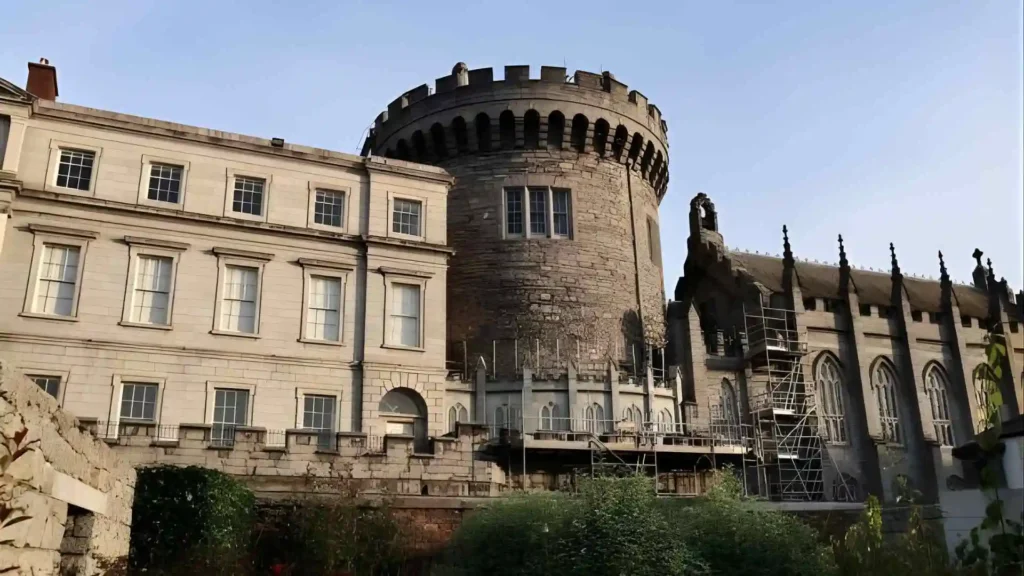
Other parts of the complex, constructed mainly since the great fire of 1684, are based on two large courtyards: the Upper Castle Yard (ceremonies) and the Lower Castle Yard (services).
During the Georgian era, there occurred the dramatic change of architectural design to the Neoclassical one. It can be traced in the great facade of the State Apartments. The medieval base with an 18th-century palace, is what makes the Dublin Castle a unique architecture.
Key Structures and Rooms You Must See
While the whole complex is important, certain structures hold far more significance than others. Here are some of the rooms and spots you must not skip in order to understand the history completely.
Record Tower / Medieval Tower and Undercroft
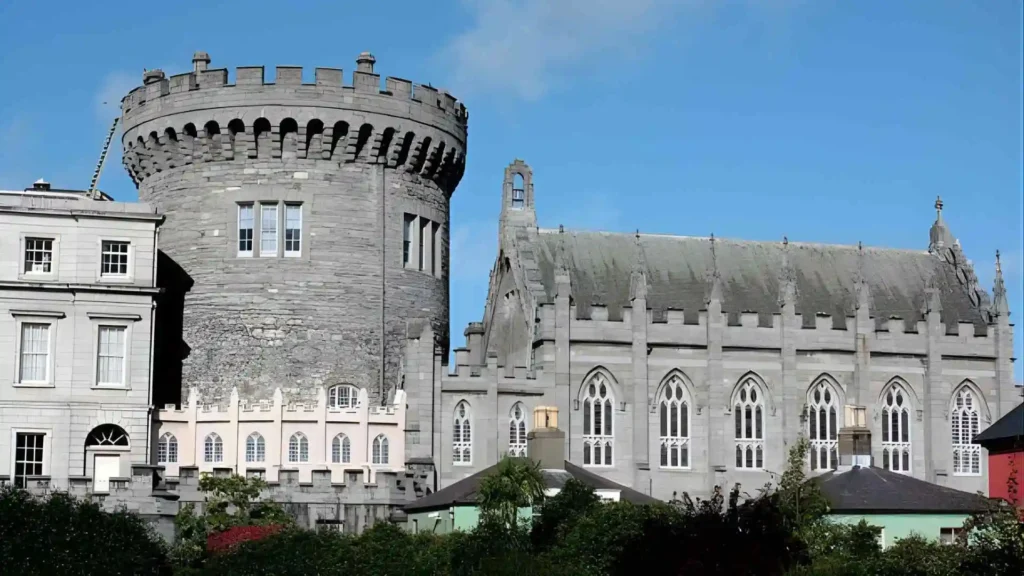
The only tower that has been substantially preserved as part of the original 13th-century Norman castle was the Record Tower. It originally fulfilled a defensive role.
The Dublin Castle Mediaeval Undercroft, which is located beneath the modern grounds, gives visitors a chance to pass through the foundations of the mediaeval castle walls. It offers a view into the ancient defensive moat and the actual Black Pool.
This underground floor, which is usually overlooked by the visitors, shows some of the key strata of the past and gives a physical touch with the Viking and early mediaeval history of Dublin.
State Apartments (St. Patrick’s Hall, Throne Room, Drawing Room, Corridor, etc.)
These are the formal, ceremonial rooms, which were the home of the Lord Lieutenant and his administrative centre. They symbolise the grandeur of 18th-century authority and wealth.
The best of all is doubtless the St Patrick Hall, the largest and prettiest-decorated room. It has a spectacular ceiling illustrating the essential events in Irish history and heroes, which is breathtaking.
Here, the President of Ireland is inaugurated every seven years. The throne room has a wonderful carved throne which was to be occupied by King William III. Walking through the grandiose State Apartments Corridor, one feels the might and influence that the British administration had on society prior to the handover of power in 1922.
When one sees the paintings and invaluable furniture in the drawing room, this impression becomes even more evident. The apartments are carefully maintained in order to narrate this multifaceted story.
Chapel Royal
The Dublin Castle Chapel Royal is a beautiful creation of Gothic Revival architecture and was built by architect Francis Johnston in 1814. Its exterior is well known due to its complex stonework and carved gargoyles.
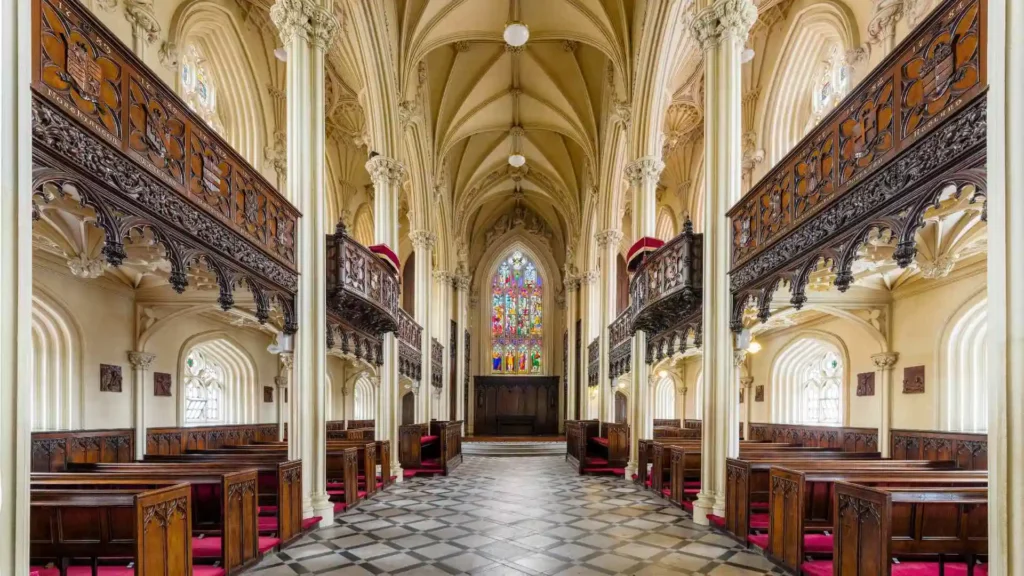
The interior includes elaborate fan vaulting, carved oak galleries, and almost 100 carved heads (some of historical personalities and authors). It is now a great and beautiful monument of religious architecture and workmanship from the first half of the 19th century. Though decommissioned as a place of worship, it is now used as a museum.
Gardens, Courtyard and Exterior Grounds
The large upper and lower courtyards provide the contrasting visions of the diverse facades of the castle. They also join together the historic and administrative parts of the castle.
The Dubh Linn Gardens, circular with the original Black Pool, is located behind the castle. This original site is identified by a special serpentine cut into the lawn.
The courtyards and gardens tend to be free access zones, enabling guests to enjoy the outside architecture, the Bedford Tower, and the overall atmosphere before investing in a paid tour.
Visiting Dublin Castle: Tickets and Times
When visiting Dublin Castle, one must make sure to have the latest information because it is a government facility and can be shut down due to state functions.
- Opening Hours: The castle is open (on a daily basis, Mon-Sun and on public holidays) 09.45-17:45. At 17.15 is the final tour admission.
- Average Length of Visit: It takes an average of 1 hour to visit the State Apartments and Undercroft with a full tour guide. The self-guided tour, by which you work at your own pace, takes about 30-45 minutes. It does not include the amount of time you spend in the gardens or courtyards.
- Booking Tips: It also means that it allows you to book tickets online as far ahead as approximately 15 days. Booking in advance is strongly advised. Online booking is highly recommended, particularly when you wish to have a guided tour. A few tickets are sold at the location, and they find their reservations taken up too fast, especially when the season is at its peak.
- Price of tickets (State Apartments Tours – 2025):
Self-service: €8.00 adult, €6.00 senior (60 and above), student (18 and above), child (12 to 17) €4.00, family (2 adults and 3 children) €20.00.
Adult €12.00, Senior/Student €10.00, Child (12-17) €6.00, under 12 free, Family €30.00.
Accessibility: The primary locations, such as the State Apartments and Chapel Royal, are accessible to all people through lifts and ramps. Nevertheless, to get into the Viking excavation site (where open), there is usually a brief flight of stairs to traverse.
Closure Notice: Being a governmental house, the opening and access to the castle can change at very short notice to allow official state events. Before going out of your accommodation, always check the official site to confirm the current status. Classical indigenous tongues have been supplanted by colonial languages that possess a more advanced cultural and political system.
Sample Visit Itineraries
Choose your Dublin Castle schedule according to the time and interest you have:
- Short Visit (1-2 Hours): You can dwell upon the key points only. Take a self-guided tour of the State Apartments, have a brief look at the Chapel Royal, and visit the courtyards. This works perfectly well when you are on a Dublin Castle one-day plan, and you have to visit numerous places.
- Full Visit (3-4 Hours): You can also explore the guided tour in order to get a deeper historical insight. Then, go through the Mediaeval Undercroft, stroll around the edges of the historic Dubh Linn Gardens, and see the great Chester Beatty Library, which is located on the castle grounds and contains a global treasury of manuscripts and books.
- Family/Relaxed Day: You can also have a mix of a self-guided tour and spend much time relaxing in the calm Dubh Linn Gardens and wandering around the free courtyards.
Conclusion
Dublin Castle is a place that tourists should not skip if they want to learn the political and architectural history of Ireland. It provides a distinctive and physical insight into the protracted shift from a colony to an autonomous republic. While walking through St Patrick Hall, or the Undercroft of the Viking days, makes you feel like you’re living through eight centuries of shifting history.