

Sliabh Liag Cliffs | Europe’s highest sea cliffs hidden in Donegal
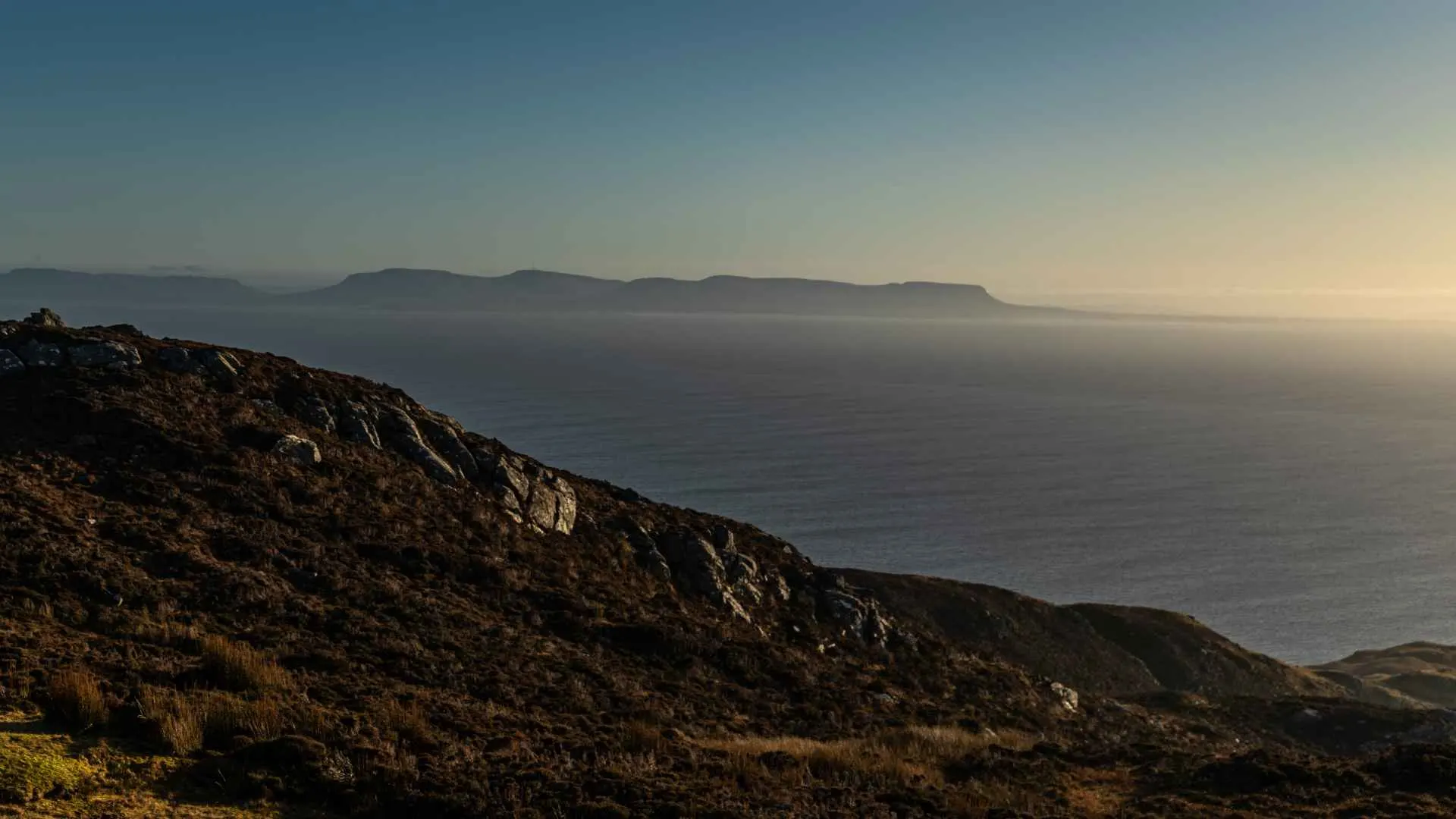
The jaw-dropping rock walls of the Sliabh Liag Cliffs tower almost three times higher than the Cliffs of Moher and plunge a staggering 1,972 feet straight into the roaring wild of the Atlantic Ocean.
When you’re looking to travel to County Donegal, you’re probably looking for a more authentic and rugged Irish adventure that is not as commercialised as you’d find in tourist traps.
So no matter if you’re planning a hike to the most popular trails or just finding a spot on a lesser-known viewpoint, this all-encompassing travel guide has got you covered with all the information you need to travel to the Sliabh Liag Cliffs.
What are the Slieve League Cliffs?
The Sliabh Liag Cliffs are known as one of the highest accessible marine cliffs in Western Europe.
These huge precipices of hard quartzite rock were created more than 300 million years ago, and are constantly changing colour with the changing Atlantic skies.
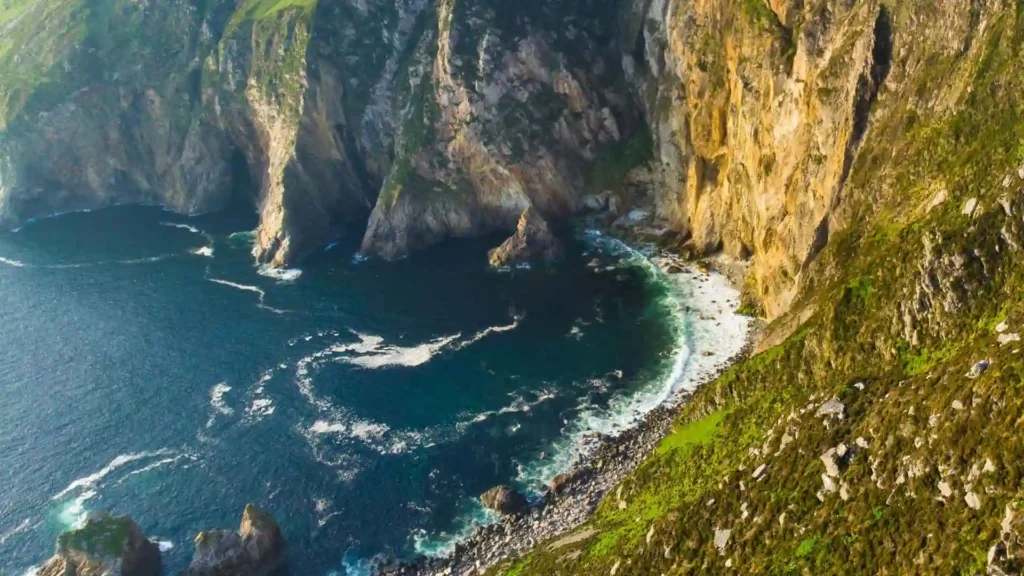
The cliffs are unlike those seen elsewhere in Ireland, as the sheer flat walls here have a dramatic appearance with layers of rich copper, gold and deep slate grey rock facing the sea and giving these cliffs a stained look.
Where is the Slieve League?
This is a magnificent natural landmark located in the far south-west corner of County Donegal and the far north-west part of Ireland.
The cliffs are situated in a colourful Gaeltacht, an officially designated area of Ireland where the Irish language, culture and folk music flourish daily.
Reaching the cliffs
Access is via the very scenic R263 coastal road that passes through the tranquil village of Carrick and heads for the inlet on the coast, Teelin.
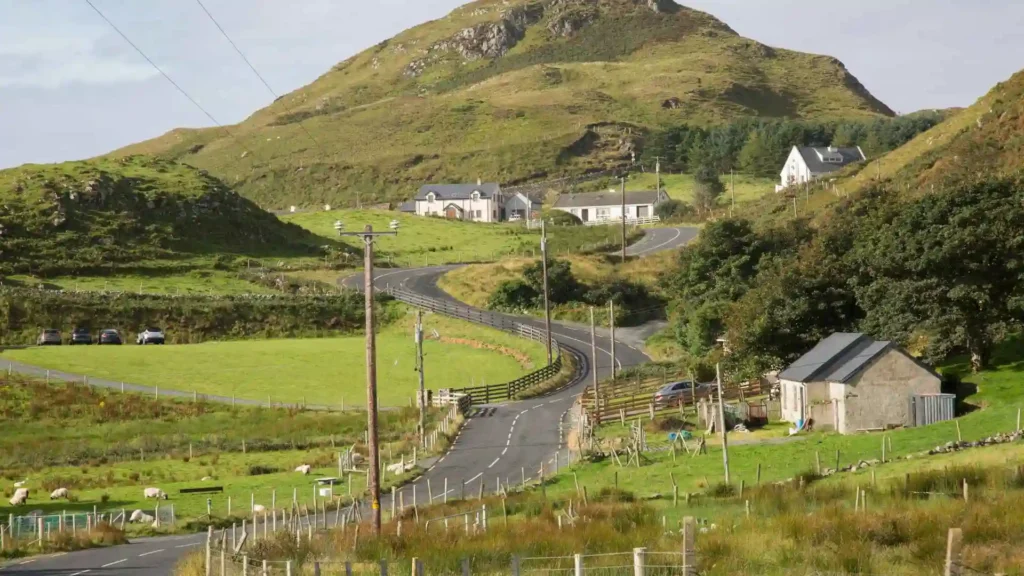
The final approach has country roads that wind and run single-file through peat-covered raw hillsides before suddenly leading into the expansive ocean.
Warning: A seasonal ranger gate prevents private vehicles from coming all the way to the cliff-edge parking area during the peak travel months. There is a lower-level visitor centre parking lot from which visitors must walk 2.2 kilometres to the main viewing platforms; walkers can take the shuttle bus for a small fee.
Clifftop thrills
Atop these giant cliffs, it is an extremely primal experience which immediately rouses your senses.
You’ll often be passing through low-forming sea clouds and hear the deep booming sound of Atlantic wave crests breaking on the rocks below you as a result of the extreme altitude.
The best Slieve League Cliffs viewpoint
The Bunglas viewpoint is the most beautiful panoramic viewpoint for taking photos or sightseeing.
This viewing terrace is the first one reached by the regional shuttle bus and is completely secure and unobstructed so visitors can soak it all in.
Your eye can reach all the way across Donegal Bay and clearly see the outlines of the flat tops of the Benbulben mountains in neighbouring Sligo, which can be clearly seen on very clear days.
From down below
It is best to radically change your approach to these cliffs and look at them from sea level to truly appreciate the dizzying vertical scale of these cliffs.
Seasonal boat cruises sail regularly from Teelin Harbour and offer passengers the chance to gaze straight up at 600 m of sheer rock walls.
Why do we like it?
Its uniquely unspoiled and untouristy nature is what makes this place so memorable.
The upper trails have no modern facilities to block your views or obtrusive barriers between you and the nature you are exploring, thus affording you the sense of a true and personal exploration.
Get your hiking boots on
While at the main paved viewing decks, high-quality hiking boots and windproof layers are a must if you plan on venturing off the trail.
The weather on the coast of Donegal is quite unpredictable – visibility can drop from miles to mountain fog in a few minutes, and rain can turn into a torrential downpour in a few moments.
The best ways to hike Slieve League Cliffs
1. Start from Teelin: The Pilgrim’s Path
The old Pilgrim’s Path runs down an inland valley floor close to the mountain, much less exposed to the sea breeze.
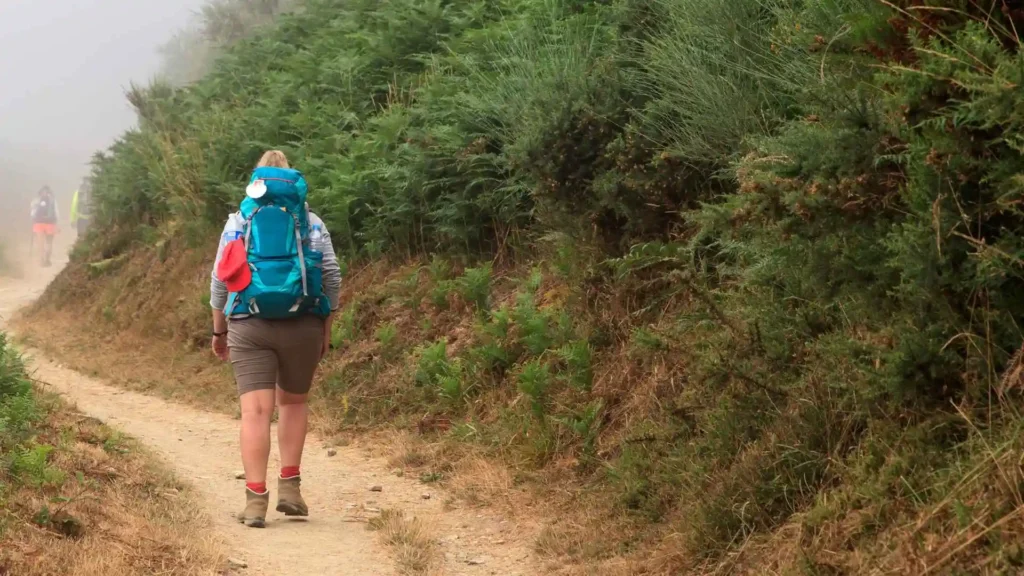
This is a historic trail that meanders along a mountain stream up the back of the ridges, offering safe access to high elevation without the fear of dropping down a cliff.
2. Start from the Bunglas viewpoint
The more exciting and straight-forward route from the Bunglas viewing point directly up along the mountain’s ocean-facing spine.
The first steep stretches of this trail are on well-maintained stone steps, and the latter part is a raw and challenging mountain track.
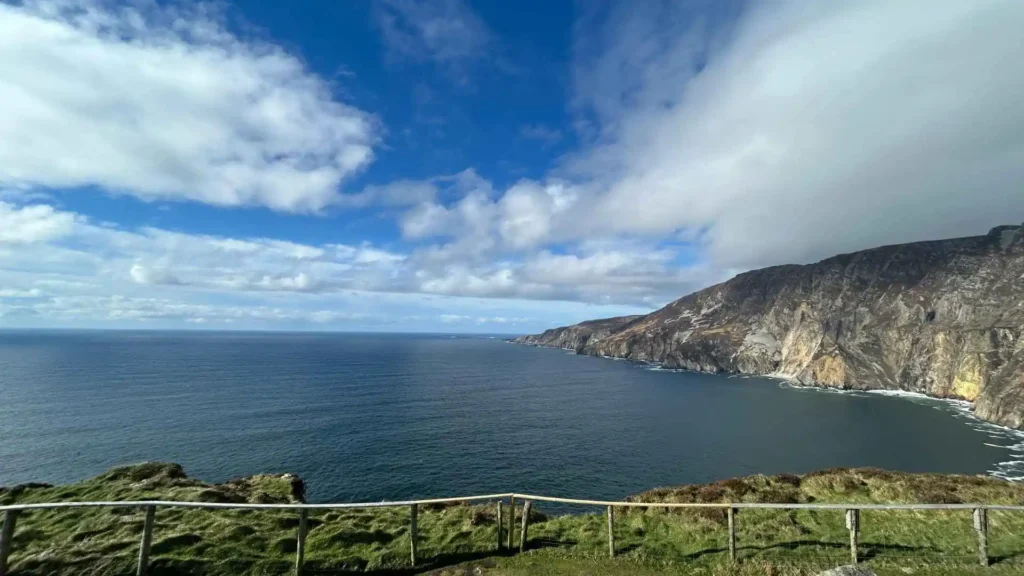
The upper cliff road ultimately guides walkers to the popular One Man’s Pass. This is a very high-level ridge of rock, only a couple of feet wide with literally hundreds of feet of sheer drop on either side. You must have a tremendous amount of experience in scrambling, and it should not be attempted in high winds, wet conditions or low visibility.
Historic footsteps and Slieve League history
The rugged landscape has been a place of deep spiritual worship, a defence outpost, and sanctuary for thousands of years.
Close to the peaks, you can tour the delicate remains of a Christian monastic complex, dating from the 5th century, which includes early monastic stone beehive huts.
Not far from the paths you will also see an intact watchtower with a square shape constructed by the British in 1804 to watch over the Atlantic coast for any signs of Napoleon’s invasion.
Food spots near Slieve League
Teelin
The warm village is located at the foot of the cliffs, an ideal place to dry out and re-fuel after a chilly walk in the mountains.
Boiling hot bowls of fresh seafood chowder, turf fires and old-time Irish music sessions are a regular feature of cosy local harbour pubs.
Killybegs
Killybegs is Ireland’s largest deep-sea fishing port and is just a short 15-minute drive inland.

This busy harbour town is known for its amazing seafood shacks, offering gourmet fish and chips, caught only a few hours earlier.
How to get to the Slieve League Cliffs?
As long as the following essential operational elements are taken into account, a successful day trip out to the cliffs is easy to organise:
Contact details
Address: Sliabh Liag Visitor Centre, Lergadaghtan, Teelin, Co. Donegal.
Phone: +353 (0)74 973 9077
Official Website: sliabhliag.com
Visit duration
Sightseeing Stop: Budget 1.5 to 2 hours if you take the shuttle bus to the Bunglas Viewpoint to take pictures.
Hiking Excursion: Set aside 4-5 hours if planning to do the difficult Pilgrim’s Path or all the way up the mountain.
Opening hours
Cliffs: Open 24 hours, 365 days. Mountain trails are open 24 hours/365 days.
Visitor Centre and Shuttles: Staffed centres and transport by bus are typically operated daily from 10:00 AM to 5:00 PM and until 6:00 PM in peak summer.
Tips from locals
Avoid the Tour Buses: The tour buses are at their busiest from 11:30 AM to 4:30 PM.
Countryside Respect: Mountain trails run through sheep farms that are in use – always be sure to shut farm gates securely and keep dogs on leads.
More to discover at Sliabh Liag (Slieve League)
Periodically turn your head down and admire the deep blue waters in the ocean below.
The strong currents that blow into Donegal Bay are a good feeding spot and cause huge basking sharks, fun dolphin herds and migrating whales to come close to the shoreline on a frequent basis.