
Irish Wolfhound in Ireland, Size, Temperament, History and Care Guide
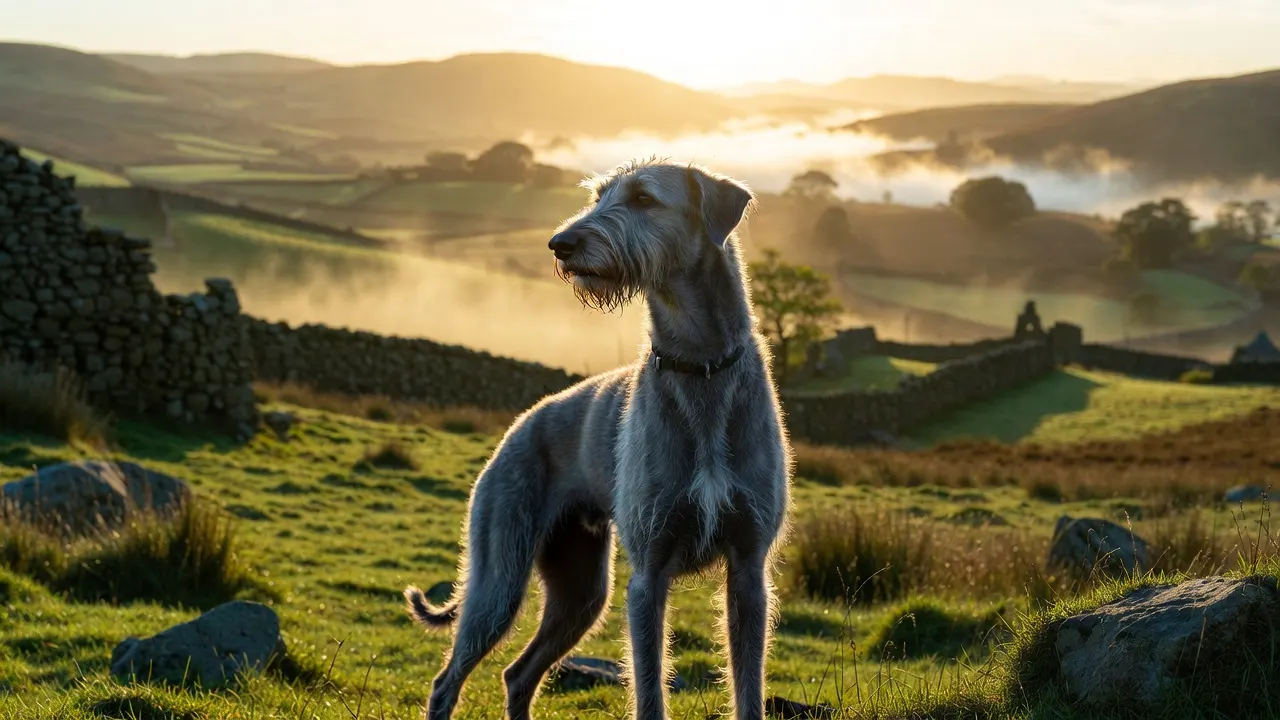
Ah sure look, if you have ever stood beside an Irish Wolfhound you will know straight away why this breed has such a special place in the hearts of us Irish. Known in our own language as the Cú Faoil, these dogs are not just big they are proper gentle giants that carry centuries of Irish history on their broad shoulders.
Tall, graceful, and with a coat made for the wild Atlantic winds, the Irish Wolfhound has been woven into our stories since ancient times. Whether you are thinking of bringing one into your home or you just want to learn more about this iconic breed, this guide will tell you everything you need to know.
The Rich History of the Irish Wolfhound
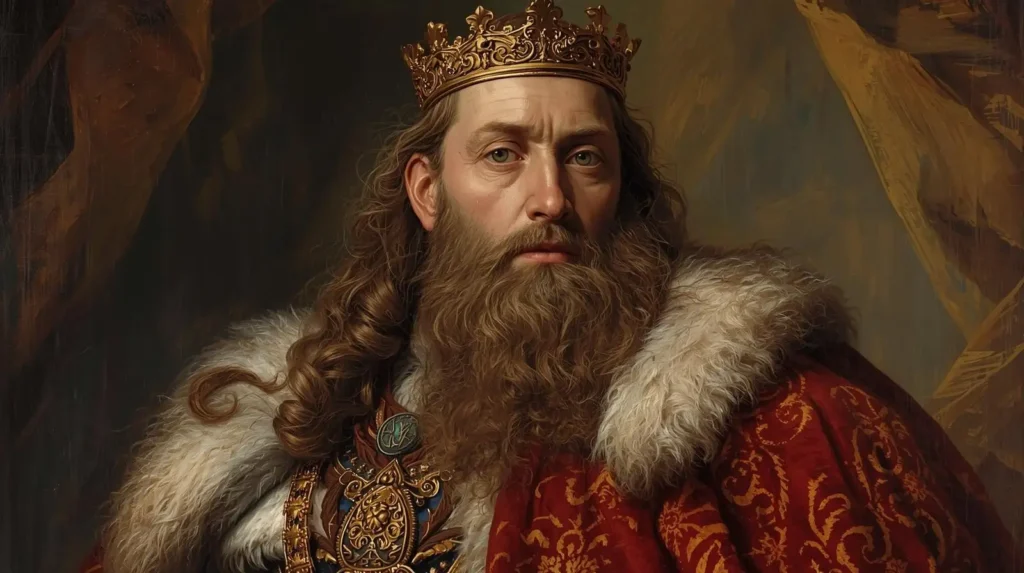
The story of the Irish Wolfhound goes back more than two thousand years. Even the Romans wrote about these mighty hounds with pure wonder as far back as 391 AD, calling them gifts fit for emperors. In old Ireland, the Cú Faoil belonged to kings and warriors. They were prized for their speed and bravery when hunting the wolves that once roamed our hills and forests.
By the late 1700s the last wolf in Ireland was killed on the slopes of Mount Leinster in 1786. With the wolves gone, the old breed nearly vanished as well. It was a British Army captain, George Augustus Graham, who saved the line in the 1800s. He carefully revived it by crossing the few remaining Irish hounds with Scottish Deerhounds and other strong breeds. Today the modern Irish Wolfhound still carries that proud ancient spirit, and many of us here at home regard it as a living symbol of Ireland itself.
How Big Does an Irish Wolfhound Get?
This is the question everyone asks first, and the answer always raises a few eyebrows. The Irish Wolfhound is the tallest dog breed in the world. A full grown male stands at least 79 centimetres at the shoulder and can easily reach 86 centimetres or more. Bitches are a bit smaller but still tower at a minimum of 71 centimetres. In weight, males start at around 54 kilograms, while some big lads go well over 80 kilograms when they are in good condition. Females are usually around 40 kilograms and upwards.
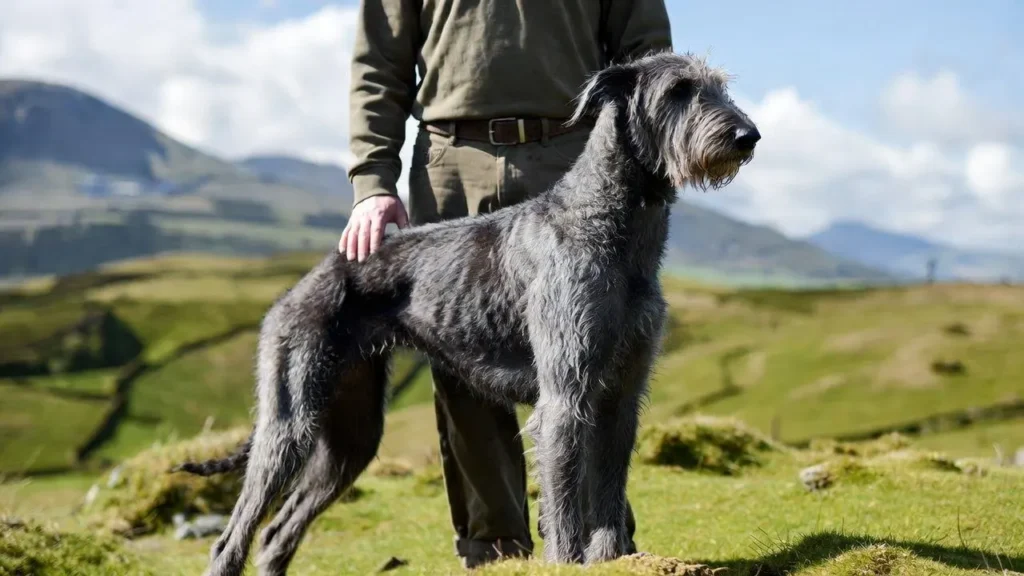
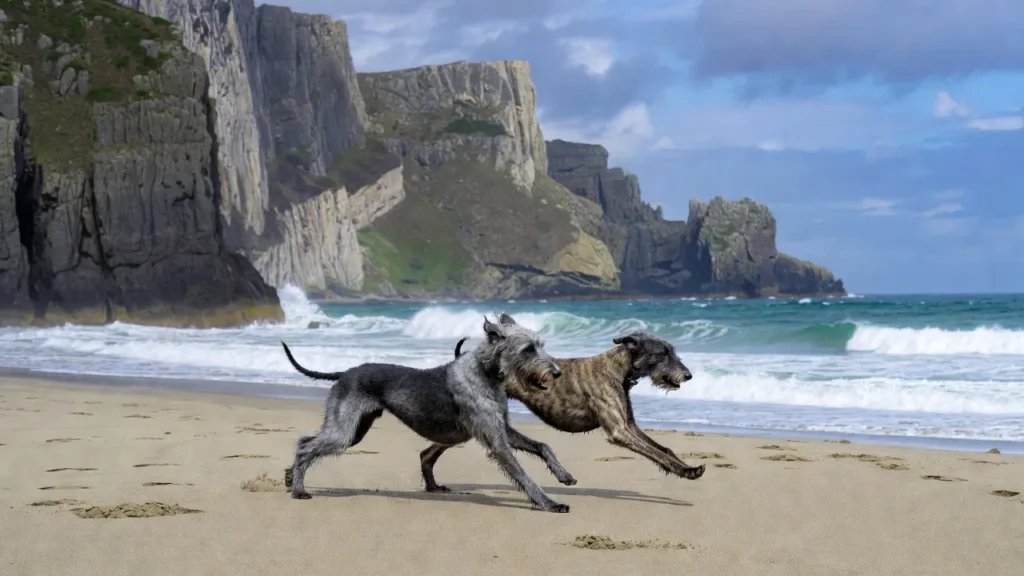
Do not let the size fool you though. They are built like athletes, long legged, deep chested, with a rough, wiry coat that comes in shades of grey, brindle, red, black, white or fawn. When one of these hounds stands up on its hind legs, it can look you straight in the eye at well over two metres tall. No wonder they stop traffic on every beach from Bundoran to Ballybunion.
The Gentle Temperament of These Giant Hounds
For all their size, the Irish Wolfhound is one of the calmest and kindest dogs you will ever meet. They are not yappy or nervy, and they make terrible guard dogs because they simply love people too much. They might let out a deep bark if something feels off, but their favourite pastime is stretching out in the house or lying in the garden with the family.
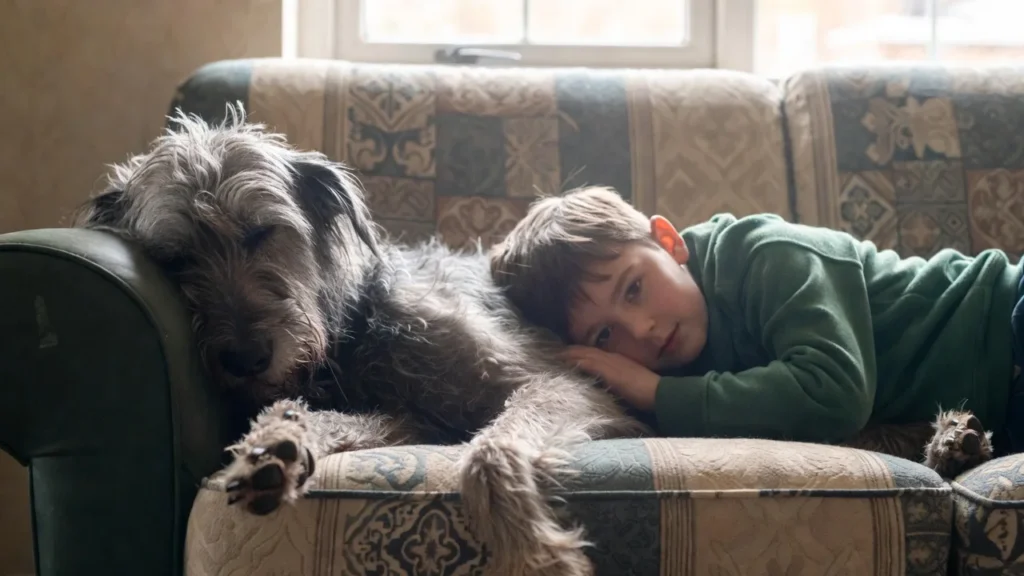
They are very patient with children, fiercely loyal to their own people, and surprisingly sensitive for such a big animal. Plenty of owners say their Wolfhound seems to know when someone in the house is having a bad day and will quietly rest that great head on their lap. They get on brilliantly with other dogs once introduced properly and are rarely aggressive. At heart, they are big softies, and that is why so many Irish families are mad about them.
Despite their huge size, Irish Wolfhounds are not included among restricted dog breeds in Ireland because they are widely known for their calm and gentle temperament.
Caring for an Irish Wolfhound
If you are lucky enough to have a Cú Faoil in your life, you will need a bit of space and a steady routine. They do not need to be run ragged every day, but they do enjoy a good hour or two of proper exercise, whether that is a long ramble in the Dublin Mountains or a gallop in a safe field down in Mayo. A decent garden or access to the countryside is ideal, but they are surprisingly content to mooch around the house once they have had their walk.
Grooming is fairly straightforward. Their rough coat needs a good brush two or three times a week to keep it tidy. They shed a moderate amount, so a quick hoover does the job. Feeding is very important, especially when they are growing fast as pups. You need the right large breed food to support their bones without letting them get too heavy too quickly.
Health and Lifespan of the Breed
Like most giant breeds, the Irish Wolfhound does not live as long as smaller dogs, usually between six and eight years, though some reach ten with proper care. The main things to watch are heart issues, especially cardiomyopathy, and bloat, which can be a problem for deep chested dogs. Regular vet checks, a sensible diet and keeping their weight right make a big difference. Hip problems and certain bone cancers can also appear, so good breeders test their dogs carefully.
The lovely thing is that with the right care and plenty of love, these hounds stay fit and happy right into their later years. Many Irish owners say the time you get with them is worth every bit of extra effort.
Is an Irish Wolfhound Right for Your Home
Not every house is suited to a dog this size. If you live in a small flat or you are out at work all day, it might not be the best fit. They do best with families who have enough space and time to keep them company. Households with older children, people who love long country walks, or anyone looking for a quiet but very affectionate companion will find the Irish Wolfhound a brilliant friend.
They are not cheap to keep either, between food, vet bills and the space they need, you have to be realistic. But for the right home, they become family members you will never forget.
The Irish Wolfhound in Modern Ireland
Here at home the Cú Faoil is more popular than ever. You will see them at dog shows, on beaches from Kerry to Donegal, and even on special Wolfhound Experience days where visitors can meet the breed up close. They remain a true symbol of Irish strength and kindness, and the Irish Wolfhound Club of Ireland works hard to keep the breed healthy and true to its roots.
Whether you are a lifelong dog lover or you are only just discovering the breed, one thing is certain: once an Irish Wolfhound walks into your life, you will understand exactly why we call them Ireland’s majestic gentle giant.