
Best Dublin neighborhoods for Tourists, Families & Expats
A Dubliner will not merely tell you, when you ask him or her where they are from, that it is Dublin. They will probably tell you the name of a particular village or even a postal code, which will have its own story. Dublin is not an urban sprawl; it is a mosaic of different communities, each of which has its own persona, which sets it apart from the neighbouring one.
These Dublin neighborhoods are crucial to anyone attempting to find their footing here. To the tourists, it is between a destination and a secret. To those who are moving here, it is about finding a tribe and a manageable commute.
The historic division of the city is one of the first things that is going to strike you: the River Liffey is dividing Dublin into Northside and Southside. On top of geography, there is the system of postal districts, which assigns odd numbers to the North (Dublin 1, 7, 9) and even to the South (Dublin 2, 4, 6), which serves as a shorthand for locality.
How Dublin is Geographically Divided
The Liffey forms the spine to have a feel of the Dublin city layout. The city is emanating centrally from the Inner City (walkable core) to the green suburbs and, ultimately, the rocky shore.
North vs. South Dublin Neighborhoods
Historically, the Southside was regarded as being the nicer half of the city, the more Victorian part, whereas the Northside possessed the gritty, authentic core of the industrial city of Dublin.

Today, the lines have been beautifully blurred. You will have world-class gastropubs in Northside Stoneybatter and historic social houses in The Liberties on Southside.
- The Inner City: D1 and D2. The large museums, Grafton Street and the GPO are found here.
- The Wider Suburbs: Zones such as Terenure or Glasnevin are more spacious and are the places families prefer.
- The Coastal Fringe: Dublin is special in the sense that you can be in a 30-storey office at 5:00 PM and on a wind-blown pier at 5:30 PM.
Central Dublin neighborhoods (Walkable Areas)
Taking a pair of comfortable shoes and a day off, these are the best neighborhoods in Dublin city centre where one will find the most energy-intensive in the city.

Temple Bar
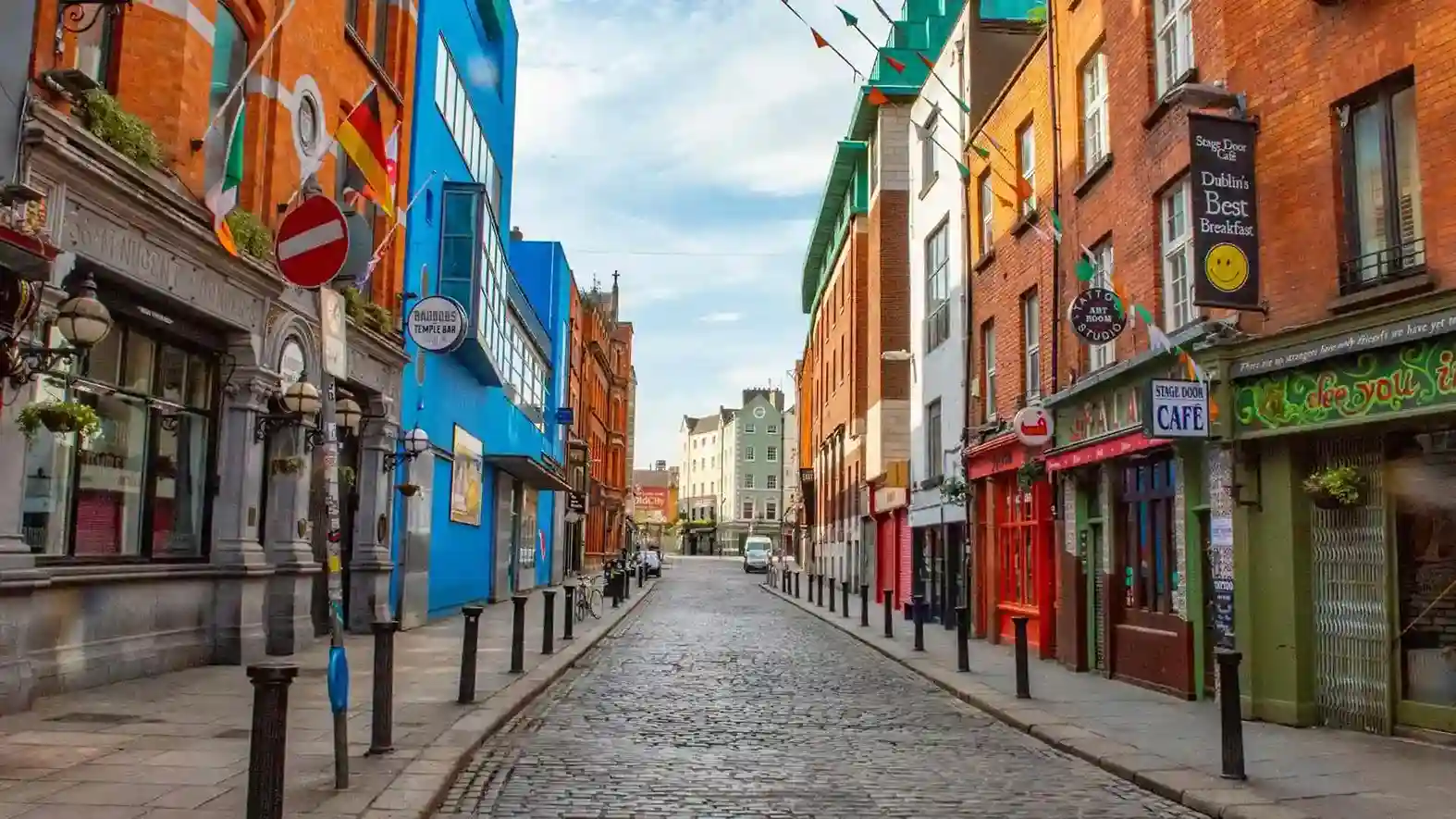
Temple Bar is often referred to as the tourist quarter; however, in fact, it is the official Cultural Quarter of Dublin. It is true that the pints are costly, but the Irish Film Institute and dozens of independent galleries are to be found in the narrow cobblestone alleys.
- The Aura: Buskers, neon lights and nightlife.
- History: It is preserved as a mediaeval street pattern, having been spared from being turned into a bus depot in the 1980s.
- Local Recommendation: Do not go to the central square to have a drink; go to The Crane Lane or use Temple Bar Food Market on a Saturday to eat an artisan lunch.
The Liberties
It is situated in Dublin 8, which is, perhaps, the most Dublin component of Dublin. It is where the spirit of the working class comes in contact with the contemporary craft revolution.
- History and Culture: It was the residence of the Liberty of the laws of the city several centuries ago. It is the centre of the whisky trail of Dublin today.
- Sights to See: The largest in the room is the Guinness Storehouse; however, the Roe & Co. or Teeling Distillery can provide a smaller-scale view of Irish alcohol.
- Drink/Eat: Go to Groundstate to have a coffee or Liberty Belle to have a pint and witness what the local community does.
Smithfield
To the north of the Liffey, Smithfield is no longer a historic cattle market but a smooth, open-air plaza which forms a gateway to the contemporary Northside.

- The Atmosphere: Metropolitan, large and unobtrusive.
- Sights: The Jameson Distillery Bow St is the major tourist attraction, but the Lighthouse Cinema is the actual centre of the neighbourhood, which is frequently referred to as one of the best cinemas in the world.
- Local Tip: Street art in the streets off the main square is some of the best. There are some to be found in the alleys off the square.
Ranelagh and Rathmines
These two gems of Southside are technically suburbs. However, they are so close to the center that they seem a part of it.

- Ranelagh: A “foodie” heaven. It consists of one major street with some of the best brunch joints and fancy bistros in the city.
- Rathmines: A little less conventional, a little more welcoming of students. It is incredibly vintage, featuring Stella Cinema (a restoration of a 1920s theatre).
- Atmosphere: Green streets, red brick buildings, and a large concentration of young professionals.
Northside Neighborhoods
The Northside is also experiencing a colossal cultural cool-down, with old streets forming the most desirable postcodes in the city.
Drumcondra
Located on the path to the airport, Drumcondra is a residential hub of colossal sporting throbs.
- Local Life: It hosts Croke Park, the giant stadium of Gaelic Games. During the matches, the entire place is transformed into a sea of jersey colours.
- Transport: it is the dream of a commuter due to excellent bus connections and the presence of a unique train station.
- Green Space: The National Botanic Gardens is a brief stroll, a good way to get out of the urban hustle.
Phibsborough
At the end of the canal is Phibsborough (or Phizz-boro to the locals), which is one of the coolest neighborhoods in the world.

- The Ambience: A blend of brutalist and Victorian architecture. It is homespun and real.
- Canal Walks: The Royal Canal greenway is ideal for walking on Sundays.
- Local Tip: Go to Bang Bang, which is a local deli/cafe and hangout and sells locally roasted coffee and used clothes.
Stoneybatter
Assuming Phibsborough is the cool kid, Stoneybatter is the older brother of the artist. The Dublin neighbourhood resembles a real village. Terraced houses are small, and the community is very close.
- Food Scene: It is considered to have the best local food scene in the city. From L. Mulligan, Grocer (craft beer and scotch eggs), to Grano (authentic Italian).
- History: It is dubbed the Cowtown because in the past, cattle were herded through this area to their markets, but it still has a close-knit street plan.
Coastal and Suburban Neighborhoods
The sea is the best luxury of Dublin. These coastal locations are the total opposite and can be a relaxing experience if you need to get out of the “Big Smoke” of life.

Sandymount
Sandymount is a mere few stops on the DART (seaside railroad of Dublin) to the city centre, but Sandymount is a classy seaside resort.
- Atmosphere: High-class and relaxed.
- Sandymount Strand: This is a huge stretch of beach that has been mentioned in the book Ulysses by James Joyce. It is the ideal spot in the city to take an extended, thoughtful stroll.
- Food: The village green is lined with fancy cafes and wine bars such as Buvette.
Clontarf
On the north side of the bay, there is the well-known Battle of 1014 in Clontarf. However, nowadays the prominence of the bay is more popular with its gorgeous promenade.
- Walking Routes: The 5km promenade has a bay view of the Poolbeg Chimneys (the most famous landmark of Dublin). See our best walks in Dublin guide.
- Local Life: It is a highly family-friendly neighbourhood full of good schools and pubs such as The Yacht.
Kilmainham and Gallery Quarter
Although it is not a coastal place, Kilmainham is a suburban resort in the city.
- History: This is dominated by the Kilmainham Gaol, which is a former prison and is currently a strong museum of Irish independence.
- Art: The Irish Museum of Modern Art (IMMA) is located in the beautiful Royal Hospital Kilmainham with formal gardens.
- The Vibe: Calm, old-fashioned and green.
Howth (The Extended Coastal Village)
Howth is a peninsula on the northern end of Dublin Bay. It is the furthest away but the perfect end-of-day trip neighbourhood.
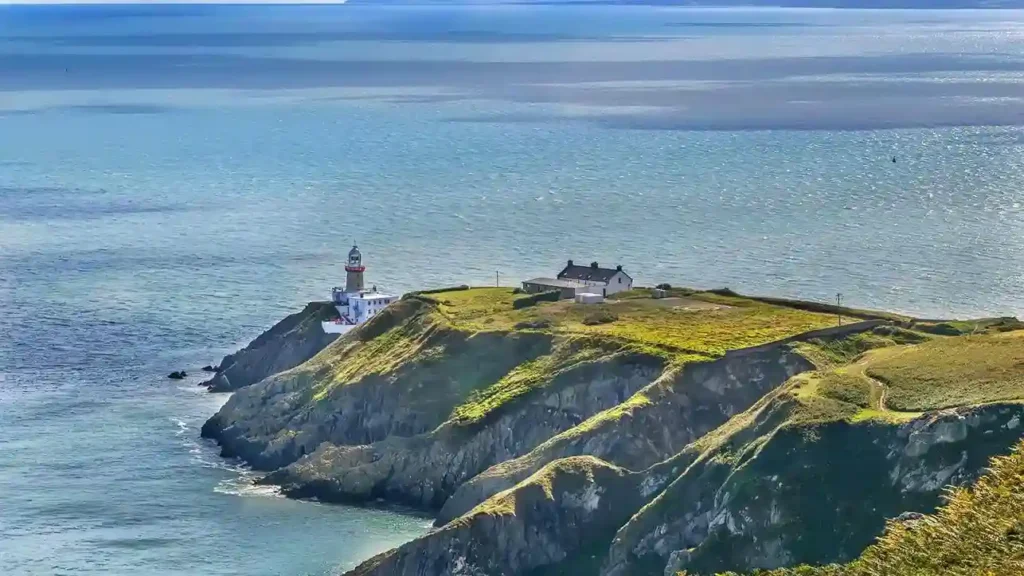
- Activities: The Howth Cliff Walk is an amazing view into the Irish Sea and the island known as the Ireland Eye.
- Seafood: Seafood restaurants and fish markets are all along the West Pier, with the catch literally a few feet off your plate.
- Atmosphere: A busy, salty fishing village.
Best Neighborhoods for Specific Audiences
Some of the Dublin districts will be more suitable to you than others, depending on the reason you are here.
For Tourists
To walk everywhere and visit the main attractions, Dublin 2 (South City) or Dublin 7 (Smithfield/Stoneybatter) would be better.
Why? You will not spend a fortune on transportation, and you will be 15 minutes away from the Book of Kells, the Castle and the best pubs.
For Families
The best options would include places such as Clontarf, Drumcondra and Terenure.
Why? They are close to big parks (such as Phoenix Park or St Anne’s), the crime rate is low, and schools are rated as the best in the city.
For Expats & New Residents
New entrants in the tech sector are well served by the Docklands (Dublin 2/4) or the Grand Canal Dock (known as the Silicon Docks).
Why? They are living in modern apartments, the community is global, and you can walk to the European headquarters of Google, Meta, and LinkedIn.
Tips for Choosing the Right Neighbourhood
Whether to live or stay in Dublin or not, in most cases, is a matter of trade-off between price and distance.
- Transport: Find a location that is close to the DART (coastal train) or the LUAS (tram). Dublin buses are wonderful but are slow during peak hours.
- The Walkability Factor: Dublin is a small city. You will probably not require a car when you dwell in D7 or D8.
- Safety: Dublin is, as a whole, quite safe. However, some areas, especially the centre of the city, might be patchy. Always use the main streets that are well-lit at night.
Decision Checklist
- Does it have a Luas/Dart station within 10 minutes of it?
- Does it have a local grocery within walking distance?
- Are there greens around (Dublin 7 to Phoenix Park, Dublin 3 to Clontarf promenade)?
Conclusion
It is necessary to be ready to cross the Liffey and go outside the main streets of O’Connell Street and Grafton Street to really discover Dublin neighborhoods. It is a city of contrasts, and the secret of its charm is in its diversity. It is the history dipped in whisky of The Liberties, the chic brunch spots of Ranelagh, or the windswept cliffs of Howth. Dublin is not a place to visit; it is a bunch of tiny towns that are almost ready to adopt you as their own.