
The Best Food in Ireland for Visitors, from Breakfast to Seafood
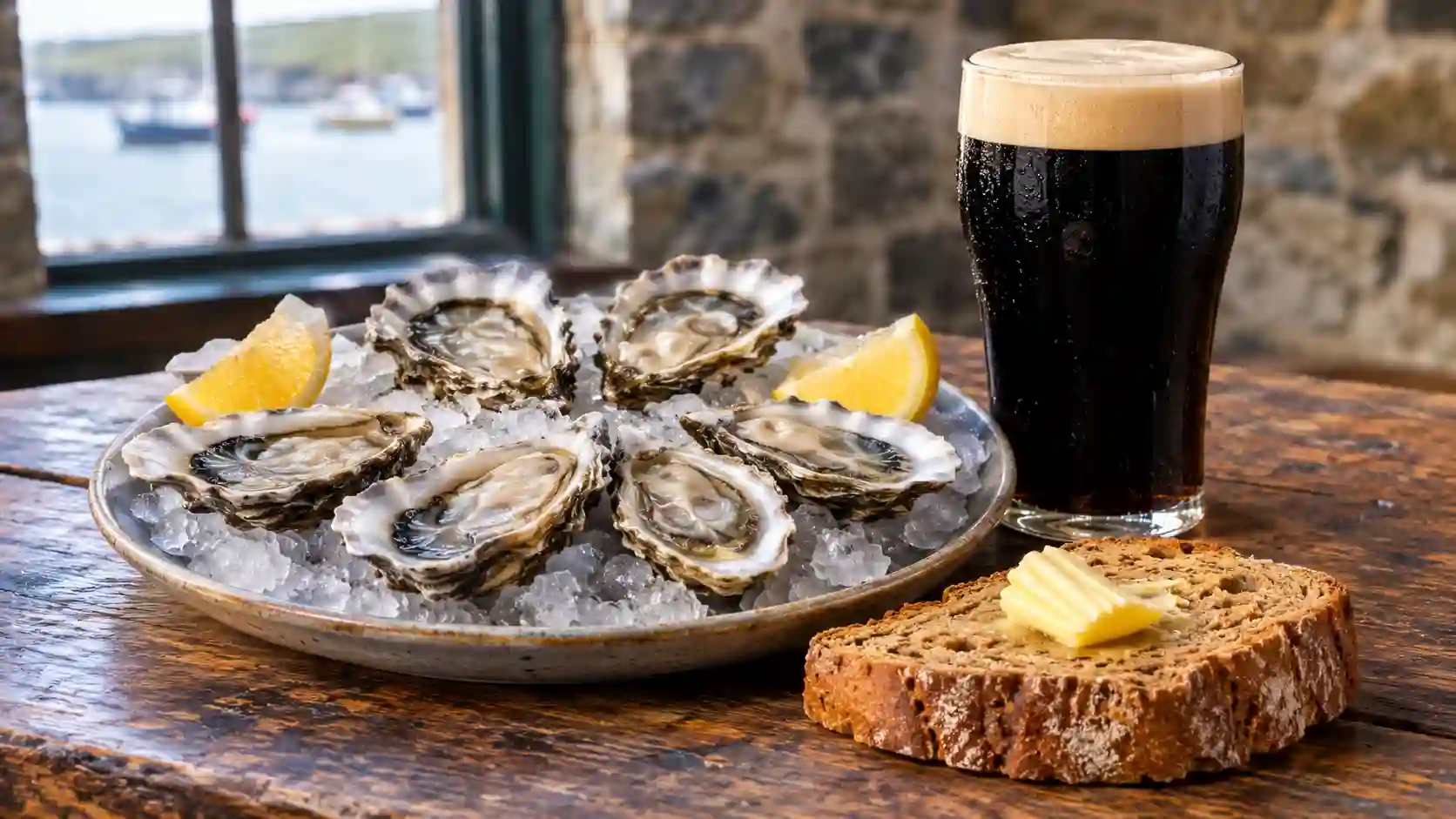
Most visitors expect potatoes and stew in Ireland, then a plate of sweet oysters lands beside a pint of stout. The old stereotype disappears in one bite.
If you search for the best food in Ireland, you probably feel torn between classic comfort dishes and the new restaurants everyone talks about. You want real flavour, fair value and a clear idea of what locals actually order.
This guide gives you exactly that. You learn which dishes deserve a place on your table, from a full Irish breakfast to seafood chowder, Waterford blaa and a proper pint. You also see how Michelin stars, protected food names and festivals fit in, plus clear tips on tipping and allergens. By the end, you order with confidence in any Irish town.
Quick Facts
| Fact | Detail |
| National dish | Irish stew |
| Classic breakfast | Full Irish with rashers, pudding and brown bread |
| Signature seafood | Oysters, mussels and chowder |
| Signature drink | Guinness |
| Protected Irish food names | Ten registered food names |
| Michelin 2026 | New first stars for Forest Avenue and The Pullman |
| Restaurant tip | About 10% when no service charge appears |
| Currency | Euro (€) |
What Defines the Best Food in Ireland
The best food in Ireland starts with ingredients, not tricks. Cattle and sheep graze on grass for much of the year, and boats land fresh fish and shellfish around the coast. Cooks keep the treatment simple: butter, salt, a little parsley and plenty of patience. You taste the source in every plate.

Protected Irish Food Names
Ireland protects a short list of foods under European Union rules. The Department of Agriculture, Food and the Marine lists ten registered food names, including Connemara Hill Lamb, Imokilly Regato cheese, Sneem Black Pudding, Waterford Blaa, Clare Island Salmon, Timoleague Brown Pudding and Irish Grass Fed Beef. Irish whiskey, Irish cream and Irish poitín hold separate spirit protections. Look for these names on menus and labels, because they tie each product to its home region.
Irish Breakfast Favourites
Breakfast gives you the fastest route to real Irish flavour. Four items matter most, and a fifth makes a handy takeaway.
Full Irish Breakfast
A full Irish breakfast gives you rashers, sausages, eggs, grilled tomato, mushrooms, baked beans, black and white pudding and a slice of brown bread or toast. Hotels and B&Bs plate it up every morning, and cafés serve it all day. Order tea alongside it. In Northern Ireland, the Ulster fry adds potato farls.
Black Pudding
Black pudding is a sausage made with pork, blood and oatmeal, and it sits at the heart of the fry. White pudding skips the blood. Two names carry EU protection: Timoleague Brown Pudding from Cork and Sneem Black Pudding from Kerry. If blood sounds daunting, try one slice beside your egg.
Soda Bread
Soda bread rises with bread soda and buttermilk instead of yeast. The result is a dense, slightly tangy loaf. Brown soda bread with wholemeal flour is the everyday version, and white soda bread suits jam. Spread on Irish butter and you have the simplest plate in the country.
Waterford Blaa
The Waterford blaa is a soft, floury white roll. Bakers make it from just four ingredients: flour, yeast, salt and water. The roll traces its roots to the French Huguenot settlers of the 1690s, and it now holds EU protected status. Locals eat it with butter, or with rashers and egg for breakfast.
Breakfast Roll
The breakfast roll packs the fry into a fresh bread roll, usually with sausage, rasher, egg and a spoonful of sauce. Many delis and forecourt shops build them to order. It makes a handy start before a long drive or a coastal walk.
Hearty Pub Mains

Pub kitchens carry the comfort food. These seven dishes show what Irish cooking does best on a cold, wet evening.
Irish Stew
Most people call Irish stew the national dish of Ireland. Cooks traditionally prepare it with mutton or lamb, potatoes and onions, and some add carrots or a splash of stout. Order it on a wet evening beside a pub fire. Expect plain, deep flavour rather than spice.
Bacon and Cabbage
Bacon and cabbage is the authentic Irish classic, not corned beef and cabbage. Cooks boil a joint of bacon, serve it with floury potatoes and cabbage, and pour parsley sauce over the top. Irish menus rarely list corned beef, so skip it and try this instead. ourescapeclause
Guinness Beef Stew
Guinness beef stew simmers beef with carrots, onions and stout until the meat falls apart. The stout adds a deep, slightly bitter sauce that mashed potato and brown bread soak up well. Pubs list it through the colder months, and many bake the same filling under pastry as a pie.
Dublin Coddle
Dublin coddle cooks sausages, bacon, potatoes and onions together in one pot. It belongs more to home kitchens than restaurant menus, so ask at traditional Dublin pubs whether it is on today.
Boxty
Boxty is a potato pancake built on grated raw potato and flour. Cooks fry it until crisp outside and soft inside. It arrives plain at breakfast or wrapped around fillings at dinner. It belongs especially to the northwest of Ireland. Try it with smoked salmon. hoteles
Fish and Chips
Irish chippers fry fish in a light batter and serve it with thick chips, salt and vinegar. Some add tartar sauce or mushy peas. The chipper also sells curry chips and battered sausage, which count as proper late night food.
Carvery Lunch
A carvery lets you pick roast meat carved fresh at the counter, then add potatoes, vegetables and gravy. Hotels and pubs run them at lunchtime. Expect several kinds of potato on one plate and generous portions.
Seafood From Irish Waters

The coast gives you the freshest eating. Order seafood near the sea and ask what arrived that morning.
Oysters
Irish oysters taste briny and clean, and many people pair them with a creamy pint of stout. Galway hosts an oyster festival in September, and Connemara runs a July showcase of local chefs and producers. Sligo also draws food lovers for its oyster producers.
Mussels
Mussels grow along the Irish coast and arrive in a pot with white wine, garlic and cream, or sometimes stout. Order a bowl with brown bread to soak up the broth. Mussels appear on menus far more often than clams, which are rare.
Seafood Chowder
Seafood chowder blends fish, shellfish and cream into a thick, warming soup. Pubs and cafés each have their own version, so compare a few on your trip. A good bowl comes with fresh brown bread and real chunks of fish rather than a thin broth.
Smoked Salmon
Smoked salmon appears at breakfast, on brown bread and beside boxty. Irish smokehouses smoke the fillets over wood, and shops sell it in packs for the journey home. Look for Clare Island Salmon, which holds EU protected status.
Tea Time Favourites

Tea time brings the dairy and baking that Ireland does so well.
Irish Butter
Irish butter tastes rich and creamy because dairy herds graze grass for much of the year. The colour runs golden. Spread it thick on soda bread, melt it over potatoes or taste it on a warm scone.
Irish Scones
Irish scones come soft and crumbly, either plain or with sultanas. Serve them warm with butter, jam and cream beside a pot of tea. Plain scones let the butter shine, while fruit scones fill the afternoon tea tray.
Barmbrack
Barmbrack is a sweet loaf packed with sultanas and raisins. Slice it, butter it and pair it with tea. Many Irish families bake or buy it for Halloween, when tradition tucks small tokens inside. Bakeries often stock it through autumn.
Irish Drinks Worth Ordering

Drinks complete the table. These four deserve a place on your list.
Guinness
The St James’s Gate brewery in Dublin dates from 1759. A proper pour takes more than two minutes, so wait for the settle before your first sip. Roasted barley gives the stout its coffee and cocoa notes. The Guinness Storehouse in Dublin offers tours and a tasting.
Irish Whiskey
Irish whiskey carries EU protected status as a spirit, a title Ireland shares with Northern Ireland. Many distillers triple distil, which gives a smooth, light taste. Book a distillery tasting flight if you want to compare styles side by side.
Irish Tea
Tea works as the national drink. Barry’s and Lyons both have loyal fans, and the debate between them gets passionate. Expect it strong, with milk, beside a scone or a biscuit.
Irish Coffee
Irish coffee combines hot coffee, whiskey, brown sugar and lightly whipped cream. Legend places its invention at Foynes, County Limerick, in the 1940s. Order one after dinner and sip through the cream rather than stirring it in.
Where to Eat Well

Good eating in Ireland runs from a village chipper to a tasting menu. These two guides help you plan.
Michelin Stars
The Michelin Guide ceremony on 9 February 2026 marks the first time Ireland hosts the announcements. Forest Avenue in Dublin and The Pullman in Galway now hold new first stars, though Ireland still waits for its first three star restaurant.
Travel Extra counts 25 starred restaurants in Ireland for 2026, and Michelin also lists Bib Gourmand picks for good value, such as Farmgate in Lismore.
Food Festivals
Irish food festivals let you taste a region in a weekend. The Irish Times lists 21 standout food and drink festivals for 2026, including Cork on a Fork. Westport Food Festival brings local chefs together for a banquet, and Galway and Connemara celebrate oysters. Check each festival’s official site for current dates before you book.
Eating Out Tips

A few local habits save you stress at the table.
Tipping in Restaurants
Tipping in Irish restaurants runs at around 10% to 15% when the bill carries no service charge. Most locals sit near the lower end for good service. Check your bill first, because some places add a charge, often for larger groups. Staff earn at least the minimum wage, so a tip rewards good service rather than covering basic pay.
Allergen Information
Irish menus take allergens seriously. Many list up to 14 allergens by name. The Food Safety Authority of Ireland sets the guidance. Tell your server about any allergy and ask them to check ingredients for you. Gluten free choices appear on many menus in towns and cities.
Plant Based Choices
Cities offer the widest choice of vegetarian and vegan dishes, and many restaurants now mark them on the menu. At fine dining restaurants, vegetarian and vegan tasting menus usually need ordering in advance. Small towns offer fewer options, so check menus online first.
Check Opening Days
Some restaurants close on Mondays, and many pause service between lunch and dinner, especially outside big towns. Book ahead, then confirm hours on the restaurant’s website or social pages on the day.
Final Words
Pick three dishes from this guide and build your trip around them: a full Irish breakfast, a bowl of chowder and a proper pint. Then add one special meal at a Bib Gourmand restaurant or a festival. Ask locals where they eat, check opening days and book ahead. Bookmark this page before you pack.