
Tuatha Dé Danann: The Legendary Tribe of Irish Mythology
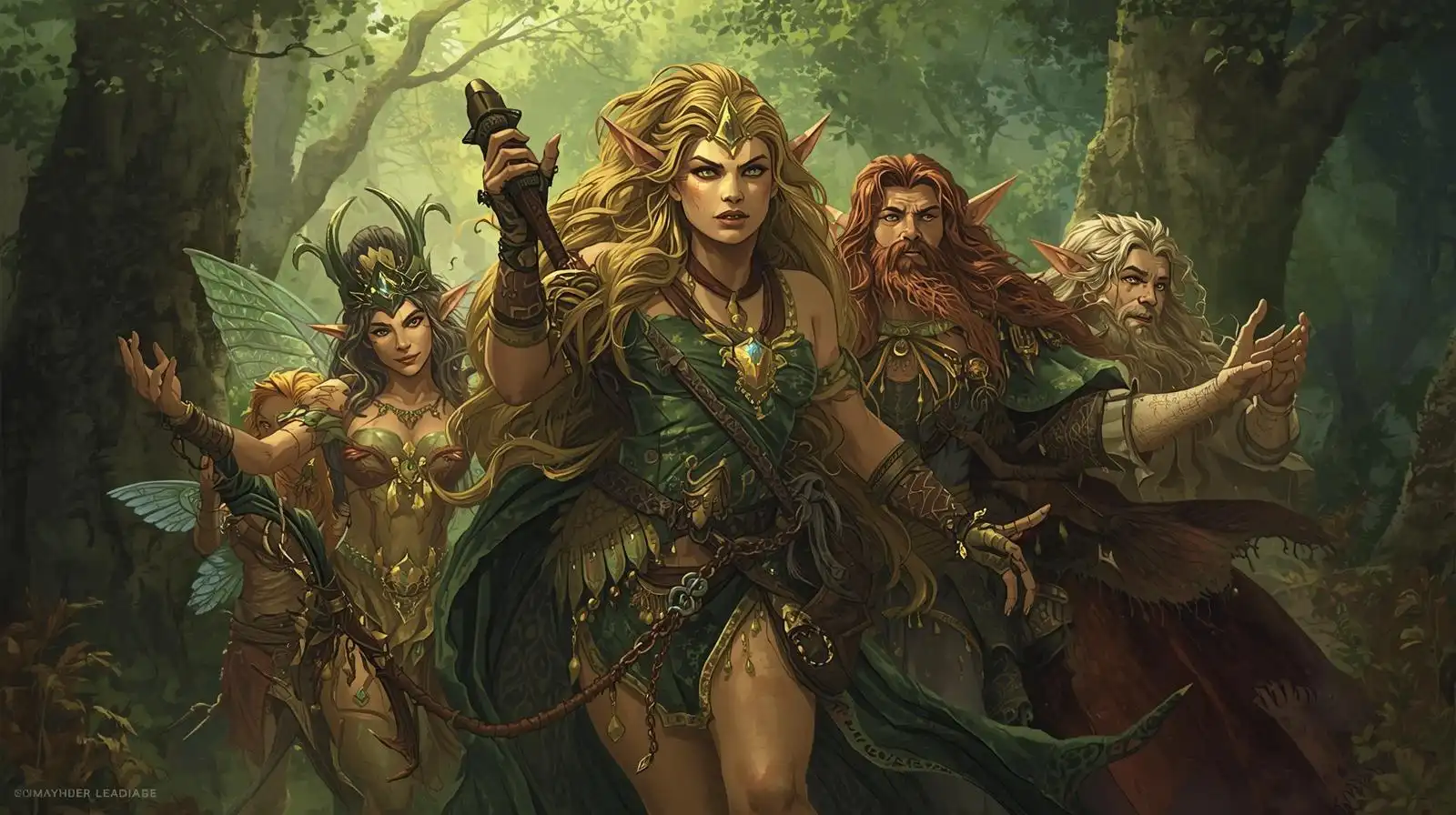
The Tuatha Dé Dannan is commonly known as the Tribe of the Goddess Danu. According to Irish mythology, the name is associated with the mother goddess Danu. Danu is a mother goddess associated with fertility, wisdom, and abundance. This shows the tribe holds divine status in Celtic legend. In the medieval Irish manuscripts, the Tuatha Dé Danann are rarely referred to as gods.
Some scholars also offer different explanations of the name based on the Old Irish linguistic roots. If we talk about the origin of the name, Tautha means tribe, De represents divine or god, and Dannan means Danu. These variations reflect how language, culture, traditions, and mythology have shaped the name over the centuries.
Origins of the Tuatha Dé Danann
The Tautha De Dannan are described in the Lebor Gabala Erenn, also known as the Book of Invasions. According to this book, the Tuatha Dé Danann, a race of gods, arrived in Ireland. Their arrival was a part of a series of mythological invasions. There is another version which describes them coming in dark clouds and their supernatural nature. There is one more version which says that they came in ships. The tribe burned their ships to prevent retreat.
Historians note that the Book of Invasions contains unclear stories about their origin. There is confusion between historical migration stories and mythology. According to some scholars, these narratives blend the oral tradition, symbolic storytelling and likely memories of the ancient settlers.
Who Were the Tuatha Dé Danann? Race or Gods?
The main question raised by the study of Irish mythology is whether the Tuatha Dé Danann are gods. The Irish mythology portrays them as supernatural creatures with power over nature, magic, and knowledge. Mythology presents them as beings with magical powers. However, some historians argue that they were not gods. They represent the ancient elite group or pre-Celtic inhabitants who later became a part of mythology. This creates a constant debate around Tuatha Dé Danann myth vs history.
Medieval Christian writers have played a major role in shaping their current image. At the time of writing myths, writers often wrote them as magical kings, heroic ancestors or fallen angels rather than outright gods. This approach aligned the native stories with Christian beliefs while preserving cultural heritage. As a result, major surviving texts portray them as a powerful race rather than divine beings.
Some middle-ground views also exist regarding the existence of Tautha De Dennan. Some Christian retellings portray them as deities demoted in status, while others see them as symbolic figures representing natural forces. The mythology supports their interpretation as divine beings because of their abilities.
Key Members of the Tuatha Dé Danann
Below are some of the most important Tuatha Dé Danann members. Many of these figures also appear among the wider Celtic gods and goddesses found across early European mythology.
- Nuada Airgetlám: He is the first king of Tautha De Dannan. He was known for being a just ruler and for having a prosthetic arm.
- The Dagda : He is a father god associated with fertility, wisdom and abundance. He is shown carrying a cauldron.
- Lugh : A talented warrior associated with light, craftsmanship and victory.
- Morrígan: A goddess linked with war, fate, and sovereignty. She often appears as a crow.
- Aengus : A god associated with love, poetry and dreams.
- Dian Cecht : A divine healer known for restoring warriors.
- Manannán mac Lir: A sea god known for travel between realms.
Together, these figures illustrate the span of Tuatha Dé Danann mythology.
The Four Treasures They Brought to Ireland
In Irish mythology, the Tuatha Dé Danann brought their four sacred objects from their northern cities. These objects served much more than tools. They symbolised prosperity, fair rule, victory and survival. In the four treasures of Celtic mythology, each treasure represents a core value of Celtic culture. Let’s have a look at these four treasures one by one.
Cauldron of the Dagda
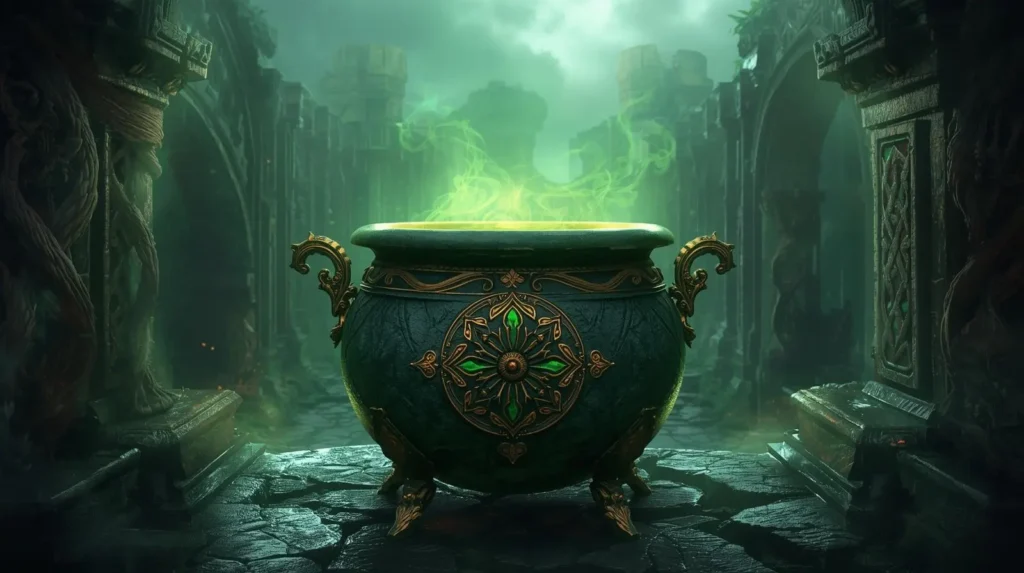
The Cauldron of Dagda was a symbol of endless food. It represents abundance, hospitality, and the ruler’s responsibility to care for his people. Apart from symbolising physical food, the cauldron represented spiritual renewal and energy. In Celtic mythology, the cauldron symbolises transformation, wisdom, provision and rebirth.
Spear of Lugh
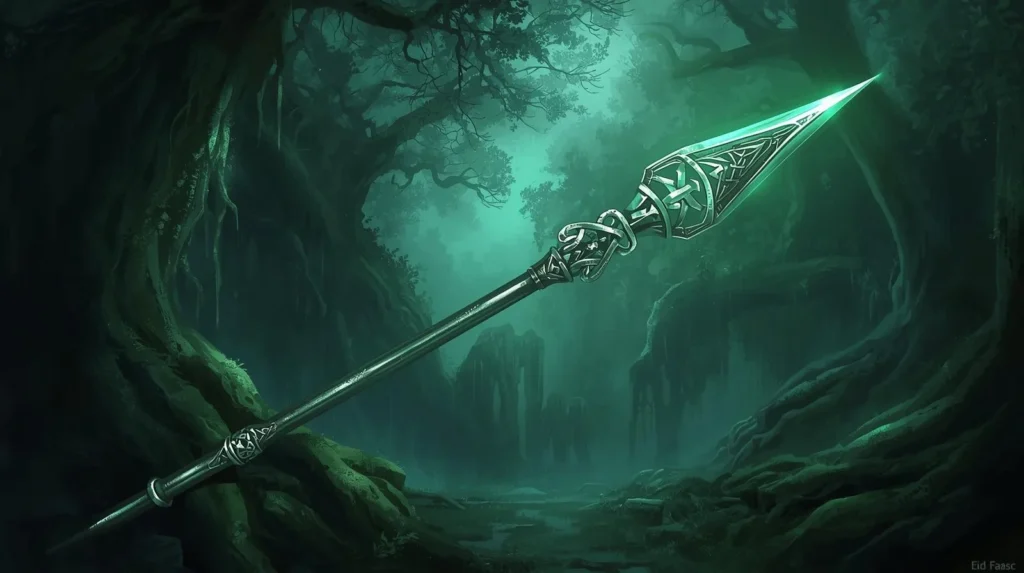
Spear of Lugh is a symbol of victory. Once thrown into the battlefield, it always struck its target and ensured victory. Stories tell that it was supposed to be kept in water to stop its bursting into flames from its own power. It represents skill, will and divine justice. The spear symbolises Lugh’s mastery as a warrior, bringing order and victory.
Lia Fáil (Stone of Destiny)
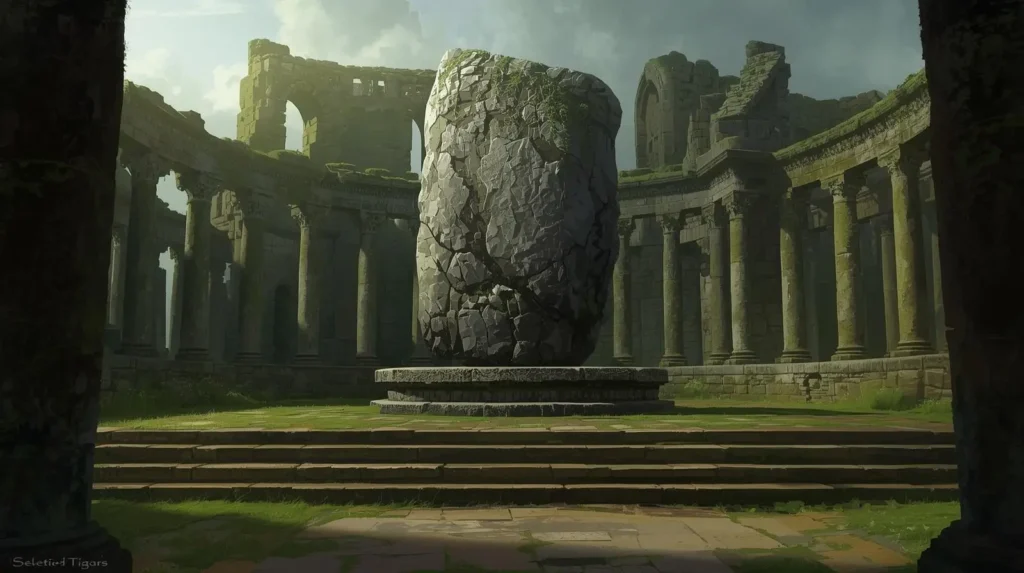
Lia Fail, also known as Stone of Destiny, was placed at Tara. Tara was the seat of Irish kings. It is said that the stone roared when it was touched by the right king. The stone represents destiny and the bond between the ruler and his land. Unlike the other treasures, the stone was associated with divine selection. It showed that true leadership was given to spiritually strong people.
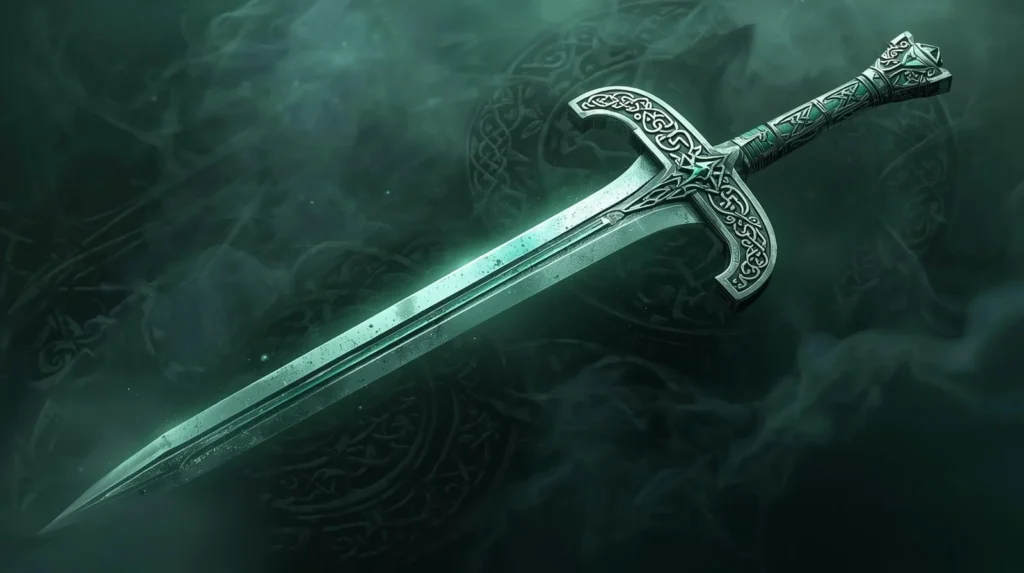
Sword of Nuada
The Sword of Nuada represented a weapon that spared no enemy. It was a symbol of a king’s authority and responsibility to bring order and justice. The tool is about rightful judgement. The sword shows Nauda’s role as a fair and noble ruler who balanced strength with wisdom and morality.
Major Battles and Conflicts
The Tautha De Denann battles form a major part of Irish mythology. There are various stories connected to the Battle of Mag Tuired. Those wars were not meant solely to occupy territory. They symbolised cycles of order, chaos and cultural change in Celtic storytelling.
Mag Tuired was the first battle fought against the Fir Bolg. The Fir Bolg were an earlier group that ruled Ireland. During this battle, Nauda Airgetlam lost his arm, which led him to step down as king. As a ruler must be physically whole. The Tuatha Dé Danann still won the battle, showing the rise of a new order.
The second battle of Mag Tuired was fought against the Fomorians. The Fomorians were associated with chaos, destruction and harsh natural forces. Lugh emerged as a central hero in this war, defeating the Fomorian leader Balor. This battle symbolises light overcoming darkness.
The arrival of the Milesians marked the turning point in the defeat of the Tuatha Dé Danann. The Tuatha Dé Denann retreated into another world rather than disappearing. This turning point shows a cultural transition from mythic rule to human civilisation. However, the gods are believed to still exist in another world.
Tuatha Dé Danann and the Otherworld
The Tuatha Dé Danann concept of otherworld connection is central to Irish mythology. After getting defeated by the Milesians, the Tuatha Dé Danann did not disappear completely. They moved to another world, believed to exist alongside the human world. Later folklore transformed them into supernatural beings linked to hidden landscapes and sacred hills.
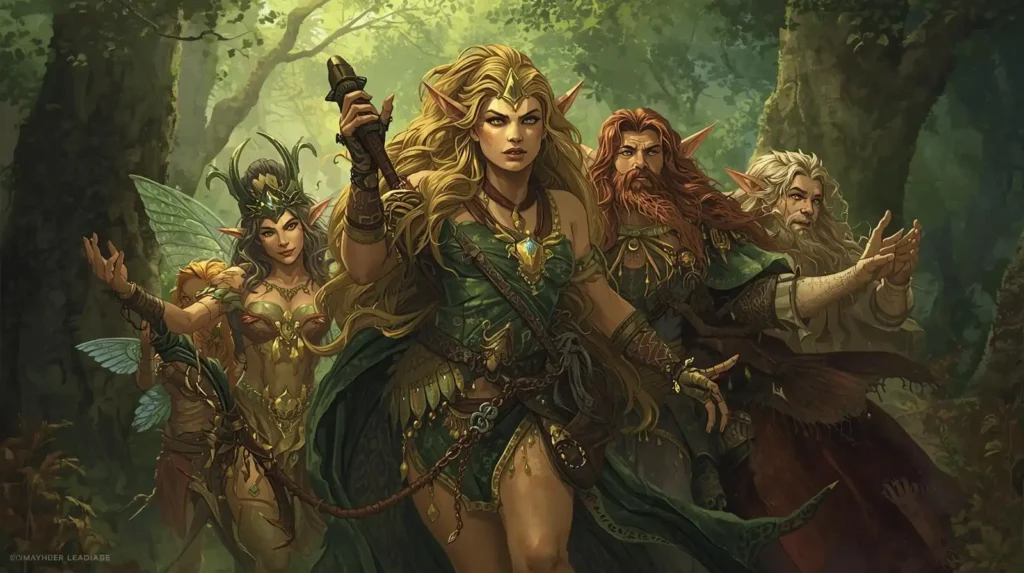
As a result of this transformation, later stories link them to the idea of Tautha De Denann fairies. Early Irish fairies were powerful and human-like supernatural beings. Their shift into stories reflects how interpretations of the gods changed over time, shaped by cultural and religious beliefs. However, they are still present in Irish folklore traditions.
Legacy and Influence on Irish Culture
The Tuatha Dé Danann legacy is deeply penetrated into Irish identity. Even the name of Ireland is linked to the goddess Eriu, associated with the land. It shows how geography and mythology merged to form cultural identity.
The impact of Irish mythology is visible in folklore and modern literature. Many locations in Ireland, including rivers, hills and ancient sites, are linked to mythological stories. Tautha De Denann also influences modern fantasy writings, Celtic stories and cultural tourism. The stories show Ireland’s ancient past, blending myth, landscape and culture into a lasting national narrative. Overall, Irish mythology is a blend of ancient traditions, beliefs, storytelling traditions and cultural evolution.
Their stories form a central part of wider Irish myths and legends that shaped early storytelling across Ireland.
Common Misconceptions
Many Tuatha Dé Danann myths are a result of fantasy stories rather than research. A common misconception is that they were fairies in the modern sense. According to early mythology, they were powerful supernatural beings having control over kingship and divine knowledge. Seeing them as small winged creatures is a misconception.
Another misunderstanding is that they were a historical tribe, although some stories suggest memories of ancient people. However, most scholars view them as mythological figures. Tuatha De Dannan facts show that they exist in a space between religion, legend and cultural storytelling. They belong to neither strict history nor simple folklore.