

Visiting Christ Church Cathedral Dublin | Dublin’s Medieval Cathedral
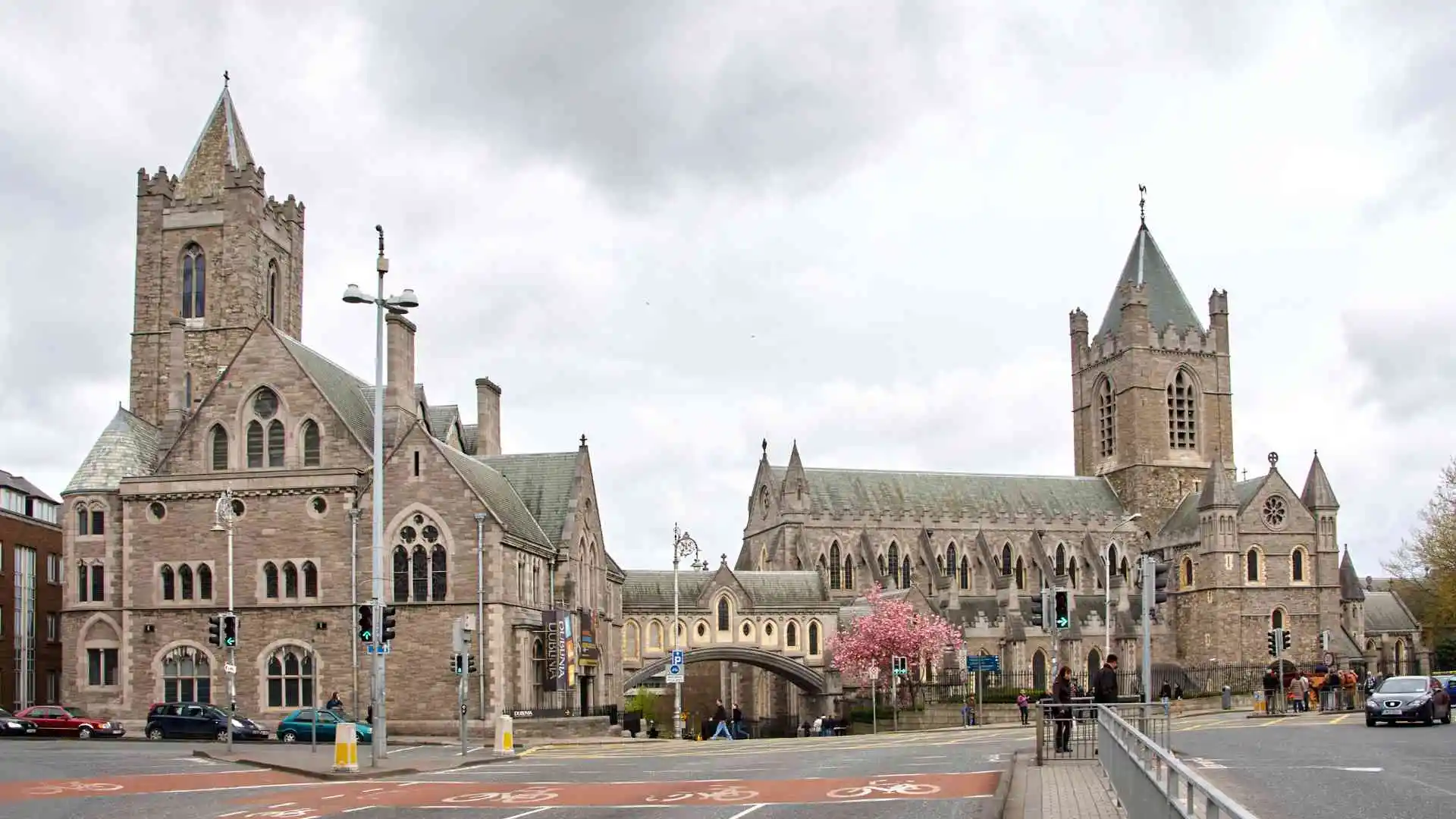
The Christ Church Cathedral, formally known as The Cathedral of the Holy Trinity, is the oldest major religious structure in use in Dublin. It is an in-depth trip through nearly one thousand years of Irish history. It includes a mixture of Viking roots and Norman, Gothic and Victorian constructions.
It is one of the key historical sites in Dublin as a leading heritage and tourist site. This guide offers important information on its history, architecture, and visiting tips in the present day. So, let’s get going.
Opening Times and Ticket Prices
The visit to Christ Church Cathedral Dublin requires planning by looking at the latest schedule. The cathedral normally opens in the morning and closes in the late afternoon or early evening.
Keep in mind the strict late admission policy, which is usually 45 minutes before closing time, in order to guarantee that every visitor will have an opportunity to see the crypt and the main areas.
There are many ticket options which satisfy the needs of everyone. They include normal adult, lower child, lower student/senior, and lower cost family options. You can purchase tickets online as well as at the site.
Ask them to offer combination tickets to get the best value that in many cases will include the admission tickets with other similar sites such as Dublinia. It is always worthwhile to check the official site and cross-check the prices and hours before your visit.
Why Christ Church Cathedral Matters
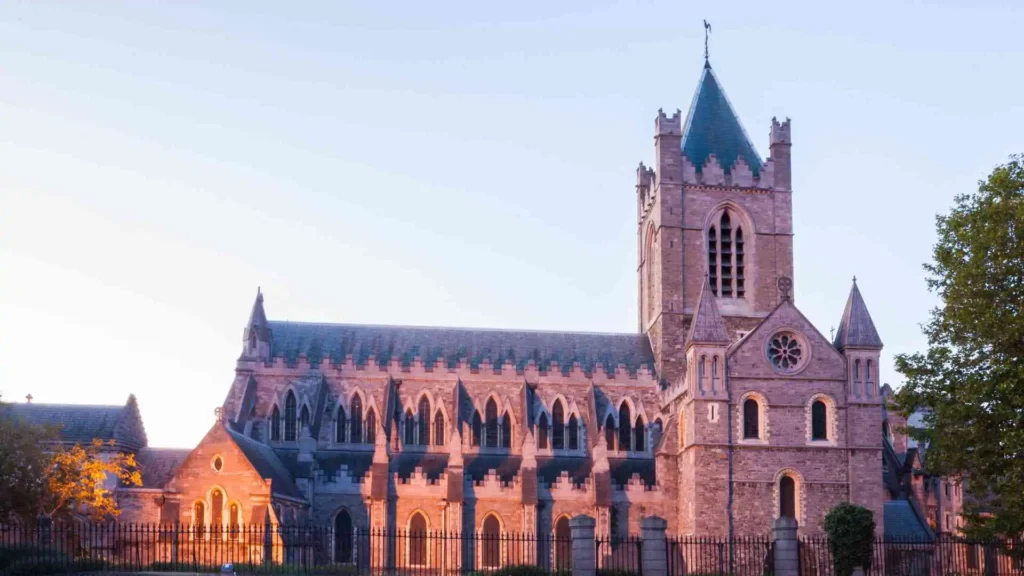
The relevance of the cathedral lies in the fact that it was the first stone church in Dublin. The most significant physical linking of the city to its Norse heritage. The main candidate for the title of the oldest building still in use in Dublin. It was founded in the middle of 1030 AD by the Viking King Sitric Silkenbeard.
It remained significant to mediaeval Dublin after the Norman invasion, and it became the seat of the Archbishop. The fact that it has been used since the centuries – living through the Reformation and political changes – is also what makes it a unique monument.
It is of paramount historical importance, as it is the embodiment of the spiritual and political development of the Irish capital throughout a millennium.
Timeline of the Cathedral – Key Historical Milestones
The Cathedral of Christ Church history presents many years of change and strength:
- 1030 AD: Sitric Silkenbeard builds the first wooden Viking church.
- 1152: The validation of the Irish Church organisation and appointment of archbishops.
- ~1172: Anglo-Norman Rebuilding in stone using the Anglo-Normans and creating durable buildings.
- Expansions during the Middle Ages: Building goes on with the addition of the grandiose crypt.
- 1562: One of the most catastrophic occurrences happened when the roof of the south vault and nave fell down and caused the structure to decay over centuries and be repaired multiple times.
- 19th-Century Major Restoration (1871-78): A large-scale, all-encompassing neo-Gothic renovation, the work of Henry Roe, rescues the building when it is on the verge of collapse and gives it the highly ornamental look it has today.
- 20th/21st-Century Restorations: Ongoing preservation work focuses on the crypt, stonework, and utilities, maintaining its status as both an active cathedral and a significant tourist attraction.
Architecture and Design
The Christ Church structure is a complicated mixture, which began with the Romanesque/Norman base. It was extended with the Gothic ones and ended with the large-scale 19th-century Victorian/neo-Gothic restoration. The classical plan comprises the nave, choir, chapels and belfry.
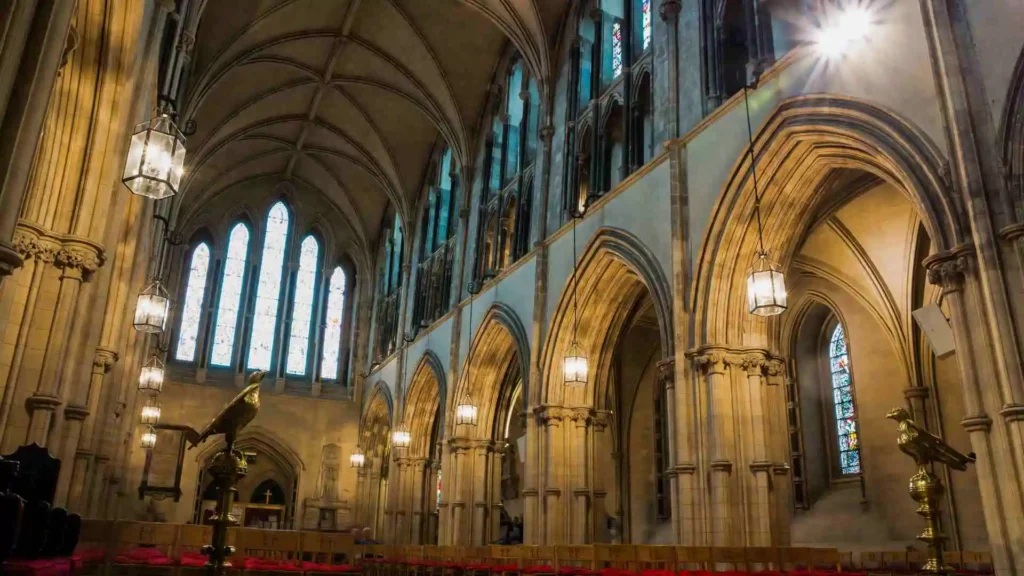
Remarkable structural characteristics include steep vaulted roofs, preserved areas of old floor tiles and the tiered interior facade (arcade, triforium, clerestory). The architecture is a compelling experiment in making a distinction between originality and additions or renovations.
Exterior Features
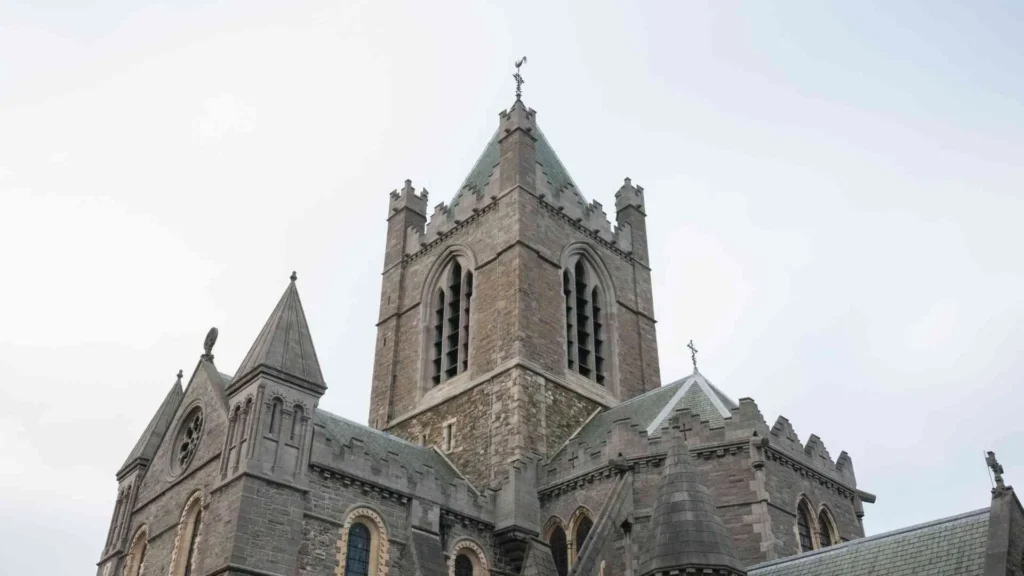
The exterior of the cathedral is placed on high ground in the centre of the city in a distinguishing manner. The main exterior features are the facade with the layers, the buttresses that are sturdy, and the tall belfry or tower.
The general impression about the exterior of the Dublin cathedral is dramatic with the rough original stone. The detailing of the recent neo-Gothic extensions firmly set the cathedral in proper perspective to the mediaeval city plan.
Interior Highlights and Crypt
The visitors are greeted with the splendid vaulted nave, ancient floor tiles (mediaeval), different chapels (including St Laurence O’Toole’s) and stained-glass windows in the interior.
The Christ Church Cathedral crypt dates back to the 12th century. It is one of the largest and oldest mediaeval crypts in Europe and is the most celebrated feature.
This is a historic place and a museum of treasures of the Christ Church Cathedral (treasures in the form of rare manuscripts, silver plates, and relics). It is best recognised as the spot where there are mummified cats and rats.
Visitors to the tower can usually gain access to the belfry, climb the tower and view the bells and enjoy a special panorama of the city.
Stories, People and Treasures Connected to the Cathedral
The lives of key personalities such as the founders of the cathedral, the mediaeval saints, archbishops and restorer Henry Roe are entwined in the cathedral.
Another great memorial is the supposed tomb of Richard de Clare, Strongbow, the key invader of the Anglo-Normans. There are peculiar legends all through the building, the most prominent one being the famous mummified cat and rat which were found during the Victorian restoration.
It has controversial uses; it was a brief commodity market and even a tavern. The exhibition of treasures of Christ Church Cathedral, such as silver plates, relics, and manuscripts, is the result of its long-standing cultural and religious heritage.
Visiting Today – What You Should Know
Essential Visitor Information
Christ Church Cathedral is located in the centre of the city; thus, you can combine it with other things to do in Dublin in a day. It is accessible by bus and is a short walk away from the major landmarks.
The suggested route of flow will be the visitor starting in the nave, then moving down to the historic crypt to see the exhibits, with an optional climb to the belfry. The tours are either self-guided tours or guided tours, usually combined with the nearby Dublinia museum.
There are gift shops, toilets, and educational audio-visual displays. Always check the photography policy. The bell-ringing experience is exclusive, and it usually has to be booked in advance.
In order to have a peaceful and comprehensive visit, it is best to come early in the morning before the crowds so as to avoid congestion.
Why It’s Worth a Visit – 5 Unique Reasons to Explore Christ Church Cathedral
Christ Church Cathedral is an excellent choice of attractions in Dublin because it has convincing and exclusive reasons that can assure every traveller:
- A Millennium of History: It gives the most concrete connection between the Viking and Norman founding of Dublin.
- Architectural Mastery: The unusual blend of Romanesque, Gothic, and theatrical Victorian neo-Gothic renovation is spectacular to the eye.
- The Rare Mediaeval Crypt: Visit what has been considered as one of the largest, best-preserved 12th-century-old crypts in Europe; the Rare Mediaeval Crypt currently serves as a museum.
- Extraordinary Stories and Valuables: The mummified cat and rat are famous, and the tomb of Strongbow brings some cultural spices to the house.
- Location: Ideally, it is located right in the centre of the city, making it the most convenient location to visit during a historic churches tour in Dublin.
Nearby Sites and Suggested Itinerary in the Mediaeval Dublin Area
Christ Church Cathedral is a fine starting point to visit mediaeval Dublin. To complete your day trip, you can also see the following nearby attractions:
- Dublinia: This is a museum situated just beside it and is centred around the history of Viking and Mediaeval Dublin, which is a seemingly perfect match in terms of thematic complementation.
- St. Patrick’s Cathedral: The other major mediaeval cathedral in Dublin, and it is easily accessible as it does not require a long walk.
- Dublin Castle: The old centre of administration of the city, located only a short walk away.
The walking tours to mediaeval Dublin begin with the Christ Church, proceed to Dublinia over the adjoining bridge, and finish at the St. Patrick Cathedral, which will cover most of the important historical sites in an efficient manner.
Tips and Best Practices for Visitors
To make your visit a pleasure to experience, these are the considerations to follow:
- Get there early: the first ones to enter are in contact with the least amount of people, especially when visiting the crypt.
- Services: It is an operational cathedral, and hence, its schedule can include religious services that will temporarily limit the access of the visitors.
- Advance booking: In case you desire the unique bells-ringing tour, advance booking is highly recommended since the capacity is very low.
- Dress in a dignified manner: Bear in mind that you are getting into a place of worship.
- Time needed: Allow at least two to three hours to cover the main church and the crypt as well as the exhibits.
- Weather: It is always a good idea to have a rain jacket in Dublin.
Conclusion
This Christ Church Cathedral site is vital and dates a long time back into history with regard to the identity of the city. Its worth, as of historical, spiritual and architectural significance, provides tourists with a solid and dramatic immersion into a millennium of Irish existence. You should definitely go there to see Dublin Cathedral and enjoy this harmonious combination of the ancient past and the present history.