

Great South Wall Walk | A Walk to Poolbeg Lighthouse Dublin
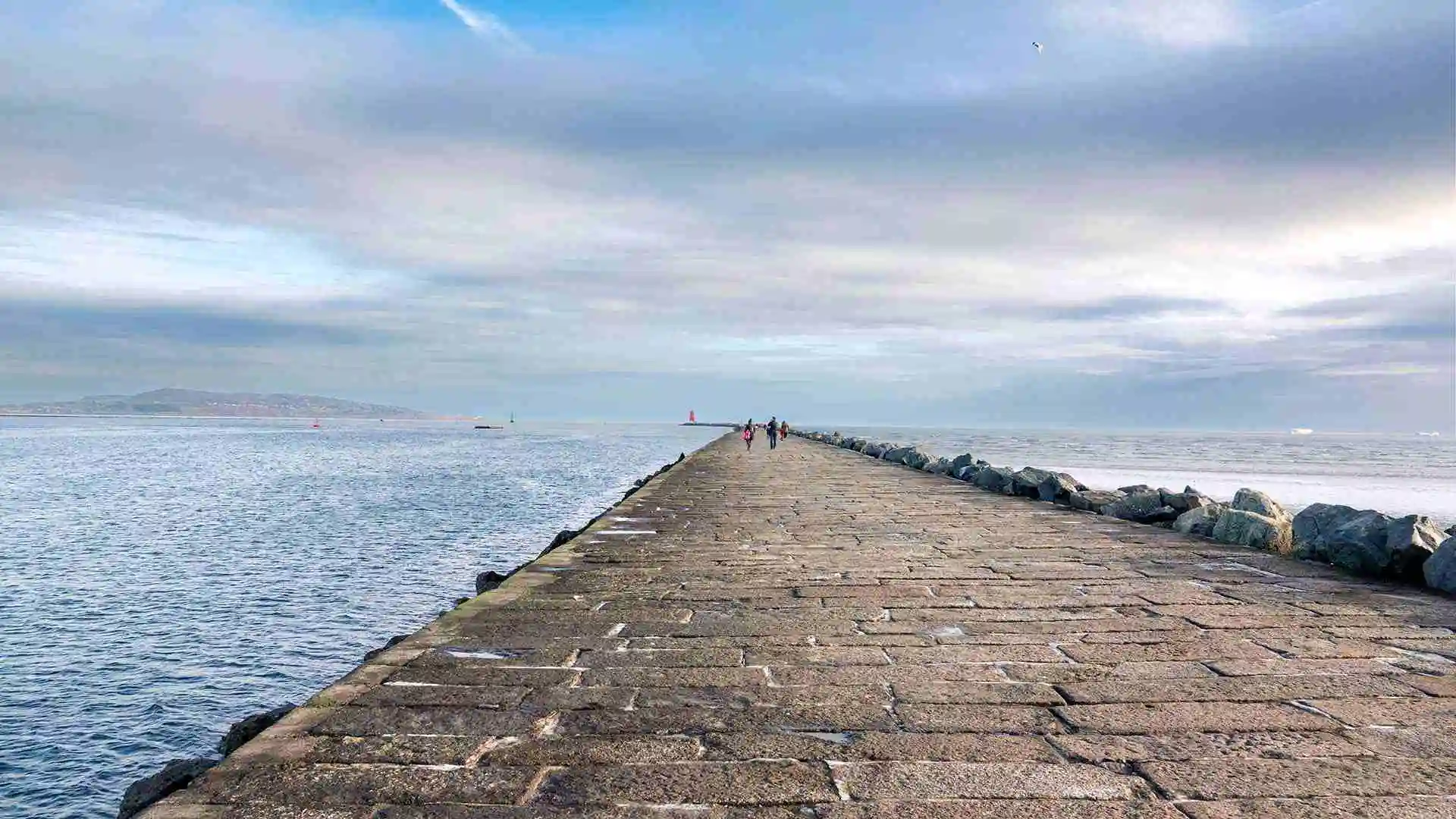
The Great South Wall is one of Dublin’s hidden coastal gems. It extends far into Dublin Bay, finishing at the striking red Poolbeg Lighthouse. It was initially built to assist sailors safely navigate Dublin Bay. But it is now a popular place for walkers, photographers and nature lovers.
You can follow the famous Poolbeg Lighthouse walk along the sea wall. You can enjoy stunning views of the bay and city skyline it faces. Close by, Shellybanks Beach provides a quiet respite after walking.
It is easy to reach the wall, with parking available if you want to drive. The guide will provide you with all the details. How to get there, how long the walk is, what you will see on the walk and where to enjoy a respite afterwards.
So, if you are looking for fresh sea air, an easy walk, this is for you. Let’s plan the trip of your dreams.
What is the Great South Wall?
Before we talk about its history, let’s set the scene for you. It’s not just stone and sea lying there. It is part of Dublin’s story. Knowing it’s past will make you go even more there.
A Short History
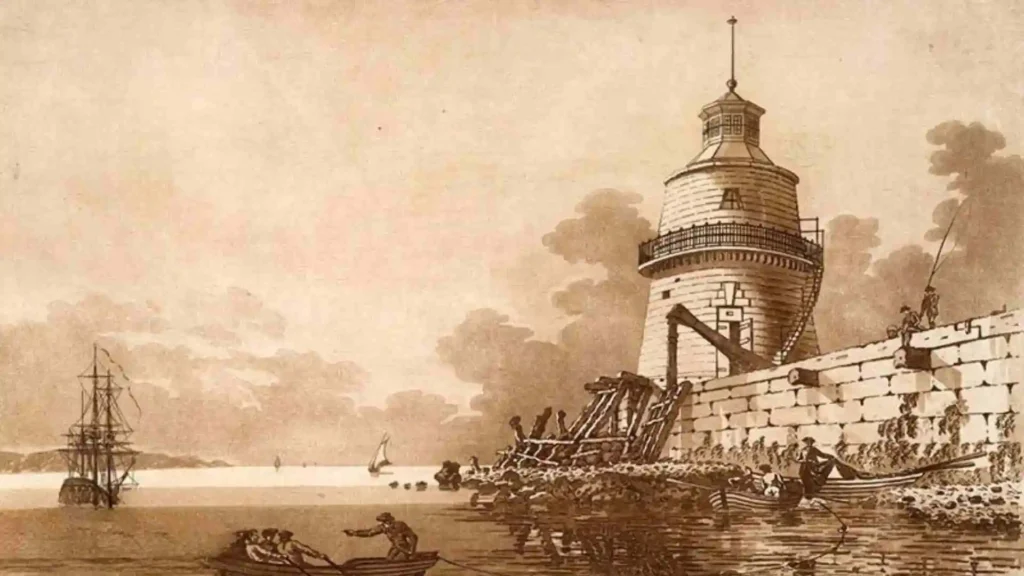
The Great South Wall was built between 1715 and 1795. It was designed to guide ships safely into Dublin Port. At the time, it was one of the longest sea walls in the world. Its massive granite blocks were hauled from nearby quarries and laid by hand over decades.
Why It Matters
The wall offers relief to Dublin Bay from silting to allow safe passage to the port. It was incredible engineering at that time. Today it is an example of Dublin’s marvellous maritime past.
Why People Visit Today
The wall is now more than a remnant of dormant history. It has become a favourite walk of the city. Residents and visitors float along the length of the stone on the wall. They can watch boats on the water, taking in the spacious view from the expensive stone strap.
It offers a natural escape and peaceful respite from the busy Dublin. The combination of heritage and calm has made the Great South Wall such a special place.
How to Get to the Great South Wall
Getting there is very easy. You can travel there by car, bicycle or public transport. Let’s go through them one by one.
By Car
Driving is the quickest way to get to the wall. When leaving the city centre, go through Ringsend and over the East Link Bridge. If you are at Pigeon House Road, follow it along until it ends near the seawall.
The route is not difficult to navigate, and signs are everywhere. Do not speed near the end of the road as there are walkers on the road.
By Public Transport
Public transport is also easily accessible. You can take Dublin Bus No. 1 or 47 to Ringsend. Then walk about 25 minutes to the seawall start. Or take the DART to Sandymount Station. From there, walk through Sean Moore Park and follow the signs towards Poolbeg. This walk takes about 30 minutes and is mostly flat.
By Bike or On Foot
Cycling works well, especially on sunny days. Use the cycle lanes along Sean Moore Road. Lock your bike to the railings near the start. Walking from nearby suburbs like Sandymount or Ringsend is pleasant too.
Parking Details
The great south wall parking is at the end of Pigeon House Road. It’s a small car park with limited space. It fills quickly on weekends, so arrive early or late in the day.
How Long is the Great South Wall Walk?
It always helps to know what’s ahead. The walk is simple and peaceful, but there are some things you need to know before heading out.
Distance and Time
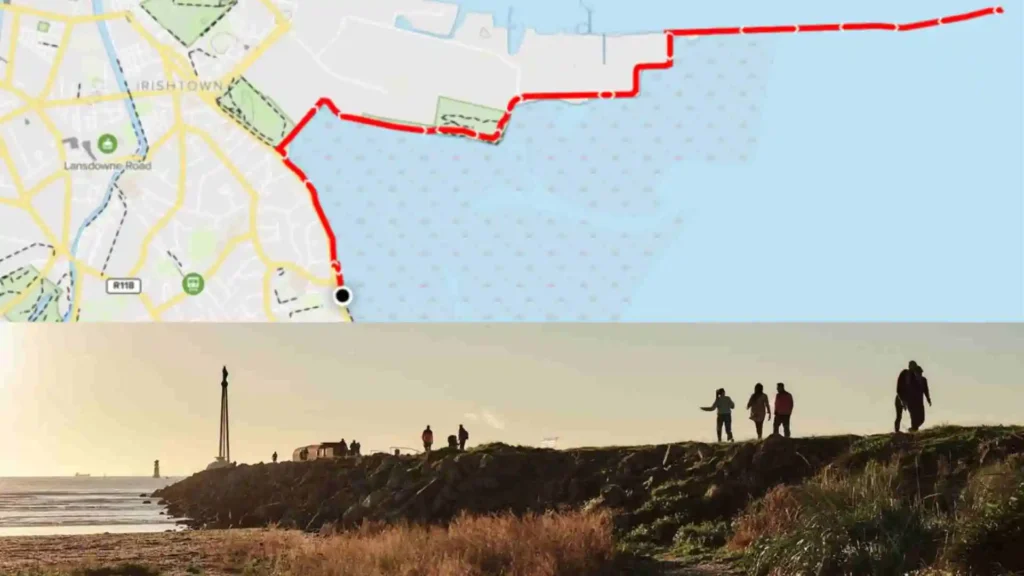
The walk is about 4 km for a round trip. It takes 40 to 60 minutes at a relaxed pace.
Difficulty and Terrain
The route is flat and straightforward. It suits all fitness levels. The stone surface is uneven in places. So wear comfortable shoes.
Accessibility and Family Info
Wheelchair users and strollers can manage the first section from the shore. The surface becomes rougher closer to the lighthouse, so caution is wise.
Dog Friendly
Dogs are welcome but must stay on a lead. The wide open path makes it easy to walk them safely.
This calm and easy route makes the Poolbeg Lighthouse walk popular with families, couples, and solo explorers alike.
Poolbeg Lighthouse Walk Guide
This is the ultimate highlight of the walk. Let’s walk through it together.
Starting the Walk
The walk begins where Pigeon House Road ends. You will see the long granite wall stretching into Dublin Bay. It looks endless from the start. But it eventually feels shorter than it appears.
What You will See
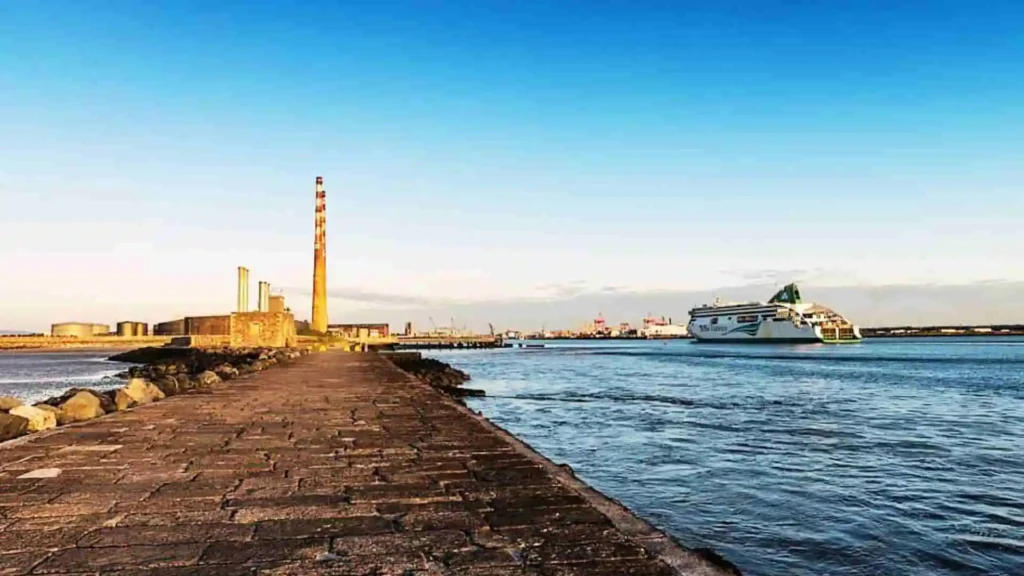
As you walk, you will see ships sailing into the harbour. Dublin’s skyline appears to float in the distance behind you. To your left, wide views of the bay open up.
Reaching the Lighthouse
At the end stands the bright red Poolbeg Lighthouse. It is small but striking against the blues and greys of the sea. Standing here, you feel like you’re in the middle of the water.
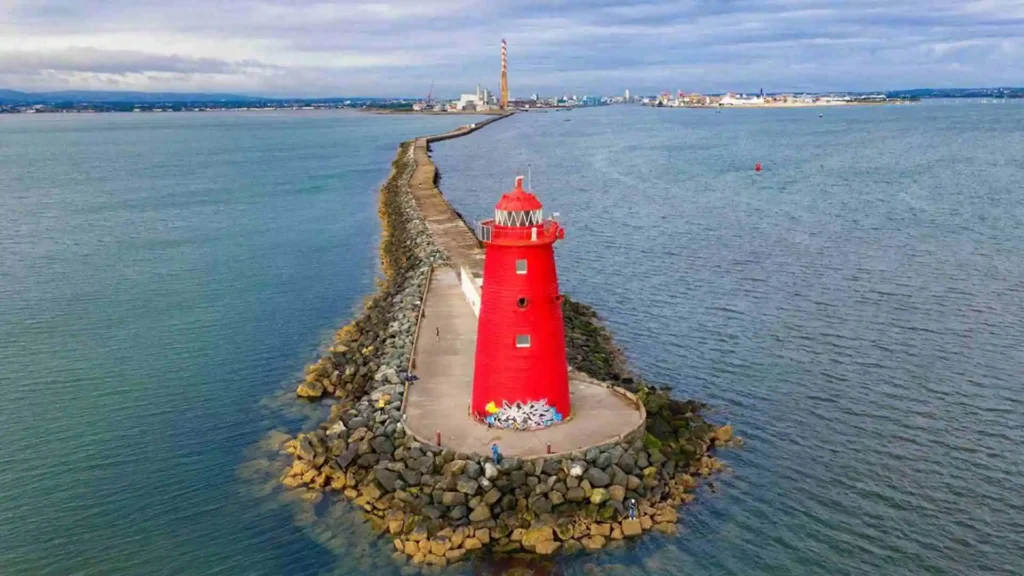
Photo Tips
Bring your camera or phone. The best shots are from halfway along the wall with the city behind you. Wide angle shots work beautifully near the lighthouse.
On clear days, you can capture Howth and the Dublin Mountains in the distance. This is the Poolbeg Lighthouse south wall Poolbeg Dublin route many locals love.
Highlights Along the Way
The walk is not limited to just walking, there is a lot more than that. From birds to beaches, here’s what to look out for.
Scenic Spots
Shellybanks Beach sits near the start of the walk. It is a small sandy cove perfect for relaxing after your walk. You can also see the entire Dublin skyline across the water as you go.
Wildlife
Birdwatchers often spot terns, gulls, and even seals resting on the rocks. You can bring binoculars if you like spotting wildlife.
Changing Atmosphere
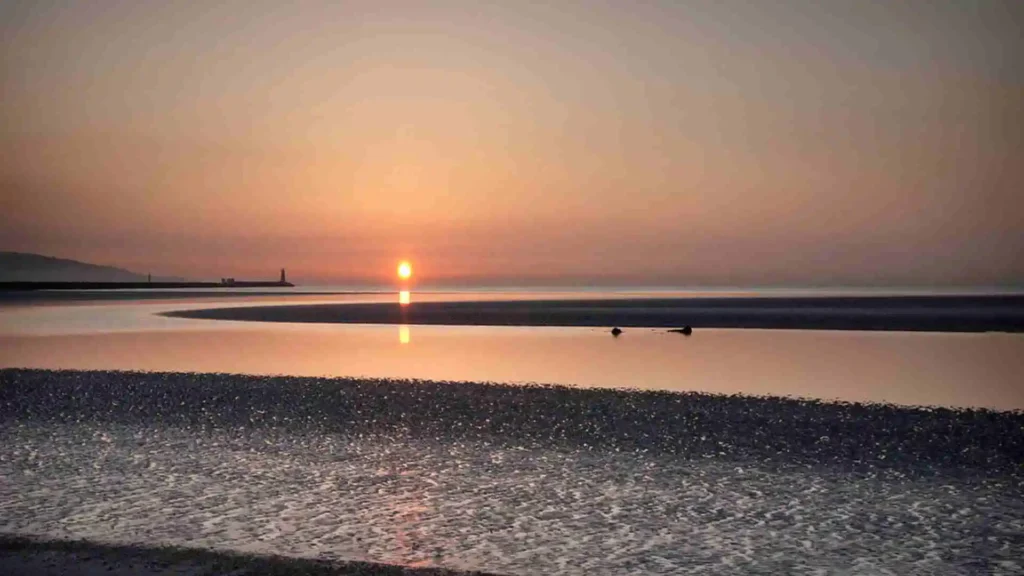
Each time of day feels different here. Mornings are calm with soft light over the bay. Evenings bring golden sunsets behind the skyline.
The Poolbeg Lighthouse south wall Poolbeg Dublin walk blends city views, quiet nature, and a sense of space you rarely find so close to the city.
Parking and Practical Information
Parking information and a few safety notes can make the walk more enjoyable for you. Here’s what to know.
Parking
The great south wall parking is beside the start of the seawall on Pigeon House Road. It is small and fills quickly, especially on weekends.
Facilities
The wall has no toilets, food stalls, and bins in sight. You can take water, snacks and a bag for your rubbish.
Safety
Knowing these safety measures can make your walk smoother and safer.
- Please wear flat shoes, especially after rain. The stones can become slippery.
- If it is a calm day, expect strong winds on the top.
- Do not walk the wall at night as there are no lights along the top.
Best Time to Visit the Great South Wall
Best Seasons
Spring and summer offer the best weather and clearer skies. You will get longer daylight hours and calmer winds.
Best Times of Day
Visit at sunrise for calm water and soft golden light. Sunset adds a warm glow to the skyline behind you.
Winter Notes
The winter is so magical but risky as well. The rocky path can become slippery. The winds are also strong. So always check the forecast before heading out. Whenever you go there, the Great South Wall rewards you with stunning views.
Things to Do Nearby
There are some more spots to see nearby. You can enjoy these along the walk as well.
Beaches and Bay Views
Shellybanks Beach is a quiet place, perfect to sit after the walk. Sandymount Strand is just a short stroll away for more space and sea air.
Dublin Port
You will walk close to Dublin Port. Watching ships sail in and out is surprisingly relaxing.
City Stops
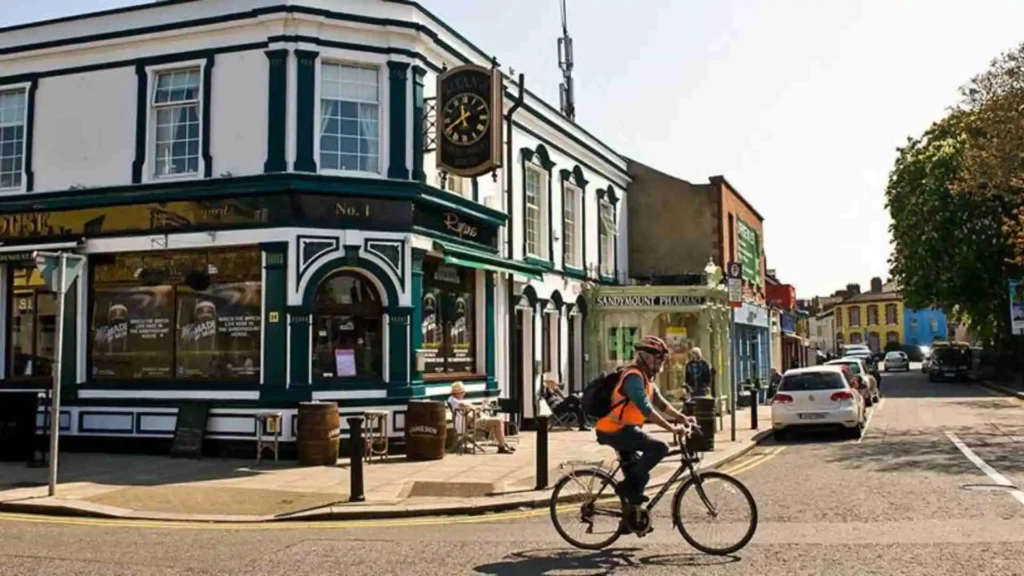
If you want to explore more of the area, you can head back into the city. Ringsend and Sandymount villages have cafés for a warm drink after your walk.
These nearby stops make your day trip even more enjoyable.
Final Wording
The great south wall is one of Dublin’s most refreshing walks. It is close to the city yet feels completely away from it. Just check the weather, wear good shoes, and bring water.
Plan an easy pace so you can enjoy the scenery and take photos. If you enjoy walking in Dublin, this will be a lasting memory.
You can also check these walks around Dublin if you are interested. These are also a good combination of history and nature and fresh sea air. So, keep the adventure going.