
Grianan of Aileach | The legendary “Palace of the Sun” in Donegal
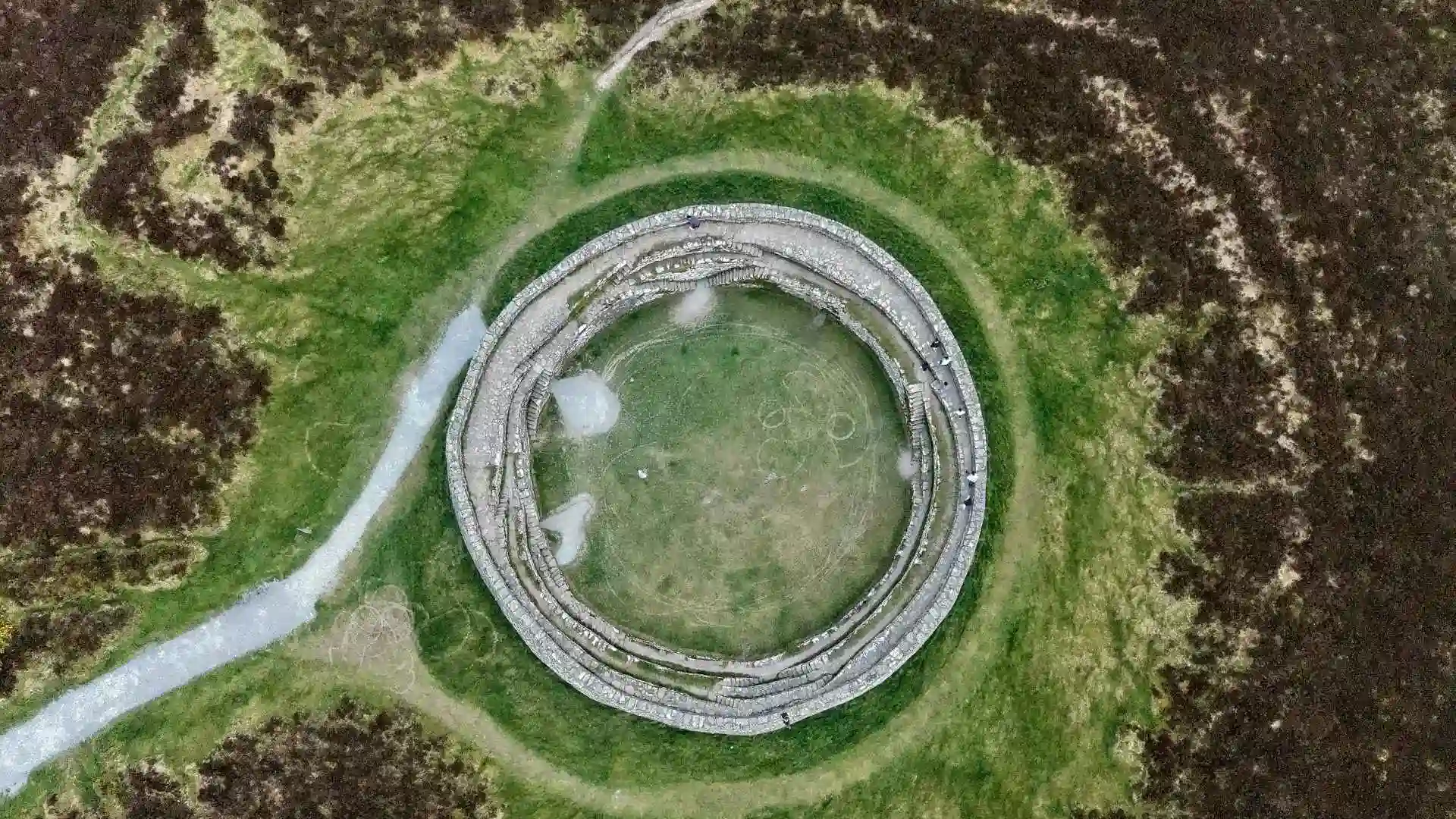
Grianán Ailigh is one of the best-known landmarks in the northwest of Ireland and is known in Irish as the Stony Palace of the Sun. Situated on the picturesque Inishowen Peninsula, on the top of Greenan Mountain in Burt, Co. Donegal, it combines ancient mystery with some of the best views in the country.
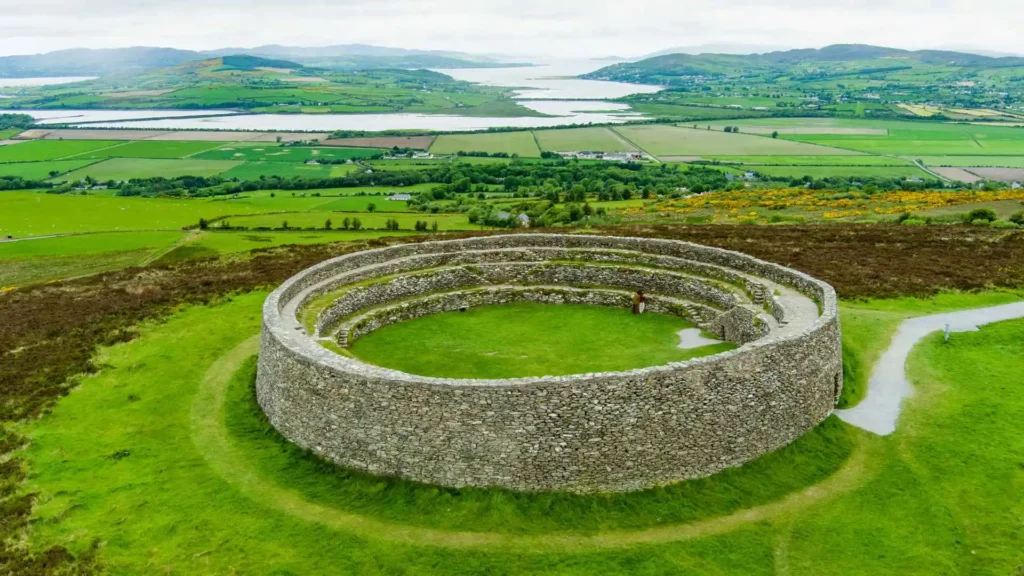
It is worth the journey to enjoy a 360-degree view over Lough Foyle and Lough Swilly. Most visitors come for the views but remain for the history. In this article, we’ll explore the myths about the Kings of Aileach, some handy tips for visiting and some secret tips on what to do nearby.
What is the Grianán of Aileach?
The circular stone ringfort, also known as a ‘cashel’, at Grianán of Aileach, is at an altitude of 244 m above sea level. The structure is an amazing feat of ancient engineering, with walls 4.5 m thick, 5 m high and 23 m in diameter.
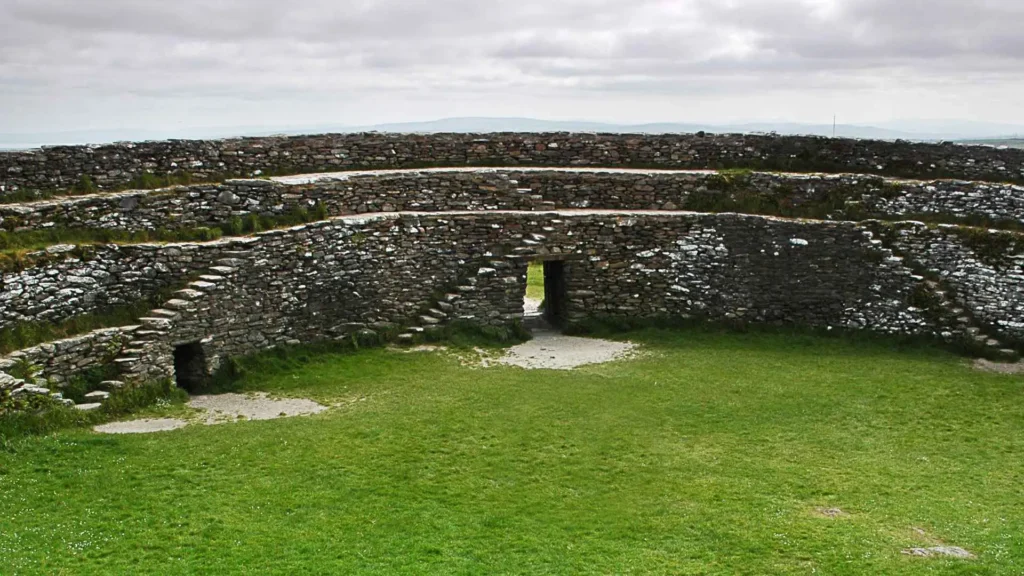
Inside you can find three internal terraces, with stone steps connecting them; you can walk directly up to the top of the ramparts. It is now in the care of Donegal County Council and the OPW and is one of the most valuable early mediaeval sites in Ulster.
What does Grianán of Aileach mean?
‘Grianán’ means ‘sunny place’ or ‘sunroom’, and ‘Aileach’ means ‘ancient kingdom’, which ruled here. The two combined are known as the Stony Palace of the Sun and are referred to locally as Greenan Fort.
The Irish pronunciation is GREE-nan av AL-yakh if you wish to use that pronunciation. Its name is appropriate because the site was of great significance; a royal seat that reached the heights of the sky.
The deep history of the fort
This hilltop has been inhabited for thousands of years. It is presumed the site was used in the Neolithic or Bronze Age, with some dating use as early as 1700 BC. In Irish mythology, it’s said “the Dagda” of the Tuatha Dé Danann built the fort as a burial place for his son, Aedh.
In the early mediaeval period it became the royal centre of the Northern Uí Néill group, Cenél nEógain. During the 6th to 8th centuries, the Aileach Kings ruled the area from this location. St. Patrick even supposedly came in the 5th century to baptise Prince Eoghan.
In 1101, Muirchertach Ua Briain, King of Munster, had his army destroy the fort. In a famous act of revenge, he ordered his soldiers to take one stone each from the fort with them so that it would never be built again.
Today’s structure is mostly a product of a Victorian-era restoration by Dr Walter Bernard from 1874 to 1879. Curiously, his reconstruction was a little controversial; he did not construct the steps and terraces in the local Donegal style but instead used the model of Staigue Fort, Kerry.
What to expect when you visit
Visiting Grianán of Aileach is quite an easy one to make. A car park is located near the top, and from here it is just a short stroll to the fort. The scale inside the drystone masonry is quite amazing.
Be sure to note the two small openings in the walls. Steps can be taken up the ramparts to the top for that famous view as well. On a sunny day the waters of Lough Foyle and Lough Swilly sparkle with water, with Inch Island in the middle.
Be careful – it’s very exposed up there. Even on a sunny day, the Atlantic breeze can get chilly, so pack an extra layer.
Getting there and opening hours
You can easily reach it by car. Derry City (11 km) or Letterkenny is about a 20-minute drive, and Buncrana is about 25 minutes. Google Maps is a good bet – look up “Grianán of Aileach”. The last road to the hill is very small and steep, so be careful driving up it.
The site is open daily, usually from 08:00 to 18:00. Best of all? There is no charge for admission. There’s no visitor centre or café on-site, so it’s just you and the history. The small car park is at the top, and the path to the fort is usually suitable for wheelchair users.
Nearby attractions
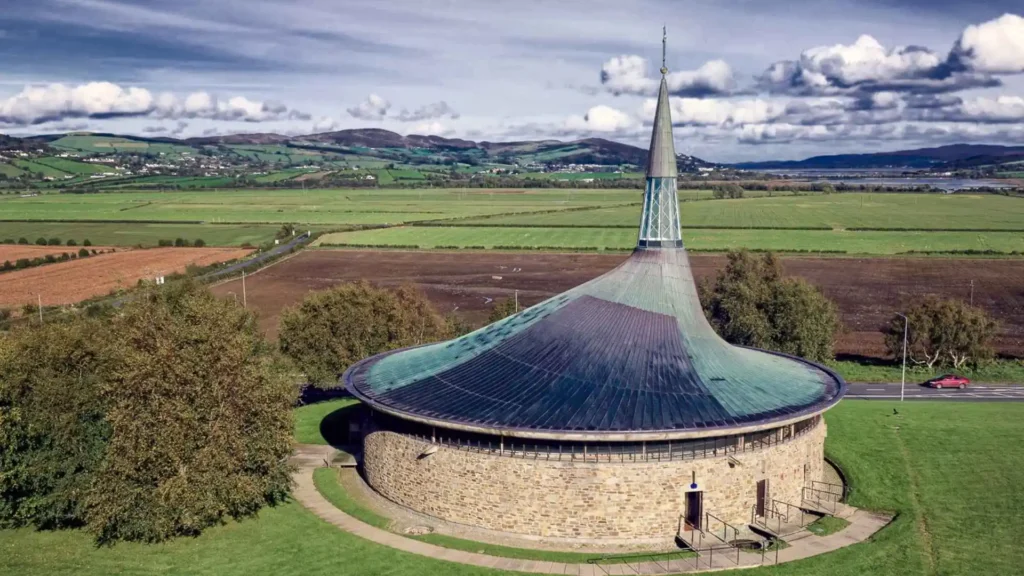
Burt Church is at the bottom of the hill and is a must-see if you’re in the vicinity. In fact, its unique circular architecture was inspired by the Grianán of Aileach. You are also just a 10-minute drive from Inch Island, which is an excellent place for coastal walks and birdwatching.
Spend more time if you wish to visit the historic walls of Derry City or drive 40 minutes west to the beautiful Glenveagh National Park.