
Hill of Tara | Ireland’s 5,000-Year-Old Sacred Site
Picture yourself on a windy green peak with rich vegetation, where the ancient High Kings of Ireland once exercised their divine right to rule.
When you’re looking for a place to immerse yourself in the magical depths of Ireland’s Ancient East, you’re probably looking for a place that combines the mystical, the haunting and the scenic.
This article delves into the mystical and historic Hill of Tara, County Meath, home to millennia of pagan mythology, historic battles, and extraordinary stone monuments.
What is the Hill of Tara?
The Hill of Tara (Teamhair or Cnoc na Teamhrach in Irish) is a multi-period archaeological site located near Navan, County Meath, Ireland. It rises 155 metres above the low-lying countryside and was the royal and ceremonial centre for the old high kings of Ireland.
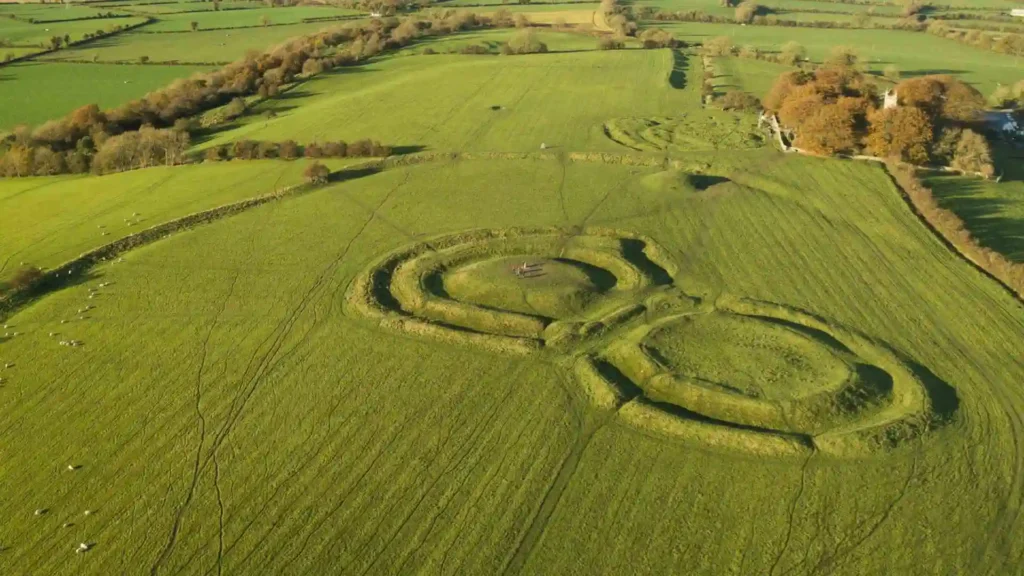
Instead of stone castles, it is renowned for its complex system of grassy earthen ramparts, barrows and ditches. These are undulating mounds of quiet activity, spanning more than 5000 years, from the Neolithic Age through to the early Christian period.
The sacred archeology of the hill
Today the remains of the great wooden halls of the kings have returned to the earth once more, but the archaeological layout shows a very sophisticated ceremonial centre.
Ráth na Ríogh (The Enclosure of the Kings)
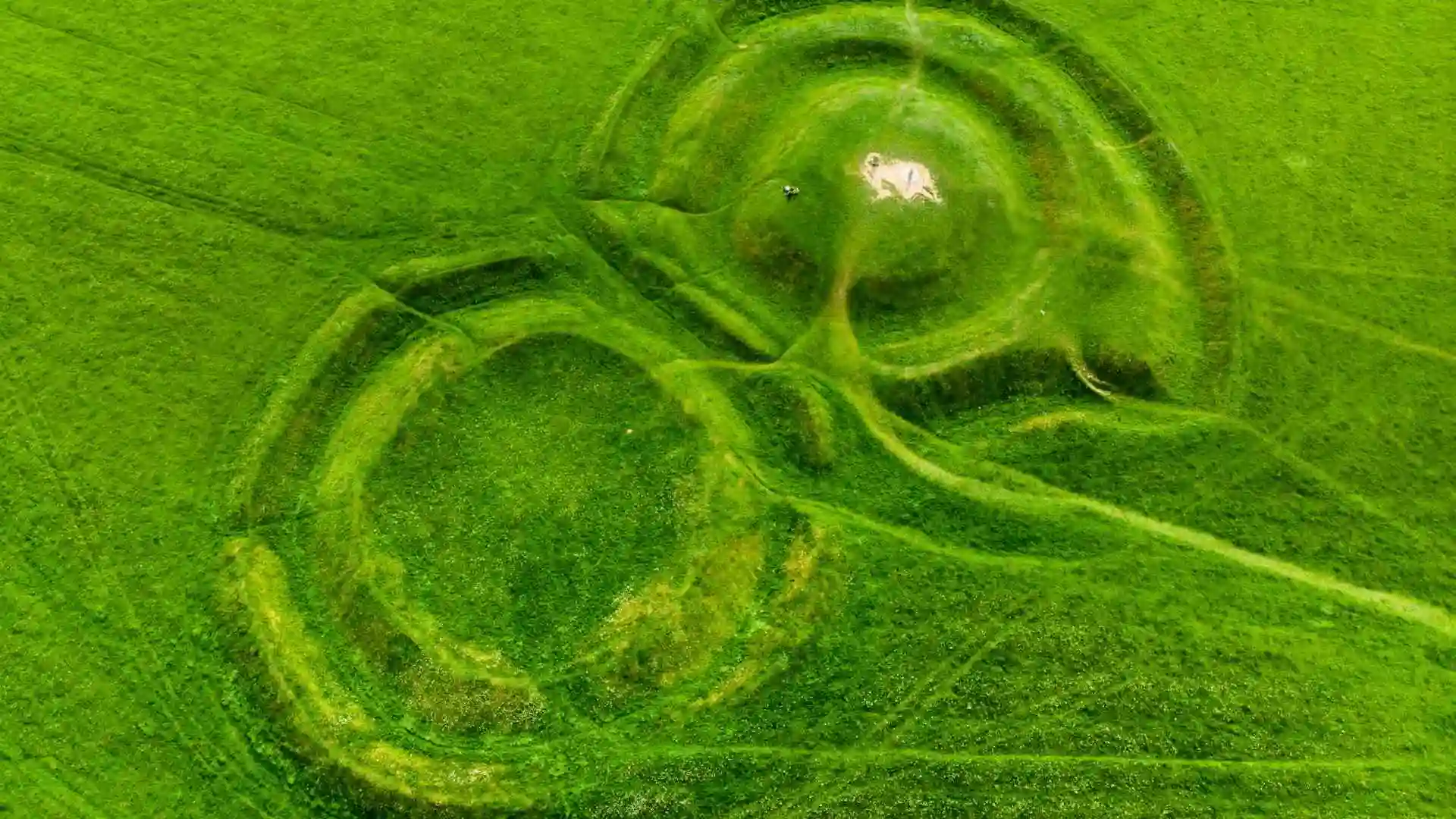
The centre of the summit is Ráth na Ríogh, a massive fort of the Iron Age with almost a 1000-metre circumference. It has a deep ditch located on the inside of the stone and dirt bank, in contrast to the ditch in military installations that would be found on the outside.
This structural feature suggests that the enclosure was used for ritual purposes and not for warfare, as it would have been if it had been used for that purpose.
Within this large ringfort is a special figure-eight earthwork made up of two enclosed structures, Teach Chormaic (Cormac’s House) and the Forradh (The Royal Seat).
Dumha na nGiall (The Mound of the Hostages)
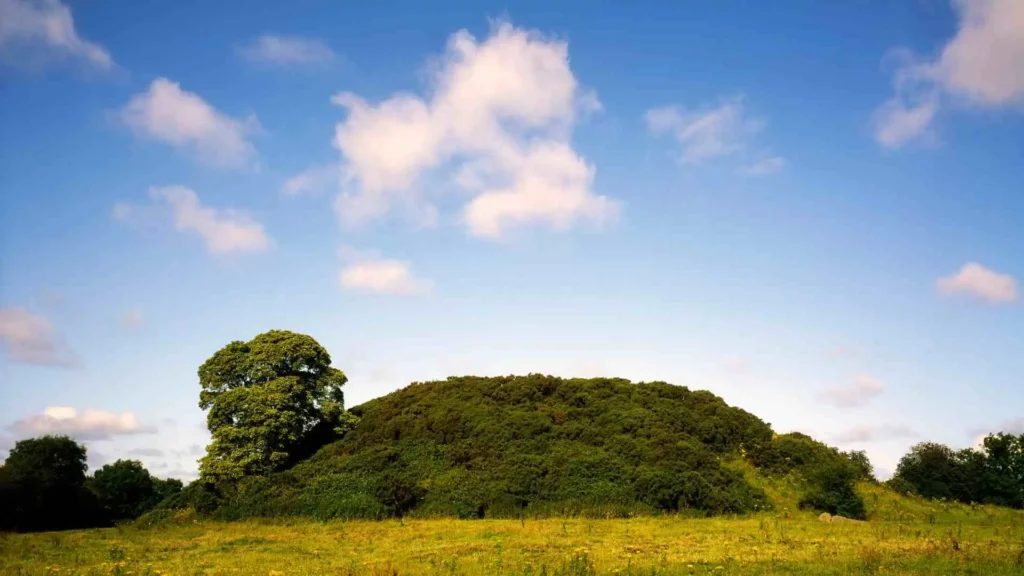
The grassy mound is the only clearly visible structure on the hill and is the oldest visible structure in the area, dating back to approximately 3200 BC. It is a Neolithic passage tomb, reminiscent of a mini Newgrange.
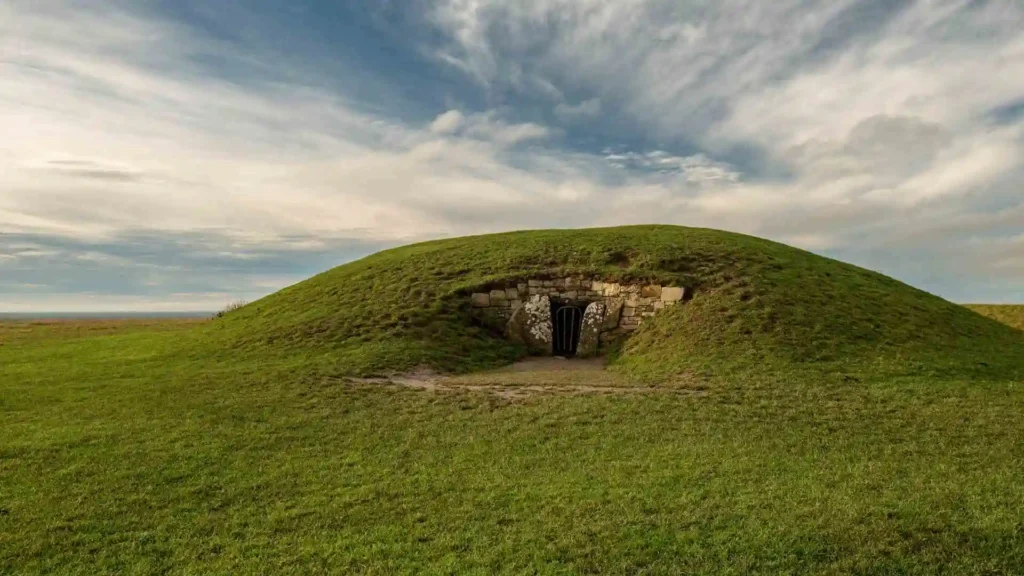
More than 300 people have been buried here throughout the ages, and the remains of these people have been discovered during archaeological excavations, demonstrating the spiritual importance of the hill throughout the ages.
The narrow entrance to the tomb is precisely aligned with the sunrise at the cross-quarter days, Samhain and Imbolc, thus providing a source of seasonal sunlight for the dark inner chamber.
The Lia Fáil: The Stone of Destiny
The Lia Fáil, the “Stone of Destiny”, is a large stone standing prominently on the Forradh mound. Perhaps the best-known of the site’s legendary relics is this tall, phallic standing stone.
According to medieval Irish mythology, this stone was transported to Ireland by the Tuatha Dé Danann, the magical people. It was the final test during the coronation of new rulers.
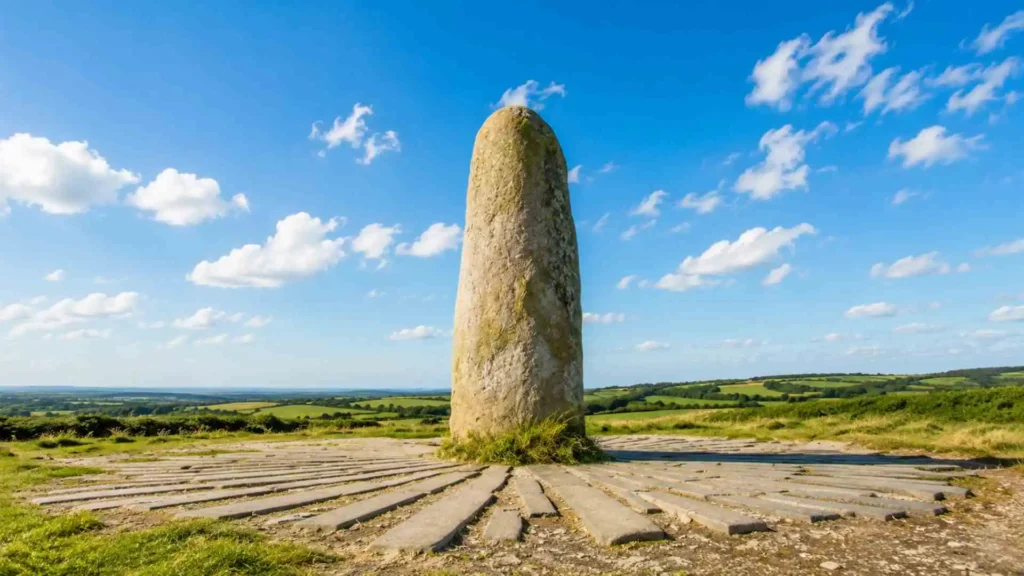
According to legend, when a true and rightful High King of Ireland stepped on the stone, it would release a thunderous roar throughout the whole of Ireland.
Historical echos: The Battle of Tara Hill (1798)
In addition to being a significant place in ancient pagan and medieval history, the hill has a very solemn place in modern Irish history. It was the scene of an important battle in the United Irishmen Rebellion on May 26, 1798.
The hill had strategic importance and was a powerful symbol of Irish identity, so more than 4,000 poorly armed Irish rebels decided to take up residence on the hill. But they were soundly defeated by a disciplined unit of British yeomanry and fencible troops who were armed with cavalry and cannon.
More than 350 rebels perished on the slopes that evening and the rebellion was effectively wiped out in County Meath. A memorial Celtic Cross is now located near the churchyard and it is said that the Lia Fáil was moved to its present site in the Forradh and used as a gravestone over a mass grave in which many of the defeated rebels were buried.
Practical tips for your visit
The Hill of Tara is an open-air, earthen site so a little preparation is necessary for a successful visit.
Admission & Access: The open site is public and free all year round.
Visitor Centre: This visitor centre is open seasonally from May to late September in the beautifully restored St Patrick’s Church on the hill and provides informative guided tours and an audio-visual presentation.
Shoes: Wear sturdy shoes or boots for walking. It is made up of a few grassy fields with some mounds and can be muddy and slippery after a classic Irish rain shower.
Weather Prep: There is little tree cover and it is exposed to the elements at the summit. Bring wind protection and a waterproof jacket for windy conditions.