
Visiting Skellig Michael: History, Boat Tours & Travel Tips
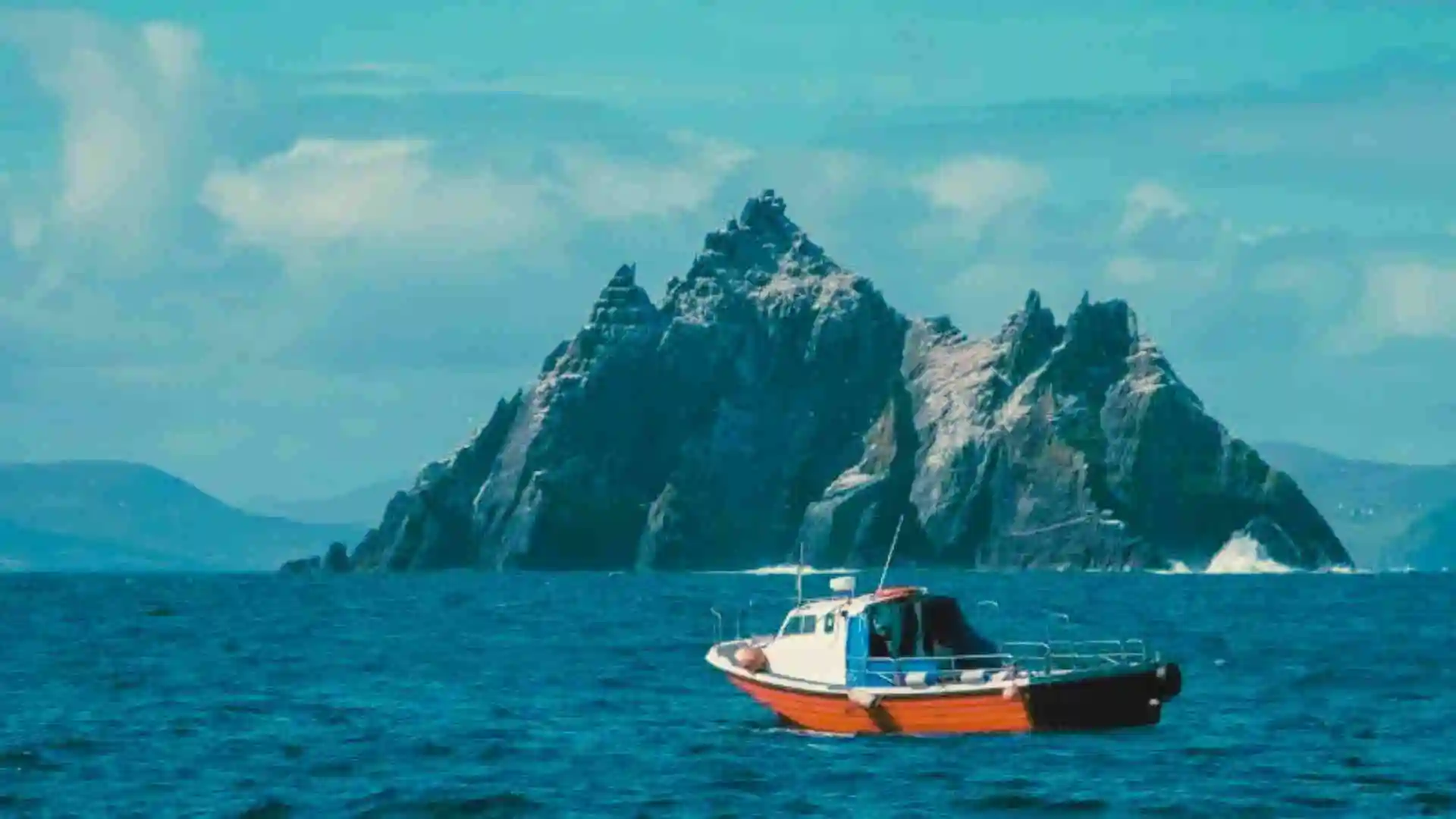
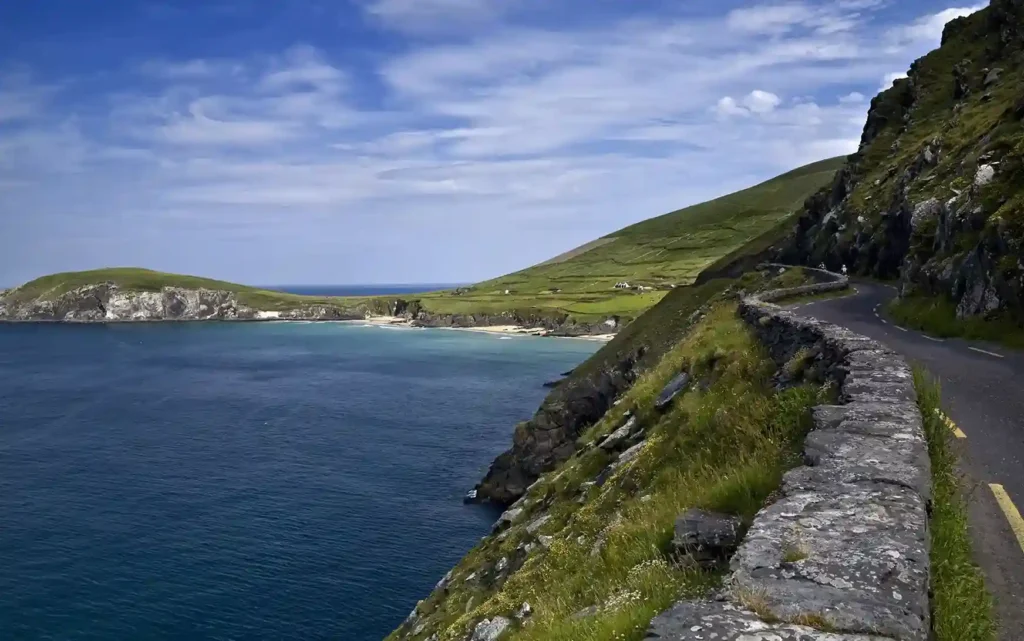
Skellig Michael is a stunning testament to ancient spirituality and gorgeous scenery off the south west coast of Ireland. This UNESCO World Heritage site draws thrill-seekers and history lovers alike. It is a unique location that incorporates untouched natural scenery, medieval monastic structures and an element of isolation.
It was also featured in Star Wars: The Force Awakens and The Last Jedi. Skellig Michael is perfect if you love archaeology, wildlife, or scenery from film locations. It is truly unique and memorable.
What Is Skellig Michael?
Skellig Michael is of the two Skellig Islands in County Kerry and is the larger of the two. Its name Skellig Michael is an anglicisation of the Irish Sceilig Mhichíl which means, literally, Michael’s rock.
It rises dramatically from the harbour of Ballinskelligs to more than 700 feet above sea level. It was home to Christian monks who lived there. They built a hiberno-christian monastery there from the 6th or 7th century.
Unfortunately today, only the ruins of their stone huts continue to crown the summit. These remains belong to the best preserved early Christian monastery in Europe.
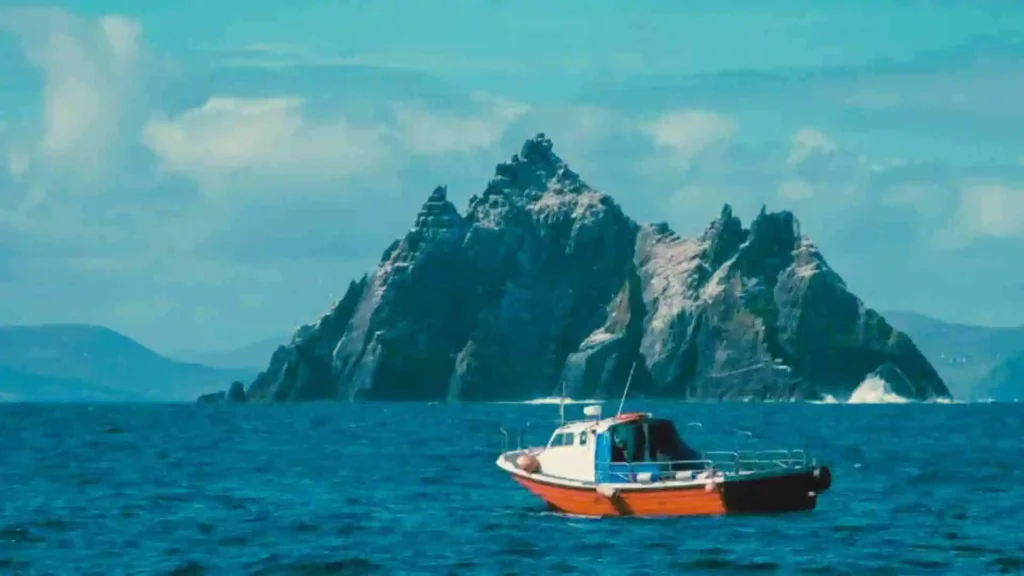
In 1996 UNESCO designated the site as a World Heritage Site because of its meaningful cultural and spiritual value. Although it is remote and not so easy to visit, its purity is that it is ‘undisturbed’.
In recent years, Skellig Michael has enjoyed an amount of fame through the fact that it was in the Star Wars films The Force Awakens and The Last Jedi, but the essence of the island comes from stories of much older times, a story of prayer, endurance and simplicity.
The Monastic History of Skellig Michael
Christian hermits likely started settling on Skellig Michael around the 6th century. They had a good reason for taking residence on a deserted island. They wanted to create their own isolation to be physically close to God through a solitary existence. Life had to be hard.
Every day they were consumed by heavy wind and rain, crashing waves around them demanding attention. To help assist in devotion, they built dry-stone huts with beehive roofs. They terraced land for farming use and used a few tools and a vast amount of willpower.
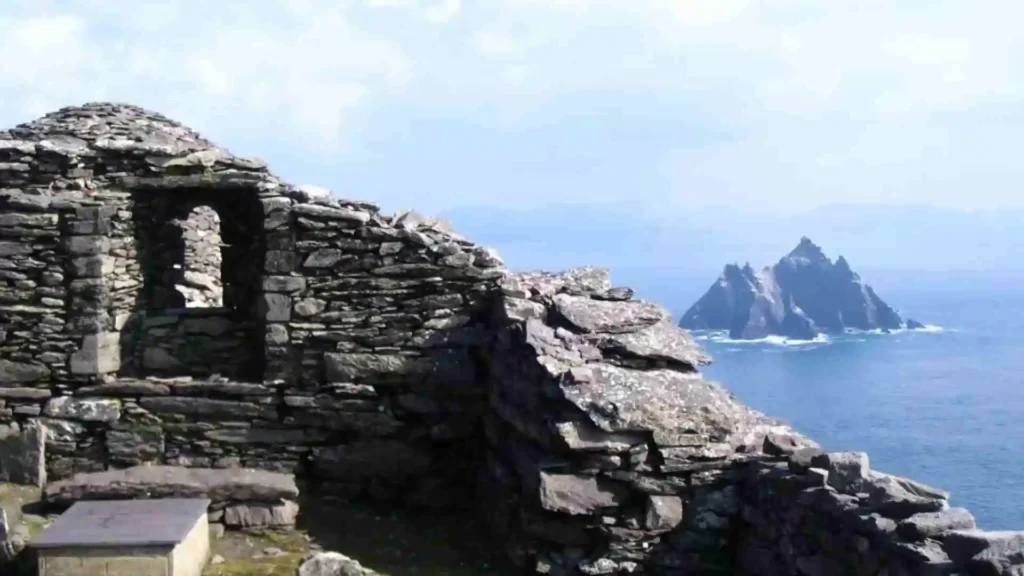
The monastery is sitting very close to the summits of the island and there are around 600 stone steps to that point. Food, fuel, and even soil had to be transported up on foot. The monks would have been intensely engaged in prayer, fasting and manual labour.
The site on Skellig Michael fits into the larger Celtic Christian tradition of seeking spiritual understanding through isolation. After the 12th and 13th centuries the monks had disappeared to the mainland. The reason behind remains frequent storms and Norse raids.
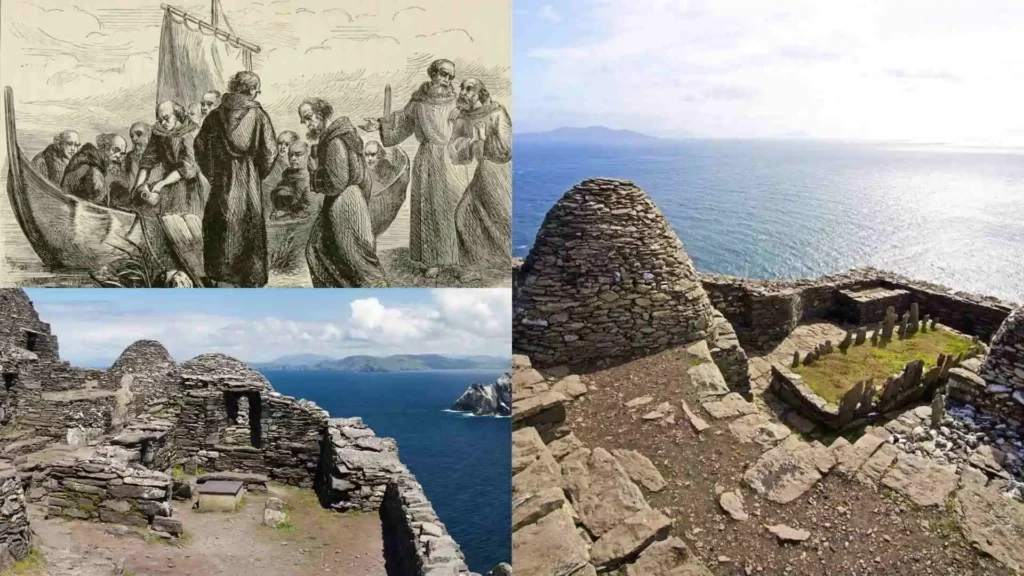
The monastery still amazes visitors and experts with its corbelled stone methods built without mortar. Even now it successfully keeps out water. As you walk among the huts, your senses capture the muted spirituality. Spirituality was the very essence of this isolated congregation.
Skellig Michael Today–UNESCO Site and Star Wars Icon
Skellig Michael is both a place of worship and a contemporary cultural icon. It is designated as UNESCO World Heritage to protect these delicate structures. There are only a limited number of tours from mid-May to late September. Also there is a cap on visitors.
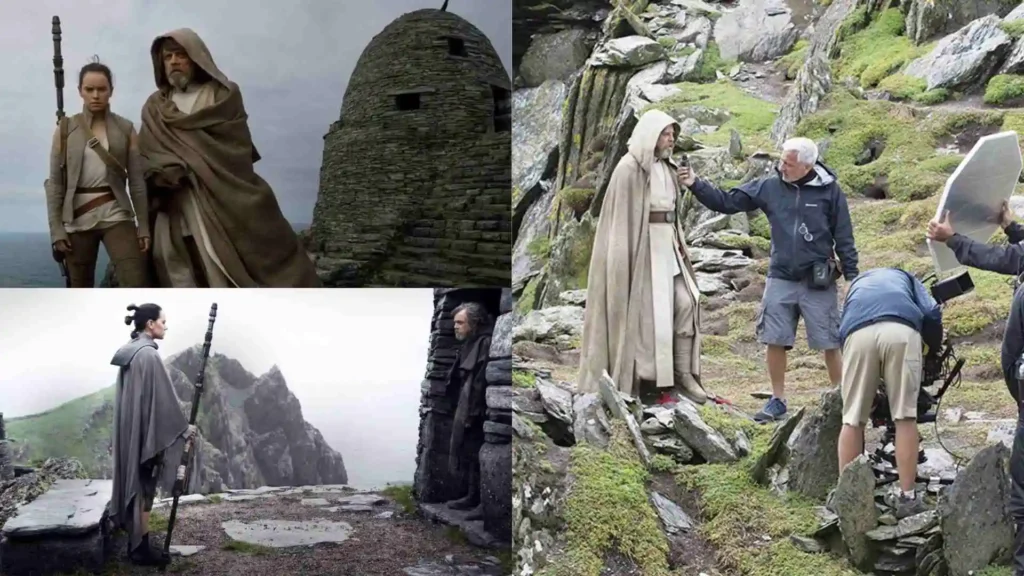
In 2015, the island made its mark on modern cinematic history. Star Wars: The Force Awakens filmed its final scene of Rey meeting with Luke Skywalker on Skellig Michael island. In the sequel, The Last Jedi, the island came back with expanded scenes.
Some fans now visit because of the films, but most leave the island amazed by its deeper history. The juxtaposition of ancient monks and space-age Jedi simply adds broad layers to its identity.
How to Get to Skellig Michael
The trip to Skellig Michael offers a journey of discovery in itself. To get there, you must start at Portmagee, Ballinskelligs, or Caherdaniel in County Kerry. These three quaint little coastal towns are the launch point for all boat trips. Most people visit Skellig Michael from Dublin.
You can reach there either by driving or taking an easy bus ride to the Iveragh Peninsula. The best chance would be to plan some wider routes. For example, check out what to do in Dublin for a day or so before heading west.
You have to take small boats from the ports to the island. The trips to Skellig Michael are dictated only by sea condition and weather. Boats do not run every day, even during the height of the season.
You should be prepared for cancellations, delays, and rescheduled voyages. The bookings fill up quickly. So you have to book a trip months in advance.
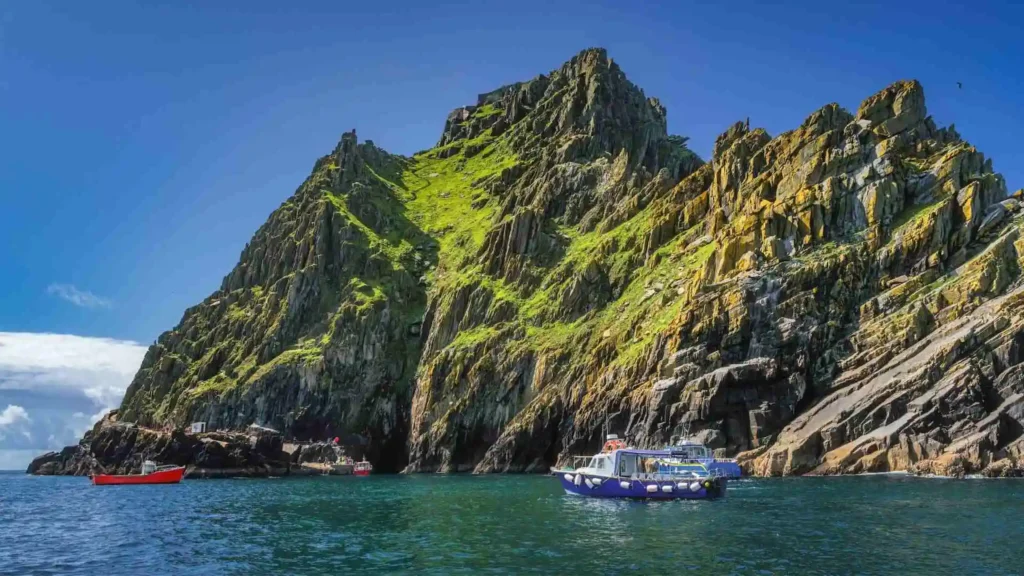
The tour operators usually have two types of trips. Landing tours, and eco (non-landing) tours. Only a few tour operators have licenses for landing trips. It permits you to disembark from the boat and lead to the monastery in the hills.
For many visitors, the adventure begins with the exhilarating boat ride. While it is not an amusement ride, the waves can be driving you forward. The ride is often accompanied by the possibility of spotting puffins, dolphins, and seals.
The journey is around 45 minutes each way, and it can get choppy. You can take some kind of motion sickness pills.
Skellig Michael Tours and Booking Tips
Planning is essential when booking a tour to Skellig Michael. The landing tours usually sell out very quickly in early spring. There are only 15 boat operators who are allowed to bring small groups of people ashore.
Only about 180 visitors usually land each day. Book through a reputable operator listed through Failte Ireland or the Skellig Experience Visitor Centre. Prices for landing trips range from about €100 to €150 per person.
The eco-tours provide visitors with up close views of both Skellig Islands. These tours circle Skellig Michael, and Little Skellig which has Ireland’s largest gannet colony.
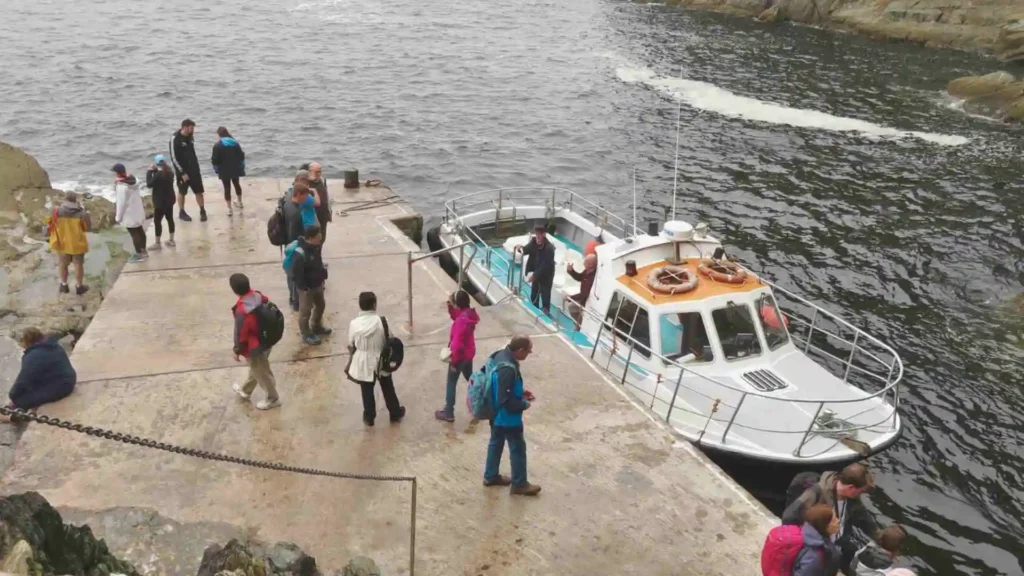
Here are some points to consider before booking a tour.
- When arranging your tour, confirm the type of tour you are booking, cancellation policy and your departure point.
- Morning tours tend to have a lower possibility of cancellation if the weather puts your tour in jeopardy.
- Wear sturdy shoes and dress in layers.
- Bring your own water.
- There are no toilets, no shelters and no food vendors on the island.
- Be prepared to do some steeper climbs with little safety rails.
- Check out our guide to seasons in Ireland to decide about the timing of your trip.
When to Visit Skellig Michael
Boat tours are operating in May or September. So these are the best months to visit Skellig Michael. Outside these months because the conditions turn rough and days shorten. June and July will give you the best sunshine that is available and most puffins.
But the islands are crowded in these months. May and September are the least crowded months. These are certainly quieter, with an air of relaxation.
If you are a photographer, or hiker who likes peace and quiet, they are both excellent months for visit. You can also get a chance to view the Northern Lights in Ireland. As the visibility is excellent due to the absence of light pollution.
The trip will always depend on the weather. Even in summer, a trip may be cancelled due to huge swells or fog. The earlier you book your trip means you can have a flexible renewal in your travels.
Wildlife and Natural Beauty on the Island
Skellig Michael’s natural environment is equally fulfilling as its spiritual heritage. The island is home to birds’ colonies, mainly seabirds, some of which consist of puffins, razorbills, and kittiwakes.
Puffins are numerous from February to July (breeding period). Puffins, with bright charming orange beaks are fondly appreciated. The predators do not exist on these cliffs and sea stacks. Cliffs and rock faces provide suitable nesting grounds to these birds.
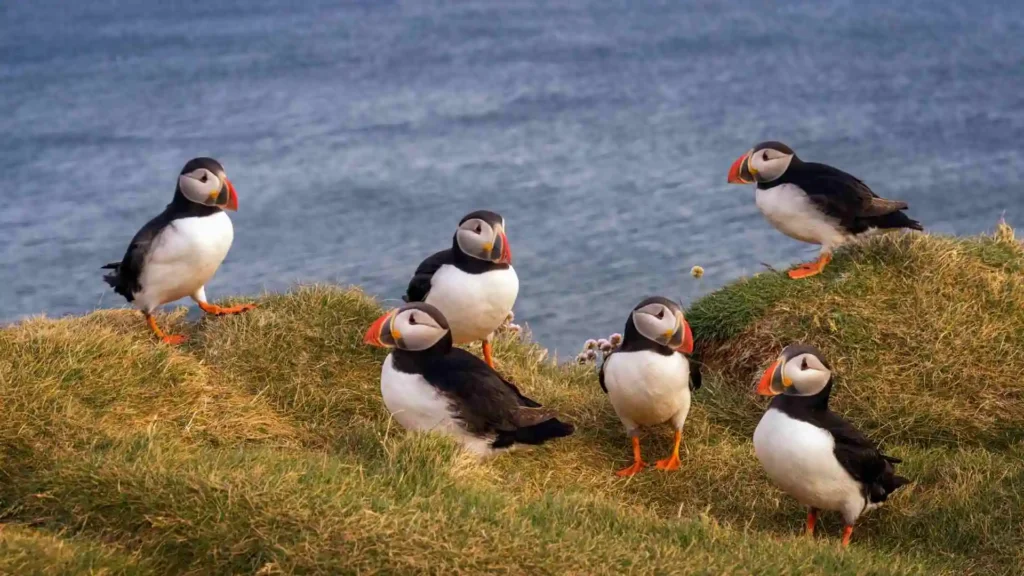
Surrounding waters have marine life. You may see grey seals warming themselves on rocks. Or you can observe dolphins swaying through the rolling waves on your boat trip. In late summer, basking sharks – gentle giants with 6-foot mouths are occasionally witnessed offshore.
The vegetation that clings in patches to the rock are battered and low. The heather, mosses and sea pinks add a punch of colour to the dull grey landscape. In fact, many vegetation clumps are hidden this way to the rocks.
The clumps are full of greenery, decorative, near- slimy plants, contrasting the rugged rocky surfaces. The whole scene is so calm and amazing which is quite an utterly unique space.
Planning your Skellig Michael Adventure
When visiting Skellig Michael, planning is so important. You should keep these points in view:
- Book early, pack early, check the weather regularly.
- The climb to the monastery is steep, with over 600 steps. There are no handrails and at times the path is narrow.
- Visitors should take care, and a reasonable level of fitness will help, if you intend to climb.
- Children under 12 cannot land.
- There are no services on the island, so bring water, sunblock, rain gear and snacks or lunch.
- Keep in mind there is limited carry-on space, so avoid heavyweight bags. You will need both hands to climb up and down the rocky paths.
- Lastly, should be aware that landing may be cancelled even on the morning of your trip, so stay flexible with your itinerary.
Consider making mention of Ireland and combining this expedition with other parts of your Irish travels. On the contrary, there are other options for physically less-demanding climbs.
You can consider hiking other best hikes in Ireland. Or perhaps a leisurely day exploring cultural excursions in Dublin. Allow your trip to Skellig Michael to inspire travel itineraries.
Cultural Legacy and Public Imagination
The allure of Skellig Michael continues to grow. Its barren beauty has inspired artists, writers and seekers. George Bernard Shaw called it “a wonderful, impossible, mad place.” He went to the island, and described it as “part of our dream world.”
That dream survives. Writers have connected the island with Irish mythology and Christian imagery. It holds an atmosphere made up of hardship, isolation, and spirituality. Bernard Shaw’s words still resonate with visitors who gaze beyond the island’s monastery into the open ocean.
The Skellig Experience on Valentia Island is the perfect opportunity to find out more about the island. The exhibits cover the history, wildlife and legends of both Skellig Islands. This can be informative and can add appreciation for the islands especially when weather conditions do not allow you to land.
Final Thoughts
Skellig Michael is a pilgrimage, retreat, and film all together. The wind, stone, and sea all play the role of a main character. History, puffins or simply leisure, whatever is the motivation behind your visit, Skellig Michael is the answer. When you claim a place on the thousand year walk, you will become part of a story that is as old as the stone.