Ancient Celtic Symbols: History, Meaning & Spirituality
Ever wonder if that Celtic knot tattoo you’ve been admiring is what it’s really made of? You are by no means alone.
The internet is full of conflicting information regarding the meanings of Celtic symbols and their uses, so it can become quite confusing. Some of the designs are really old and some are quite new but have been lent a Celtic sense over the years.
This article will help you to see the difference, and you will have an idea of what you are actually buying for a tattoo, piece of jewellery or artwork.
Historical ancient Celtic Symbols and their meanings
The key to understanding the Celtic symbolism is to examine the artefacts which archaeologists have recovered.
There are many designs that are referred to as “Celtic” but are actually from another particular time in history or a particular place; the number 3 is significant in Celtic tradition.
The Triskelion (Triple Spiral)
One of the oldest symbols linked with this tradition is the triskele, or triple spiral. It is located at Newgrange in Ireland, a Neolithic passage tomb which is thought to date from approximately 3200 BCE.
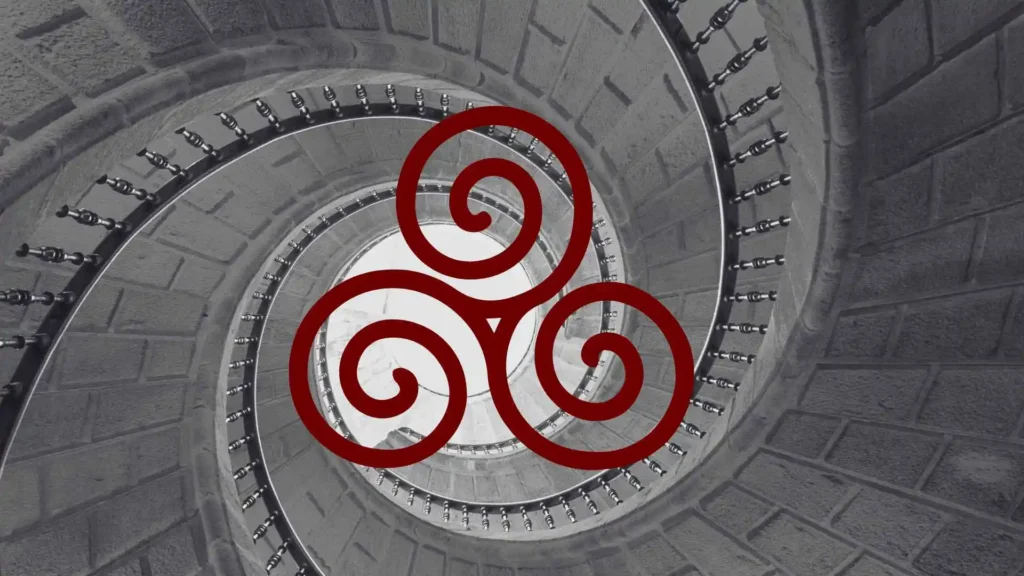
This was long before the Celtic people as we now know them. The three spirals are frequently linked to movement, natural cycles and the notion of three parts making a whole.
In Celtic culture, the number three was also significant and is frequently associated with concepts such as land, sea and sky or mind, body and spirit.
The Celtic Cross
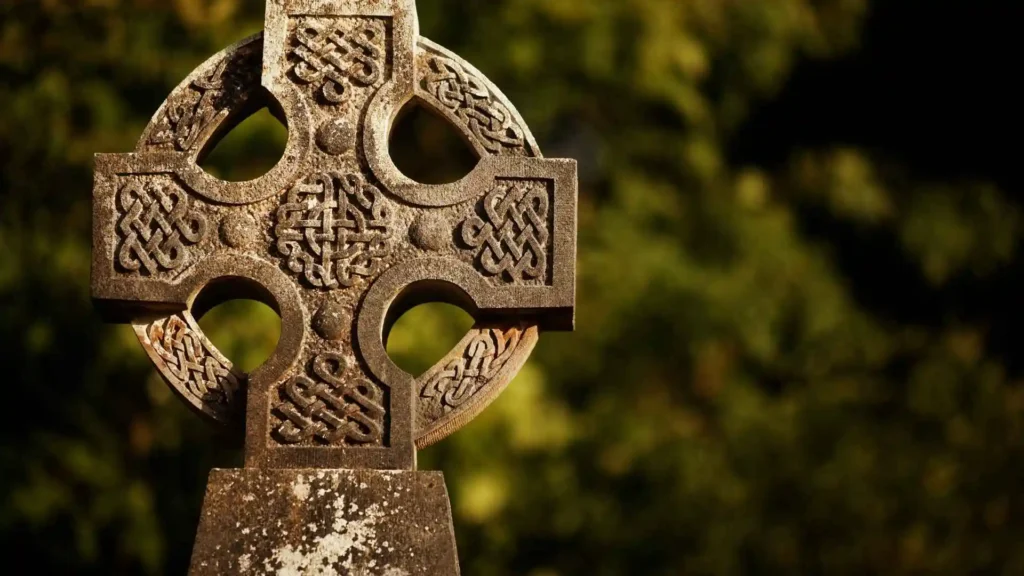
The Celtic cross with the circle around it was introduced much later, around the 8th-9th century. It is typically depicted as a cross with a circle around it, sometimes accompanied by the sun and the concept of the oneness and eternality of God.
The detail of the knots and interlaced patterns found on many Celtic crosses should also be studied. They aren’t necessarily ancient Celtic symbols. Much of this knotwork was in fact Christian art of early medieval Britain and Ireland.
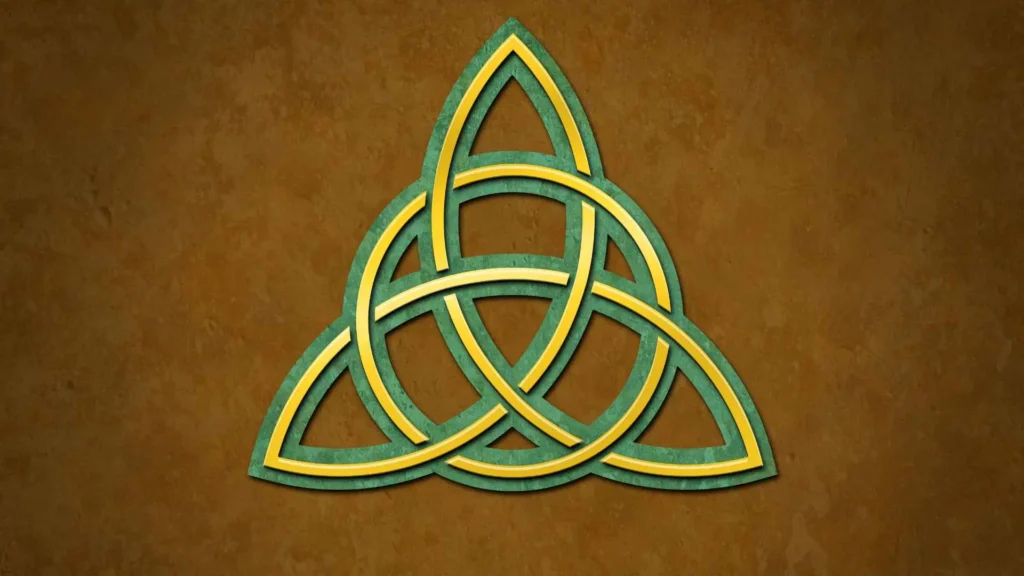
The Triquetra (Trinity Knot)
The other symbol is quite similar to the first and also of a medieval origin, the Triquetra, which translates to “three-cornered”. The three-point motif is interlocking and is found in the Book of Kells and other Insular art manuscripts. It is similar to the triskelion, a symbol of several triplicities: in the pagan world, land, sea, and sky, and in the Christian world, the Holy Trinity.
The Celtic Tree of Life (Crann Bethadh)
Trees were also very important to the Celts, especially oak and ash. They were perceived as more than just trees and were linked closely with life and nature.
Typically the Tree of Life is depicted with its roots extending into the ground and its branches extending upward towards the sky. It symbolizes the relationship between the various parts of the world and the concepts of wisdom, strength and the relationship between all living things.
Celtic knots and their meanings: Strength, family and love
Now we get to the interesting bit. The majority of the popular Celtic knots are actually modern designs that are inspired by ancient designs but not actually ancient.
The Dara Knot
The Dara Knot’s meaning is popularly accepted as a Celtic symbol of strength. This knot is based on the root system of the oak tree (Doire in Irish) and is actually a modern knot from the Victorian Celtic Revival period. However, it is still adopted as a symbol of strength and resilience in the Celtic community for tattoos and jewellery.
The Serch Bythol
The Serch Bythol meaning stands for eternal love and unity between partners. This is a symbol of love that is created by combining two triskeles into one continuous motion, a Celtic love symbol. It is a modern design with a lot of ancient triple symbolism.
The Celtic Motherhood Knot
One of the most misinterpreted is the meaning of the Celtic motherhood knot. This design with interwoven hearts is a modern design, not an old one. It is now widely used as a Celtic symbol of family, or a mother-daughter knot, but it has not been found in any archaeological context.
The Claddagh & Other Protective Emblems
The Claddagh symbol from Galway means love (heart), loyalty (crown), and friendship (hands) and dates back to the 17th century. Brigid’s Cross is more authentic than the other traditional Celtic symbols for protection, being woven from rushes to ward off evil. Ancient symbols of strength and protection were also used, such as those of Celtic animals like the bull or boar.
Dissecting authentic artefacts vs. modern inventions
Many online guides make these mistakes. The Triskelion, high crosses and the triquetra are all authentic symbols found in the archaeological record. The Dara Knot, Motherhood Knot and Ailm are all designs of the Victorian Romantic Revival. Many “ancient” traditions are now commonplace that were invented during the Celtic Revival of the 19th century.
Experts state that the interlace patterns that are known as “Celtic art” only date back to the 7th century AD, which is approximately 1000 years after the start of Celtic history.
It was not a druidic tradition but an expression of new beliefs by Christians. Likewise, the symbols such as the Norse Vegvisir are frequently misidentified as Celtic symbols. Always check the source.
Choosing Celtic Symbols for tattoos, jewellery and modern art
If you’re planning on getting a Celtic tattoo or jewellery item, you’ll want to find those uninterrupted lines. They’re one of the main features of traditional Celtic knots.
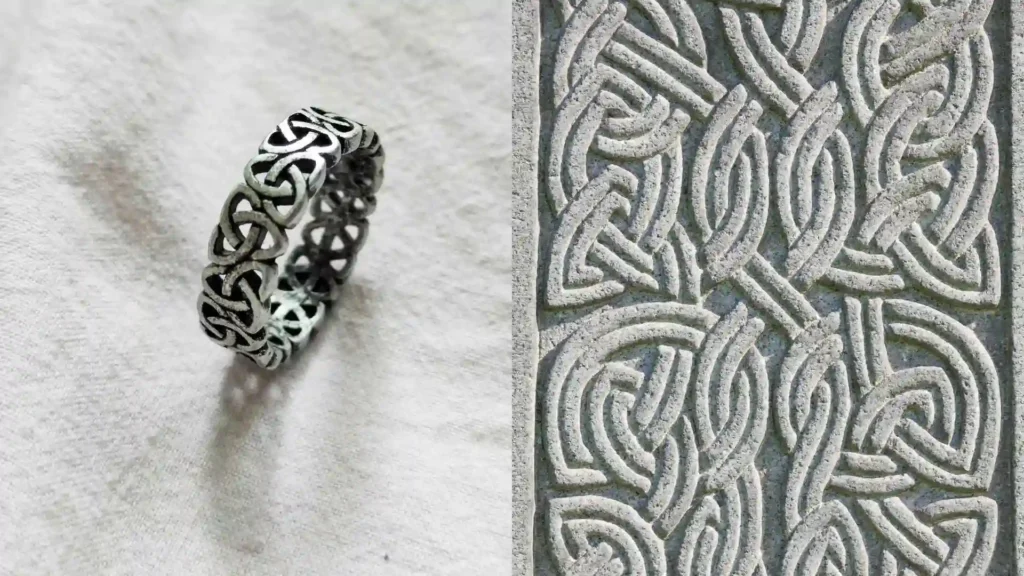
The style that you choose should also be dependent on the message that you want the design to convey. For instance, the Motherhood Knot is a popular modern symbol for family or motherhood. Another knot that is commonly chosen for strength is the Dara Knot.
Before getting a symbol tattooed, it’s also important to search its history. Not all the Celtic designs that you see today are of pagan origin. Certain symbols originated in Christian art starting in the 7th century, others were popularised much later in the Victorian era and the Victorian craze of Celtic art.
It can be a little more meaningful if you know where a symbol has actually originated from. You can then choose it because it is a story that resonates with you, not because it looks Celtic.