
How to Become a Marriage Solemniser in Ireland: The Complete Guide

Embarking on the journey to become a marriage solemniser in Ireland can be a rewarding professional path. It offers a unique opportunity to play a key role in one of the most important days of a couple’s life. However, because Irish marriage law is strictly regulated, the process of gaining the legal authority to perform these ceremonies is often misunderstood.
Many people use terms like “HSE solemniser” or “independent celebrant” interchangeably. In law, these roles are quite distinct. To provide clarity, this guide explores the legal requirements, the differences between various types of officiants, and the exact steps needed to operate legally in the Republic of Ireland.
Understanding the Legal Status of a Marriage Solemniser
In Ireland, a solemniser is a person who holds the legal authority to perform a marriage ceremony that is recognised by the State. Under the Civil Registration Act 2004, for a marriage to be legally binding it must be performed by a person whose name appears on the Register of Solemnisers. This register is maintained by the General Register Office.
If your name is not on this register, you cannot legally perform a wedding ceremony in Ireland, regardless of any training you may have completed or professional titles you hold. There is no mechanism for an independent or freelance solemniser to register themselves directly with the State. All solemnisers must belong to a recognised structure. This ensures that every marriage performed in Ireland meets the same legal standards.
Can You Directly Become an HSE Solemniser?
There is a common misconception that someone can apply to the Health Service Executive to become a solemniser in a private or freelance capacity. In practice, you cannot simply apply to the HSE to start performing weddings as an individual.
The term “HSE solemniser” usually refers to a Civil Registrar. Civil Registrars conduct civil marriage ceremonies and are public servants working within the Civil Registration Service. These roles are filled through standard public sector recruitment processes. Civil Registrars generally conduct ceremonies in registry offices or approved venues during working hours. They are not private contractors and do not operate independently.
The Different Types of Registered Solemnisers
The Register of Solemnisers categorises individuals according to the type of ceremony they are authorised to conduct. Understanding these categories helps you decide which path suits you.
Civil Registrars
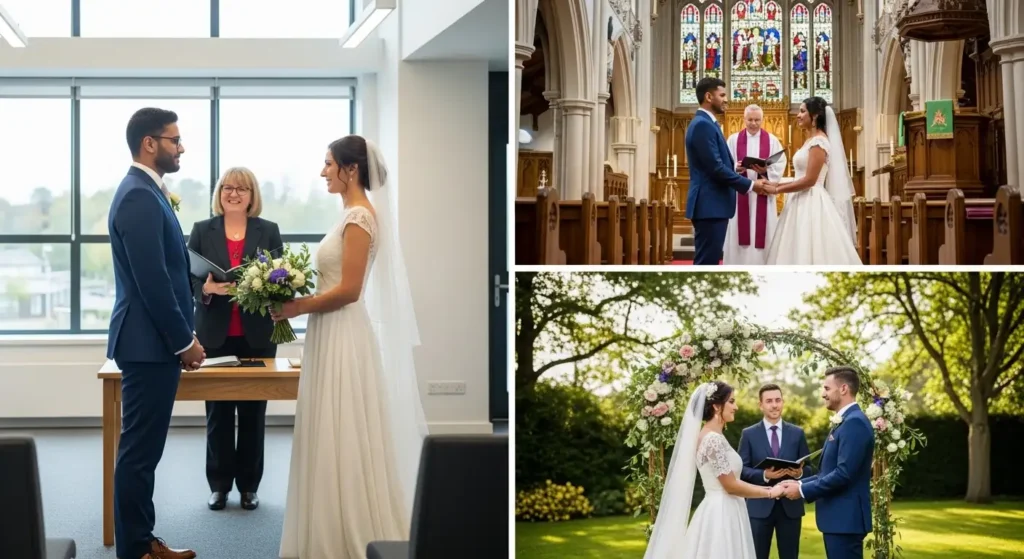
Civil Registrars conduct civil marriage ceremonies on behalf of the State. These ceremonies must be entirely secular and cannot contain religious or spiritual content. Civil Registrars work within the Civil Registration Service and operate within designated registration districts.
Religious Solemnisers
Religious solemnisers are members of recognised religious bodies. They are nominated by the authorities of their church, faith, or religious organisation. Their authority allows them to conduct ceremonies that follow the rites and traditions of their faith community.
Secular Solemnisers
Secular solemnisers belong to recognised secular organisations such as the Humanist Association of Ireland. Like religious solemnisers, they are nominated by their organisation for inclusion on the register. They conduct non religious ceremonies that reflect humanist or philosophical values. These ceremonies are often personalised and can take place in a wide range of suitable venues.
The Step by Step Path to Becoming a Registered Solemniser
If your goal is to conduct personalised ceremonies while maintaining full legal authority, you must follow a process that leads to nomination by a recognised body.
1. Research and Choose a Recognised Body
You cannot apply to become a solemniser as an individual. Your first step is to identify a religious or secular body that is recognised by the State and authorised to nominate solemnisers. Research organisations whose values and community structure align with your own. Some organisations represent specific faiths, while others operate on a secular or humanist basis.
2. Complete Necessary Training
While the State does not prescribe a single national training programme for all solemnisers, the organisation you join will usually require structured training. This training typically covers the Civil Registration Act 2004, the legal requirements for marriage ceremonies, the correct use of the Marriage Registration Form, and the professional standards expected of a solemniser.
3. Seek Nomination for the Register
After completing your organisation’s membership and training requirements, you may request nomination to the General Register Office for inclusion on the Register of Solemnisers. The nomination must come from the authorised nominator within the organisation. Individuals cannot apply directly to the General Register Office.
4. Inclusion in the Register of Solemnisers
Once the General Register Office reviews and approves your nomination, your name will be added to the official Register of Solemnisers. At this point, you are legally empowered to solemnise marriages in the Republic of Ireland. Your contact details will be made public on the register, allowing couples to verify your status and reach out to you.
Celebrant vs. Solemniser: Clarifying the Confusion
A celebrant specialises in designing and delivering ceremonies. They often focus on storytelling, ceremony structure, and creating meaningful experiences for couples.
However, in Ireland not all celebrants are legally authorised solemnisers. A celebrant who is not listed on the Register of Solemnisers cannot legally sign the Marriage Registration Form.
For this reason, some couples choose a two part wedding process. They complete the legal marriage with a Civil Registrar and then hold a separate personalised ceremony led by a celebrant.
If you become a registered solemniser, you combine both roles. You conduct the ceremony and you also hold the legal authority to register the marriage.
The Legal Responsibilities of a Solemniser
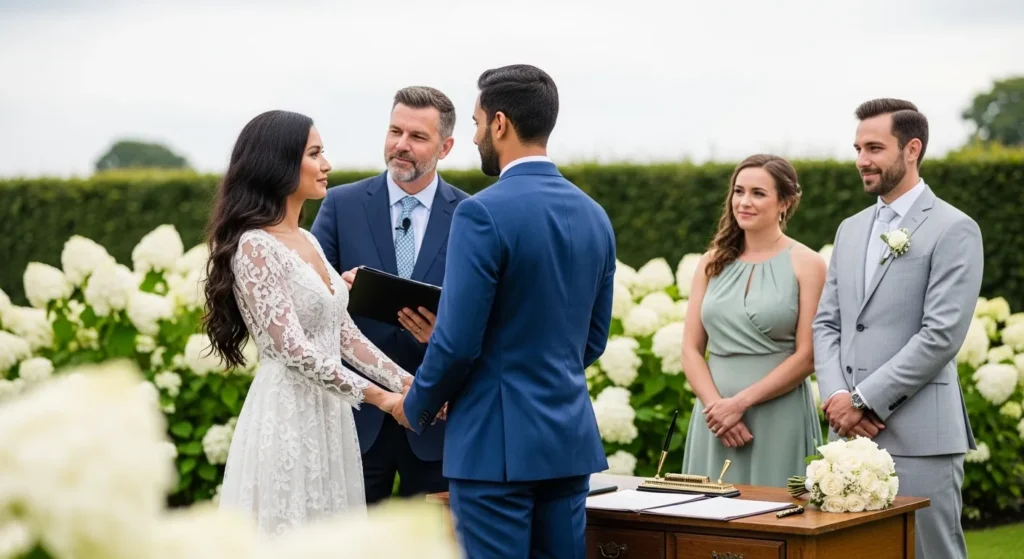
Becoming a registered solemniser carries significant legal responsibilities. A marriage ceremony is not simply a social event. It is also a legal process that must meet strict requirements.
Verifying Identity and Legal Capacity
You must ensure that the couple has the legal capacity to marry and that the required identification has been provided.
Checking the Marriage Registration Form
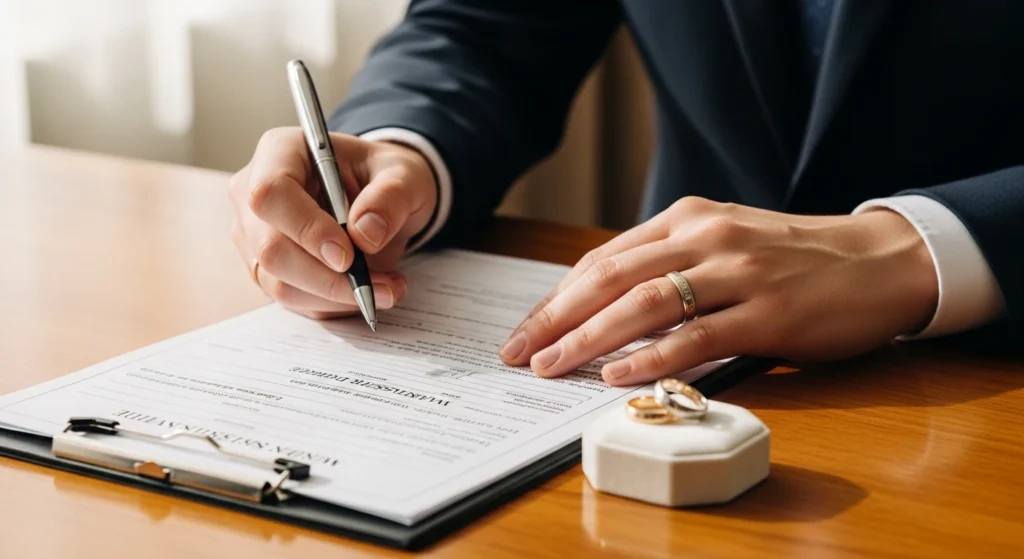
Before the ceremony begins, you must receive and verify the Marriage Registration Form issued by the Civil Registration Service. Without this form a legal marriage ceremony cannot proceed.
Ensuring Proper Witnesses
Two witnesses must be present for the entire ceremony. Each witness must be at least 18 years of age.
Conducting the Legal Declarations
Irish law requires specific verbal declarations from the couple during the ceremony. These declarations must take place in the presence of the solemniser and the two witnesses.
Returning the Marriage Registration Form
After the ceremony the form must be signed by the couple, the witnesses, and the solemniser. It must then be returned to the Civil Registration Service within the required timeframe, usually within one month.
Why Quality Training and Proper Affiliation Matter
The role of a solemniser carries legal responsibility. Errors in the ceremony process or documentation can create serious issues for the couple involved.
Joining a reputable organisation and completing proper training builds professional credibility. It also ensures you understand the legal framework governing marriage in Ireland.
Couples often look for solemnisers who combine legal authority with strong ceremony skills. Proper training allows you to deliver both.
Conclusion
Becoming a marriage solemniser in Ireland involves joining a recognised organisation and gaining nomination to the Register of Solemnisers. It requires an understanding of Irish marriage law and a commitment to maintaining the legal integrity of the ceremony.
Before starting this path, consult official sources for the most accurate and current information on Irish marriage regulations.
- Citizens Information: Getting Married in Ireland
- The Register of Solemnisers (General Register Office)