
Irish National Heritage Park: The closest thing to time travel in Ireland
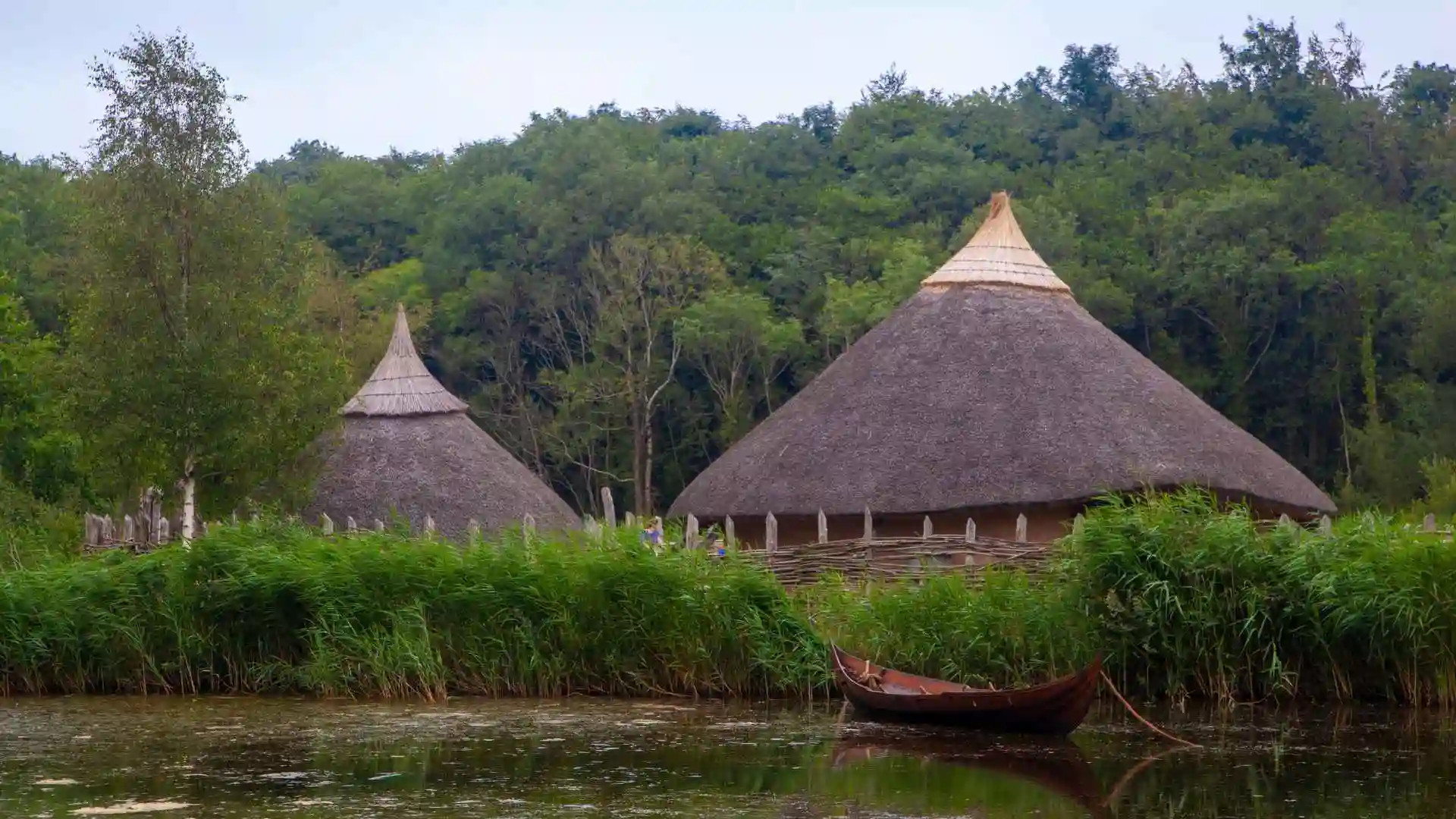
Step through a portal and suddenly the modern world is gone, and you are greeted with the aroma of woodsmoke, the sound of native oak trees, and the sight of a prehistoric settlement.
If you’re headed to County Wexford, you’re probably seeking a trip that’s more than just glass-case galleries of a museum, you want to make history come alive.
This article will help you see 9,000 years of Irish history, all condensed into a fantastic 35-acre outdoor adventure at the Irish National Heritage Park, and learn what to do in order to make your visit perfect.
Some quick need-to-knows before visiting Wexford Heritage Park
But, before you get on the trails, a couple of simple details will make your trip completely hassle-free. The park is very accessible, being only a short drive from Wexford Town and less than a 2-hour drive from Dublin.
It is advisable to book tickets for admission online to guarantee a time slot, especially in the summer season.
The opening hours of the park are 9.30 AM every day, and the closing hours vary slightly throughout the year, ranging from 5.00 PM to 5.30 PM, so check the schedule before leaving.
Ticket Cost Of The Heritage Park
Tickets are normally priced as:
- €18.00 for adults,
- €14.00 for seniors and students,
- €9.00 for children
- free for those under 4
About Wexford Heritage Park
This park is a beautifully preserved open-air museum and covers 35 acres of protected wetlands, estuary banks, and ancient woodlands. It was conceived and planned to follow the actual path of Ireland’s earliest people.
Instead of viewing static displays, you’re exploring a landscape that’s alive, literally constructed on the banks of the River Slaney.
Here, the emphasis is on immersive storytelling, and you will be able to explore natural environments as they were thousands of years ago.
What makes it special
This is what makes this park stand out in Ireland’s Ancient East. It is dedicated to experimental archaeology.
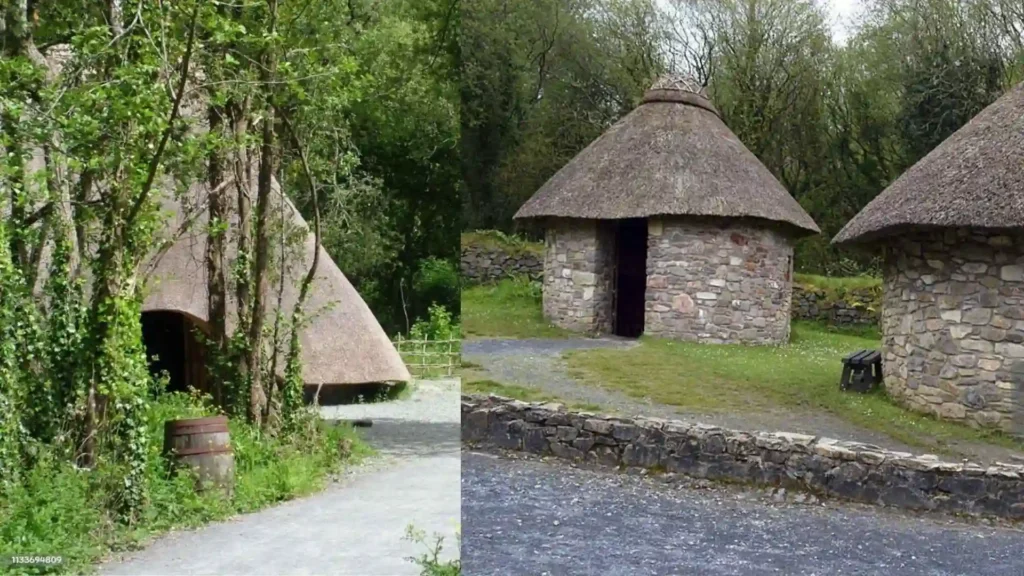
Each and every building you come across is constructed with original materials and period-specific tools, so you have touchpoints to the past.
It connects the school learning zone with an active outdoor playground, from the replica weapon throw to watching ancient metallurgical craftsmanship.
Things to do at Wexford Heritage Park
There are 16 separate sites set out in chronological order along a meandering, kid-friendly pathway through the park.
A self-guided walk is available, with an audio app, or you can participate in one of the three guided walks daily, which are led by characters from prehistoric Ireland, early Christian Ireland, and The Age of Invasion.
Children can try out the “Trials of Tuan” adventure logs, and history buffs can take in the ongoing, in-the-field archaeology on the historic hill of Carrig.
Types of reconstructions
It’s all in the building techniques; the genius of early Irish society is in the engineering. Along the path, you’ll see how the houses developed from makeshift lean-to huts to large stone fortifications.
These are true reproductions and depict the evolution of domestic architecture in direct relation to changes in climate, available resources, and the threat of invasion.
Crannóg
Walk across the wooden bridge to a high-status defensive homestead from the Bronze Age known as a ‘crannóg’.
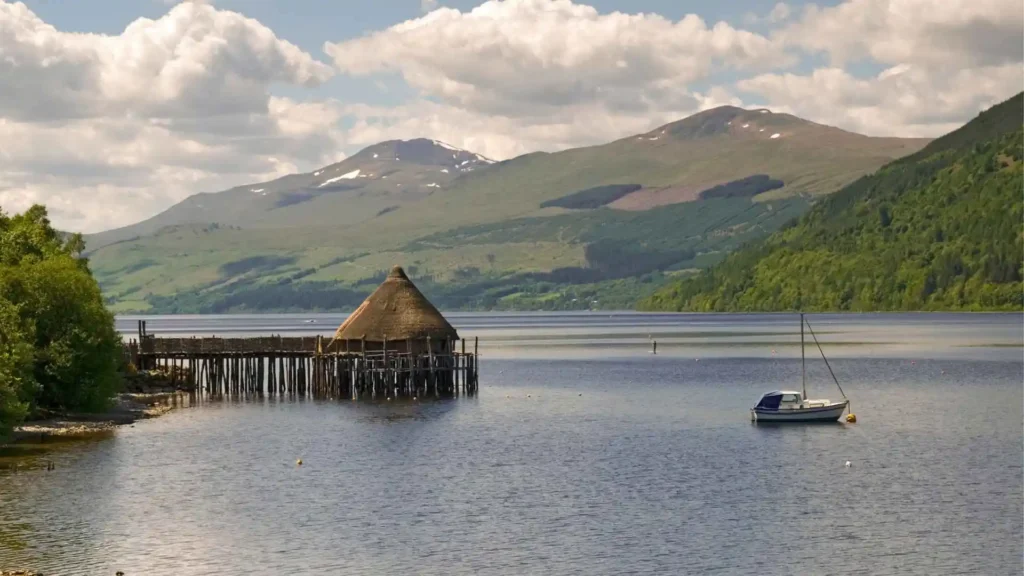
They were totally artificial islands built in deep lakes or marsh areas, using a framework of driven timber piles filled with brushwood, peat, and heavy stones.
A crannóg was like a floating rath (fortified dwelling) and ensured a very secure and prestigious residence for the wealthier families and their cattle, protecting them from night-time raids.
Watermill
Shortly upstream of the river path is the horizontal watermill and has been described as one of the earliest automatic machines in Ireland.
These mills have been in operation since the early 7th century and featured a dammed reservoir with controlled water gates that spun a horizontal wheel, which in turn ground corn into flour.
This new technology transformed local crafts and customs in early Christian Ireland and significantly reduced the amount of manual labour required for local communities and monastic orders.
Fulacht Fiadh
A Fulacht Fiadh is a traditional cooking site that has been heavily used since the Stone Age and can still be found deep in the marshy lowlands.
Hunters used to dig a pit in an area with a high water table, wrap their fresh game in straw, and then throw fire-heated stones into the trough to bring the water to a rolling boil.
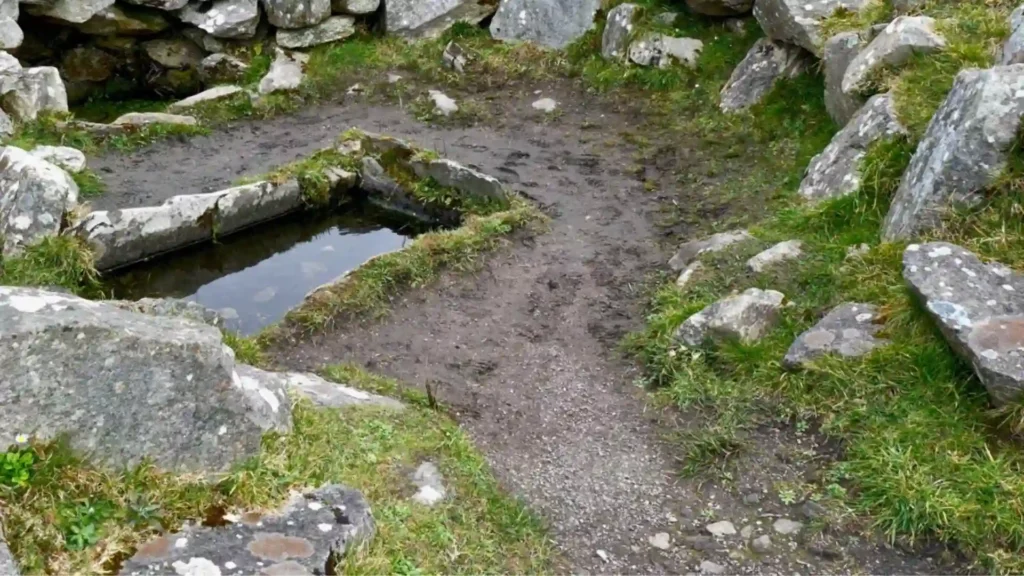
Today, these massive cooking fires can be easily recognised all across the Irish countryside as crescent-shaped mounds of burnt and shattered rock left behind.
Ringforts and Viking Houses
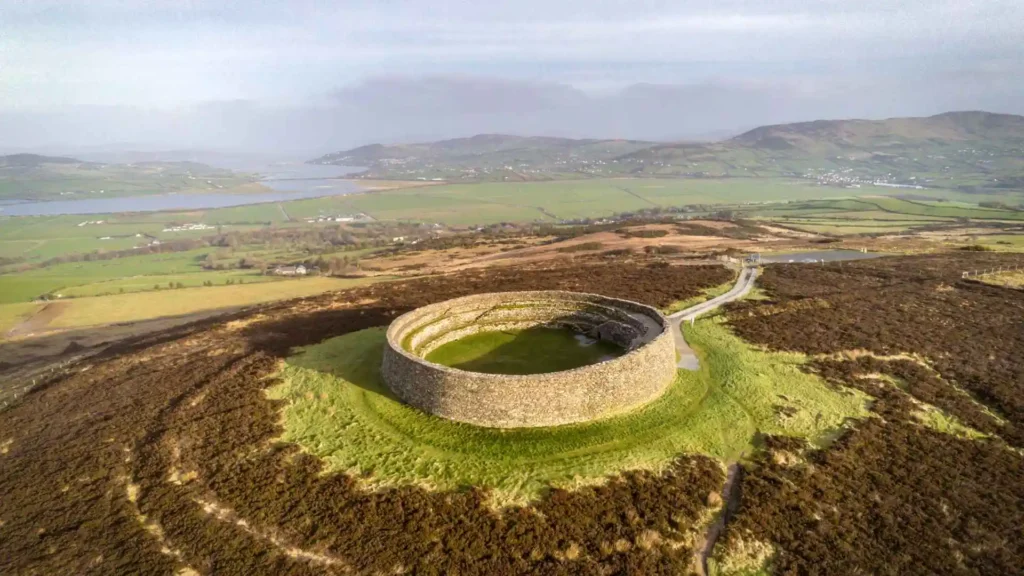
You will pass through the early Christian reconstruction of monasteries and into the early mediaeval townships. Unlike the timber ring-fort houses nearby, the earthen banks of the traditional Irish ring-fort are circular.
The restored Viking boatyard is right on the water’s edge and displays the amazing maritime craftsmanship that made Wexford a world trading port.
Depending on the season and timing, you may even be able to see live woodworking demonstrations or seasonal Viking festivals on the water.
The Norman Conquest
The last part of the park will confront you with the “Age of Invasion”. The real earthen remains of the first Norman castle (1169), built by Robert FitzStephen on his arrival, are here.
The main feature of the site is a tall, stone tower that is circular in shape and has a clock face on its side.
This viewpoint provides a panorama of the river crossing and is a perfect example of why the Normans selected this particular military viewpoint.
Things to do nearby
After your trip through time and a visit to the visitor centre café, you can easily continue your trip.
For those who wish to walk, a short drive will take you to Forth Mountain, where you can take rugged walks along the Wexford coastline.
For those preferring to visit another attraction, there is also Johnstown Castle, a castle renowned for its extensive lakes, Gothic architecture, and peacocks.