
Vikings in Ireland: History, Settlement and Lasting Impact
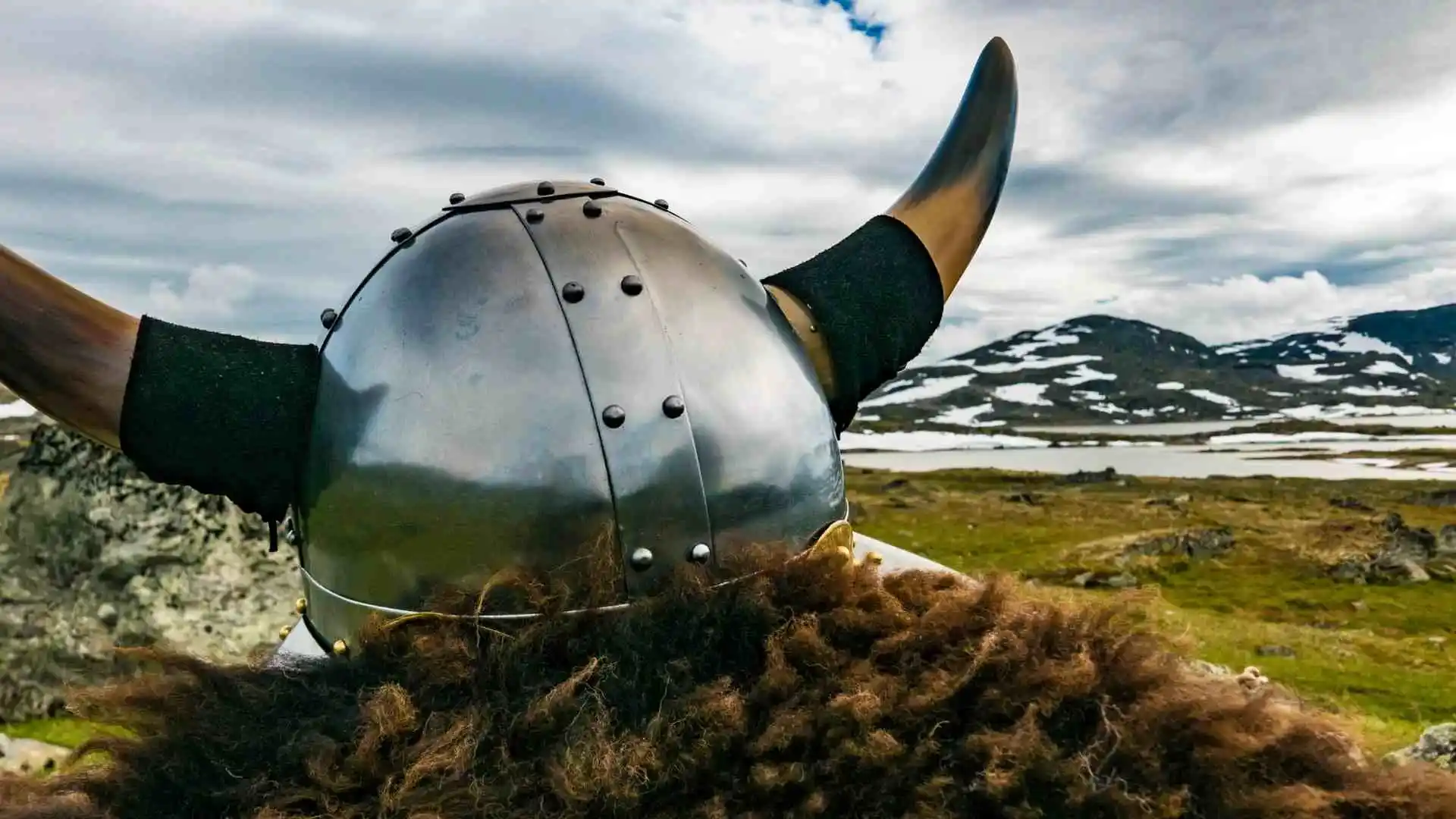
In Ireland, the Viking era began around 795 AD when Norse raiders started attacking the coastal monasteries. Vikings were Scandinavian seafarers who came to Ireland for trade, raids and exploration. Their raids eventually evolved into settlements and thriving trade networks here. The Vikings in Ireland are not just about conflict. Their invasions resulted in permanent settlements. They brought changes in every aspect of life, which can be seen even today.
The Vikings in Ireland are more about cultural exchange, urban development and economic growth. The blog covers the Viking history in Ireland, their arrival, settlement and daily life. Explore the visible and lasting impact of the Viking Age on Irish society.
Viking Raids and Early Contact (795–840 AD)
The first Viking raid happened back in 795 AD. Norse ships attacked coastal monasteries, including Lambay Island and Iona. The early Viking raids targeted monasteries because of their wealth, weak defence and proximity to the sea. The attackers used swift longships to attack, seize valuable items and withdraw before local forces could respond.
During the early Viking phase, the raiders included seasonal attackers who returned to Scandinavia after raids. These encounters and attacks became a part of the Irish storytelling tradition. These stories sounded like the Irish Mythical Creatures that shaped how these events were remembered and narrated.
Establishment of Viking Towns and Settlements
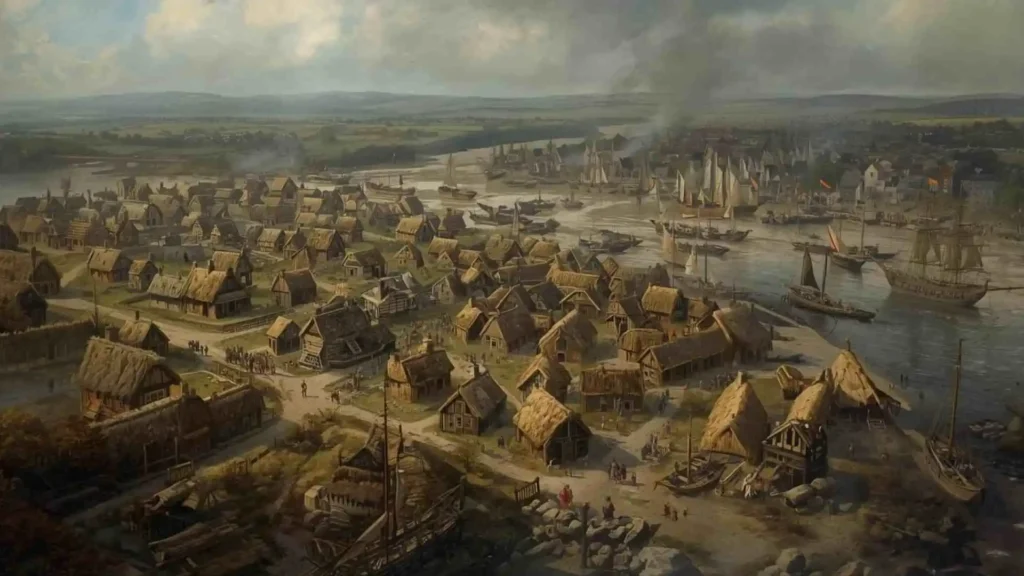
The raids and Viking activity in Ireland gradually took the shape of permanent settlements. Norse leaders by the mid-9th century started building their fortified bases known as longphorts. The longphorts later evolved into towns. Through settling in Ireland, the Vikings were able to control trade routes and expand political and economic influence.
Vikings intentionally chose coastal locations and river mouths to get access to inland trade networks . They also maintained easy sea escape routes. The transition from raids to settlement in Ireland laid the foundation of several important cities.
Dublin (841 AD)
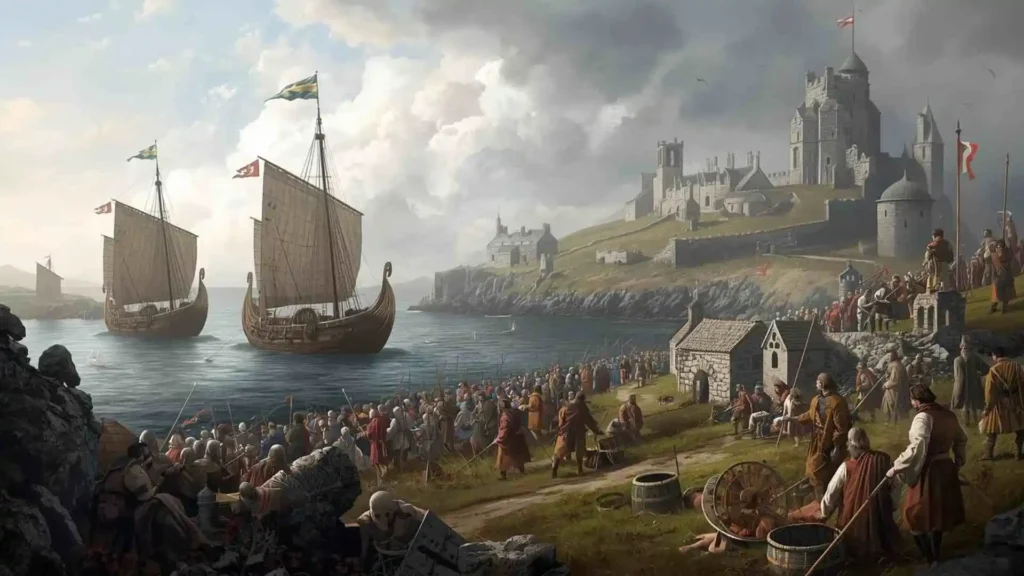
Dublin was initially established as a fortified longphort. It became the most powerful Viking settlement in Ireland in 841 AD. Dublin quickly developed into a major hub for trade, slavery and craftsmanship. The city has undergone profound change during the Viking Age. Dublin became a source of connection between Ireland and the wider Norse trade network, which stretched to Europe. The official forming date of the city is 988 AD.
Later, Norse and Gaelic cultures blended to form a new Irish culture. The symbols of this Viking past are still evident today in the area near Dublin Castle.
Waterford (914 AD)
Waterford is Ireland’s oldest city, founded in 914 AD. The city attracted the Vikings for its harbour and access to the River Suir. Vikings started trade to the Irish interior through this city. Waterford became a key trading spot for silver, textiles, and weapons. Vikings took great advantage of its maritime position during conflicts with Irish kings. They had a strategic advantage due to this city. Today, the city’s Viking triangle shows its Norse heritage.
Cork
Vikings invaded Cork for seasonal trade. Being located along the River Lee, Cork offered them safe access to the inner markets. Although Cork was smaller than Dublin and Waterford, it played a strategic role. With the passage of time, Viking merchants and traders integrated with Irish communities. They contributed to Cork’s development as a commercial centre rather than a military base.
Limerick
Limerick was established as a powerful Viking settlement controlling western trade routes. Its location on the River Shannon allowed the Vikings to control the river traffic and conduct raids. Influential Viking leaders took full control of Limerick and often clashed with Irish kings. The Vikings’ origin in Limerick helped the city serve as a political and economic centre in Munster during decline.
Wexford
Wexford began as a Viking settlement which mainly focused on commerce. The sheltered harbour served as an ideal place for shipbuilding and trading with Europe. Unlike other Viking towns, Wexford was established through peaceful interactions with locals. This peaceful settlement survived beyond the Viking Age and evolved into a stable mediaeval town. You can still see the Viking influence while walking through the winding streets of Wexford.
Viking Culture and Daily Life in Ireland
Viking society comprised the communities of traders, craftsmen, farmers, slaves and warriors. Warriors were given prestige, and daily life activities were incomplete without skilled crafts, trades and family households. Archaeological evidence reveals that people had skills of woodworking, shipbuilding and metalworking. Artefacts, including silver brooches, glass beads, combs, tools and weapons, show their personality and lifestyle.
With the passage of time, when Vikings blended with Irish culture, it evolved into a unique culture. The new and unique culture was a fusion of Scandinavian and Irish customs. Their daily diet comprised fish, meat, barley, dairy products and foraged foods. Clothes were made from wool and linen, adorned with brooches and jewellery. Jewellery was an indication of their social status. The fusion of different cultures shaped their everyday life beyond raiding stories.
Viking Economy, Trade, and Commerce
Extensive trade networks linked the Viking economy in Ireland with England, Scandinavia and continental Europe. The settlements along coastal cities such as Dublin, Waterford and Wexford became major commercial hubs. Vikings traded silver, weapons, textiles, agricultural items and other goods.
Archaeological discoveries of silver hoards and weights show that they used to do bullion-based trade . Bullion-based trade was widely in practice before the coinage system came into use. The Irish economy saw a turning point at the arrival of Viking-minted coins. The introduction of these coins played an important role in Irish economic development. This is how Ireland integrated into European trade systems. This integration laid the foundation of urban commerce and monetary exchange.
Viking Warfare and Conflicts with Irish Kingdoms
Viking warfare included both the conflicts and cooperation with Irish kingdoms. Initially the Vikings started as interventions and raids, but later they formed alliances with local chieftains. Through this alliance, they fought against rival kingdoms for mutual gains. The Battle of Clontarf (1014) and Sulcoit (968) show how the power kept shifting between Irish rulers and Viking forces.
Unlike the mythical stories, Vikings never got complete dominance over Ireland. This shift of power kept shifting through treaties, intermarriage and alliances. Irish kingdoms stood resilient and absorbed the Vikings into local society. Over the years this gave way to settlement and integration, reshaping Irish culture and society.
Religion, Beliefs, and Cultural Integration
The early Viking phase shows that Vikings had Norse pagan beliefs. They worshipped gods such as Thor, Frey and Odin and followed rituals of fertility, nature and war. A sustained connection with Ireland led them to the gradual adoption of Christianity. This happened particularly after the 10th century. The conversion to Christianity was not sudden; in fact, it was a cultural integration.
Irish and Norse traditions blended to form Hiberno-Norse identity. This fusion can be seen in cross-slabs, stone carvings and jewellery. Christian symbols appear alongside the Scandinavian artistic styles on different jewellery and metal pieces. The burial customs also show a blend of pagan and Christian rites. This religious integration shows how Vikings adapted to Irish spiritual life while preserving their own heritage.
Legacy of the Vikings in Modern Ireland
Modern Ireland’s culture and landscape clearly show the Viking legacy. The names of many places in Ireland have Norse origins, such as Waterford, Wexford and Dublin. These famous cities developed after Viking settlements. Surnames such as Doyle, Cotter and Higgins also show Norse ancestry.
Vikings also played an important role in architecture. They laid the foundations of Ireland’s first true towns, influencing the layout and trade centres. You can truly spot the symbols of Viking heritage in Irish festivals, museums and heritage trails like Waterford Viking Triangle. Viking influence helped shape Ireland’s urban, cultural and historical identity.
Archaeological Discoveries and Museums to Visit
Ireland’s Viking past is safe in the form of archaeological sites and museums. The National Museum of Ireland (Dublin) shows Viking artefacts such as jewellery, weapons and everyday tools. The interactive history museum, Dublinia, recreates Viking streets, homes and daily life.
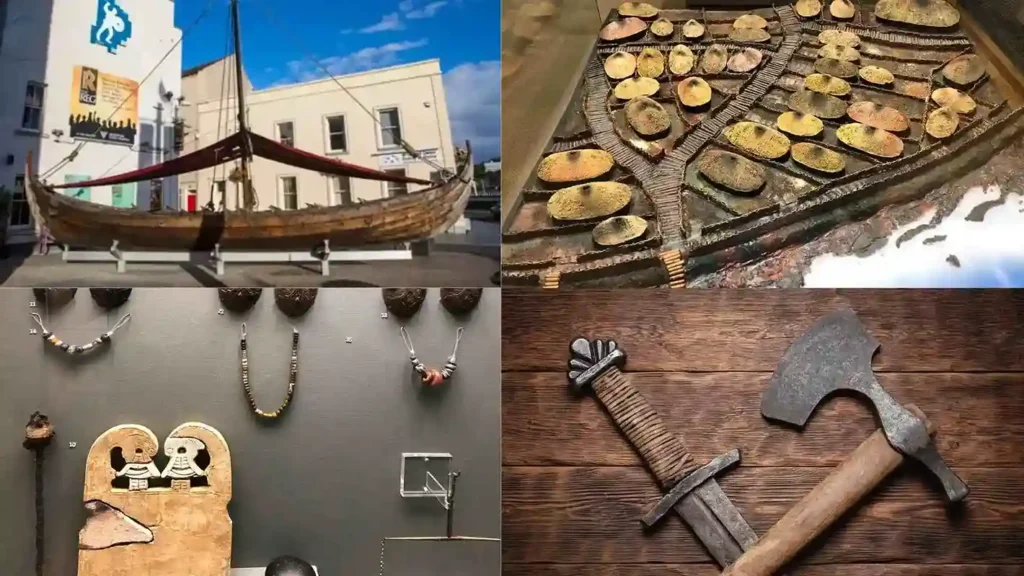
Waterford treasures in the southeast have archaeological finds and immersive displays within the Viking Triangle. The excavated settlements in Dublin and Waterford have a deep influence of Viking presence. Together these museums provide the visitors with comprehensive insights into Viking culture, trade, warfare and long-term influence in Ireland.
Conclusion
The history of Vikings in Ireland is more about battles and raids. Their arrival resulted in permanent settlements, towns, and expanded trade networks. Vikings influenced Irish culture, economy and urban life. They integrated into Irish society and created the Hiberno-Norse identity. Their legacy is visible in surnames, place names, archaeology and city layouts today. Cities such as Dublin, Waterford, and Wexford came into being after their settlements. Every famous site in Ireland preserves the shared heritage and identity. This reminds us that Vikings shaped Ireland’s historical development and contributed to the layered identity of the nation.