
Driving Test Questions: Full Guide with Answers
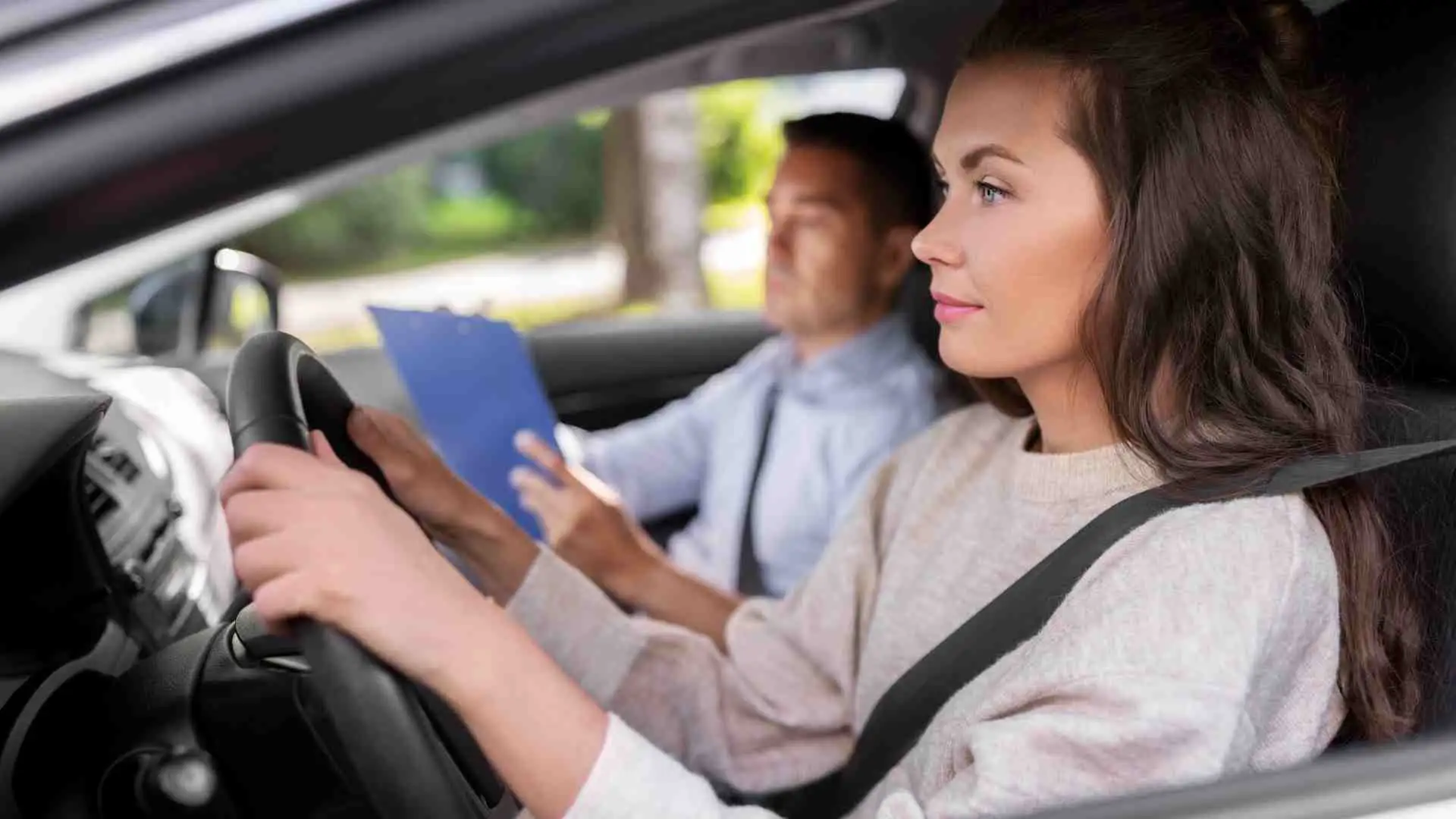
Most people are so focused on the actual driving that they forget there is a desk test to get through first. Before the examiner ever asks you to start the engine, you will be sitting across from them answering questions on road signs, rules, and vehicle safety. It all happens verbally, on the spot. Get caught off guard there and the nerves can snowball for the rest of the test.
This guide walks you through the questions that come up again and again, with answers that actually explain what is going on rather than just the bare facts to memorise and forget. Work through it properly and you will go into that test centre knowing your stuff.
What Happens with Questions on the Day?
A lot of learners do not realise the questions start before they even see the car. At the beginning of your driving test in Ireland, the examiner will bring you to their desk and ask you a mix of Rules of the Road questions and road sign identification. You will also be asked to demonstrate two hand signals.
Only then do you head out to the vehicle. The desk portion matters because it sets the tone and, if you are shaky on it, it puts pressure on everything that follows.
The questions are pulled from the RSA’s Rules of the Road, so that book is your bible. The categories below cover the most commonly asked areas.
Vehicle Safety and Checks
Examiners love these questions because they are practical. They tell the examiner whether you actually think about your vehicle before you drive it, or whether you just hop in and go.

Q. What should always be kept clean on your vehicle?
Ans: Your lights, reflectors, windows, mirrors, and registration plate. It sounds obvious, but a dirty rear reflector or a mucky number plate is both a legal issue and a genuine safety risk because other drivers and cameras cannot see you properly.
Q. What is the procedure for checking your mirrors before moving off?
Ans: Check your interior mirror, then your door mirrors, then glance over your shoulder to cover the blind spots. The order matters because you are building a picture of what is around you before you commit to moving.
Q. What do you do if your brake lights do not work?
Ans: Do not drive until they are fixed. A driver behind you has no warning you are slowing down and that is how rear-end collisions happen. It is also a legal requirement to have functioning brake lights, so you would effectively be driving without proper cover.
Q. What is the legal minimum tyre tread depth?
Ans: 1.6 mm across the central three-quarters of the tyre, and 1 mm for vintage vehicles. Worn treads cannot channel water away properly and that is how tyres lose grip on wet Irish roads. Our roads are wet a lot, so this one genuinely matters.
Q. How would you check your brake lights if you were on your own?
Ans: Reverse close to a wall, window, or garage door and watch the reflection when you press the brake. It is one of those simple tricks most people do not know until someone tells them.
Q. How often should you check your oil and water?
Ans: Every week, not just before a long journey. Running low on oil or coolant causes serious engine damage that builds up silently before something finally gives out.
Q. What are you legally required to have before driving on a public road?
Ans: A valid learner permit or full licence, valid motor tax, and valid insurance. All three are required and missing any one of them means you should not be on the road.
Q. What should you be keeping an eye on to keep your vehicle roadworthy?
Ans: Brakes, lights, tyres, steering, indicators, wipers, speedometer, horn, and silencer. Think of it as the list you would run through before an NCT because it more or less is.
Road Behaviour and Rules
These questions check whether you understand the logic behind the rules and not just the rules themselves. Examiners can tell when someone is reciting something they half-remember versus someone who actually gets it.
Q. What is the correct following distance in normal conditions?
Ans: At least two seconds behind the vehicle in front. Pick a fixed point such as a lamppost or a road sign and when the car ahead passes it, count “one thousand, two thousand.” If you pass that point before you finish counting, you are too close. In wet or icy conditions, double it.
Q. When do you need to use your indicators?
Ans: Any time you are changing your position on the road, whether that is turning, changing lanes, or pulling out from or in to the kerb. The indicator is not optional for when you feel like it. It is how you communicate your intentions to everyone else around you.
Q. At an uncontrolled junction where roads are of equal importance, who has right of way?
Ans: Traffic coming from your right. If in doubt, you yield. Pedestrians crossing the road you are turning into also have priority and a lot of people forget that part.
Q. What should you do when approaching a pedestrian crossing?
Ans: Come off the accelerator early, cover the brake, and be ready to stop. Do not wait until you see someone stepping out because by then it is too late to stop comfortably.
Q. If another driver is overtaking you, what should you not do?
Ans: Speed up. It sounds like common sense but the instinct to keep pace can kick in. If someone is overtaking you, your job is to hold your speed or ease off slightly so they can get past safely.
Q. What is the rule when passing animals on the road?
Ans: Slow right down, give them as much room as you can, and keep your hand off the horn. Animals are unpredictable and a sudden noise or a vehicle too close can spook them into the path of oncoming traffic.
Q. When can you use your horn in a built-up area at night?
Ans: Only in a genuine traffic emergency. Between 11:30 pm and 7:00 am in residential areas, you must not sound the horn and there is no exception for impatience or frustration.
Q. When should hazard warning lights be used?
Ans: When your vehicle is broken down, being towed, or at the scene of an accident. They are not a free pass to park wherever you like. Switching on the hazards does not make an illegal stop legal.
Parking and Overtaking
Both of these come up regularly because they are areas where learners commonly pick up faults, even on the practical part of the test.
Q. Where are you not allowed to park?
Ans: On double yellow lines, on a bend, within 15 metres of a junction, opposite a continuous white line because it forces others to cross it to pass you, or anywhere that would block other road users. A handy rule of thumb is to ask yourself whether your parked car creates a problem for anyone else. If it does, do not park there.
Q. What does a single yellow line at the side of the road mean?
Ans: No parking during the hours shown, which are usually business hours. Unlike double yellows which apply around the clock, a single yellow line has specific times posted on nearby signs and outside those times parking is generally permitted.
Q. When is overtaking unsafe?
Ans: On bends, at the brow of a hill, near pedestrian crossings, over a continuous white line, near hump-back bridges, or anywhere your visibility ahead is restricted. The common thread is straightforward: if you cannot see far enough ahead to know the road is clear, you should not be pulling out.
Q. When can you overtake on the left?
Ans: In three specific situations. First, when the vehicle ahead has signalled and moved out to turn right. Second, when you yourself are turning left. Third, when you are on a dual carriageway and traffic in both lanes is slow-moving but your left lane is moving faster than the right. Outside these three situations, overtaking on the left is not permitted.
Q. How close to the kerb should you park?
Ans: Within 45 cm. Any further out and you are creating a hazard for passing cyclists and narrowing the road unnecessarily.
Q. What is the correct way to do a turnabout or three-point turn?
Ans: Check your mirrors and blind spots, signal if there is traffic around, then carry out the turn in three smooth movements: forward across, reverse back, and forward away. Keep checking both directions throughout. The examiner is looking for control and observation, not speed.
Q. Can you reverse from a minor road onto a major road?
Ans: No. You always reverse from the major road into the minor road and never the other way around. Reversing onto a busier road blind is a serious hazard.
Sample Theory Questions for the Driving Test in Ireland
The desk test is not just about rules. Irish Road sign recognition is a big part of it. The examiner will show you signs and ask what they mean. Knowing the shape and colour of a sign gives you a head start even when you are not certain of the exact rule behind it.
Road Signs and Markings
Q. What shape and colour is a warning sign in Ireland?
Ans: Diamond-shaped with a yellow background and black markings. The diamond shape alone should trigger caution because something ahead needs your attention.
Q. What shape and colour is a regulatory sign?
Ans: Circular with a red and white background. The round shape means this is not a suggestion but a rule. The three exceptions are the Stop sign which is octagonal and red, the Yield sign which is an inverted triangle, and the end of a speed limit sign.
Q. What does a continuous white line in the centre of the road mean?
Ans: No overtaking, full stop. You cannot cross it to pass another vehicle. You can cross it only to avoid an obstruction, for access to a premises, or in a genuine emergency. One thing people often miss is that you also should not park opposite a continuous white line because you would force other drivers to cross it to get around your car.
Q. What do double broken white lines in the centre of the road warn you of?
Ans: They are a heads-up that continuous white lines are coming up shortly, or that there is a traffic island ahead. They are telling you to prepare and be alert rather than to slow down suddenly.
Q. Where there are two lines running together in the centre of the road, which one do you follow?
Ans: The one on your side, nearest to you. It is a simple rule but it catches people out when there is a combination of continuous and broken lines running side by side.
Q. What is the rule at a yellow box junction?
Ans: Do not enter it unless your exit is already clear. The whole point of the box is to stop the junction from blocking up. The one exception is turning right. If your exit is clear but you are waiting for a gap in oncoming traffic, you can wait inside the box. That is the only situation where stopping on a yellow box is permitted.
Q. What do zig-zag lines near a pedestrian crossing mean?
Ans: Three things are banned in that zone: overtaking, parking, and setting down passengers. The zig-zags are there to keep the crossing visible and clear. You will be penalised in the test if the examiner sees you do any of those things in that area.
Q. What does a broken white line mean?
Ans: You may cross it or overtake, but only if it is safe to do so. The broken line is permission, not instruction. You still have to judge the road ahead before you act on it.
Q. What do double yellow lines mean?
Ans: No parking at any time, day or night, weekday or weekend. Unlike a single yellow, there are no hours when double yellows become fair game.
Q. What does a clearway sign mean?
Ans: No stopping during the times displayed. Not just no parking but no stopping at all, even briefly to let someone out. Clearways are usually on main roads where stopping would cause significant disruption to traffic.
Traffic Lights and Signals
Q. What is the full sequence of traffic lights in Ireland?
Ans: Green, then Amber, then Red, then Amber again, then Green. That amber on the way back from red is telling you to get ready and not to go. You move on green.
Q. What does an amber light mean?
Ans: Stop if you can safely do so. The key word is safely. If you are already close to the stop line and braking hard would cause a problem, you may continue. Amber is not a signal to speed up and beat the red.
Q. What is a Pelican crossing?
Ans: A pedestrian-controlled set of lights where the pedestrian presses a button to trigger the sequence. For vehicles the order is Green, Amber, Red, Flashing Amber, then Green. The flashing amber is the part that confuses most people.
Q. What does the flashing amber at a Pelican crossing mean?
Ans: You may proceed but only if no pedestrians are still crossing. If someone is still on the road, they have priority even though you have a flashing amber. Always look before you move.
Q. Where would you see a flashing amber beacon rather than a traffic light?
Ans: At a zebra crossing. The beacon on the pole tells you there is a zebra crossing ahead. At night it is how you would spot a crossing before you can see the markings on the road itself.
Q. What should you do if traffic lights are out of order?
Ans: Treat the junction as uncontrolled. The same rules as an unmarked crossroads apply, so yield to traffic from the right and proceed with care.
Q. Where would you see two flashing red lights?
Ans: At a level crossing. Both lights mean the same thing: stop and wait. Do not attempt to cross until the lights go off and the barriers, if there are any, have fully lifted.
Motorways and Lanes
Q. What is the maximum speed on an Irish motorway?
Ans: 120 km/h. That is the national speed limit in Ireland , though some sections may have lower limits shown on variable speed signs overhead and those always take precedence.
Q. What is the maximum speed on a national primary road?
Ans: 100 km/h, unless signs indicate otherwise.
Q. Can you drive on a motorway with a learner permit?
Ans: No. Learner permit holders are not allowed on motorways under any circumstances, even with a fully licensed driver accompanying them.
Q. What other vehicles are banned from motorways?
Ans: Motorcycles under 50cc, invalid carriages, horse-drawn vehicles, cyclists, and pedestrians. Motorways are high-speed roads and the rules reflect that.
Q. What lane should you be in when driving normally on a motorway?
Ans: The left lane. The right lane exists only for overtaking and once you have passed the vehicle ahead you move back left. Sitting in the outside lane when the inside is clear is both illegal and a common source of frustration for other drivers.
Q. Can you use the hard shoulder on a motorway?
Ans: Only in a breakdown or emergency. The hard shoulder is not a lane, not a shortcut past slow traffic, and not a place to pull in for a phone call. Using it outside an emergency is dangerous and illegal.
Q. What is a contraflow bus lane?
Ans: A bus lane that runs in the opposite direction to the rest of the traffic, most commonly found on one-way streets. If you do not spot it, you can end up driving into oncoming buses, which is about as bad as it sounds.
Driving Conditions and Safety
Q. What should you do when driving in fog?
Ans: Switch on your dipped headlights, not just your sidelights but your dipped headlights, then slow down and increase the gap to the vehicle ahead. Fog compresses your stopping distance in terms of what you can see. You need more time, more space, and a lower speed.
Q. When exactly should you use dipped headlights?
Ans: When meeting oncoming traffic, when following closely behind another vehicle, in built-up areas with good street lighting because full beams would dazzle others, between dusk and dawn, in snow or fog, and in tunnels. The simple way to remember it is to use dipped headlights whenever full beams would cause a problem for someone else on the road.
Q. What do you do if you are dazzled by oncoming headlights?
Ans: Slow down, shift your gaze to the left verge of the road, and stop if you need to. Whatever you do, do not put your own full beams on in response because it makes the situation worse for both of you.
Q. What do you do if your car starts aquaplaning?
Ans: Ease off the accelerator gently and keep the steering straight. Do not brake sharply. If your tyres have lost contact with the road, hard braking will send you into a skid. Let the speed drop naturally and the tyres will find the road surface again.
Q. When should you not get behind the wheel?
Ans: When you have been drinking, when you are on medication that affects driving, or when you are exhausted. Tiredness is widely underestimated. A drowsy driver’s reaction time can be just as impaired as someone over the legal alcohol limit.
Q. How should you approach a green light that has been green for a while?
Ans: With caution and at a speed that lets you stop if it changes. A green that has been showing since before you spotted it is more likely to change than one that just turned. Examiners call this a stale green, so approach it expecting it might go amber.
Roundabouts and Priority
Q. Who has right of way at a roundabout?
Ans: Traffic already on the roundabout, and traffic coming from your immediate right as you approach. You give way before you enter and not as you are entering.
Q. How should you approach a roundabout?
Ans: Slow down as you approach, get into the correct lane for your exit, and yield to traffic on your right. Keep the rear wheels of the vehicle in front in view because it gives you a safe following gap and enough time to react if they stop suddenly.
Road Signs and Rules You Must Know
The examiner will hold up signs and ask you what they mean. You do not need to name them. You need to know what they are telling you to do. There is a real difference between a learner who can name a sign and one who actually knows how to respond to it on the road. Examiners are testing for the latter.
Warning Signs
Warning signs are diamond-shaped with a yellow and black design. They alert you to a hazard ahead, whether that is a sharp bend, a school, or a junction. When you see one, the appropriate response is always the same: ease off the accelerator, increase your awareness, and be ready for whatever the sign is warning you about.
Regulatory Signs
These are circular with a red and white background. They are not suggestions. The word regulatory means they carry legal weight. A red circle with a number inside means that is a speed limit. A red circle with a cross means prohibition. A blue circle means you must do something such as turn left or keep right.
Three signs are exceptions to the circular format. The Stop sign is octagonal and red. The Yield sign is an inverted triangle in red and white. The end of a speed limit sign has its own distinct look.
Q. What does a no entry sign mean?
Ans: No vehicle may pass that point in that direction. It usually appears on one-way streets or the exit of car parks where wrong-way entry would be dangerous.
Q. What does a no entry road marking look like?
Ans: A full white line across the road followed by a broken white line. You will typically see this on a street you are not supposed to drive into from that end.
Road Markings
Think of road markings as the writing on the road that is always there. Signs can be hidden by trucks or hedges but the markings under your wheels are harder to miss.
A solid white line down the centre means no overtaking and you should not park opposite it either. A broken white line means you may cross if it is safe. Double yellow lines at the kerb mean no parking ever. A single yellow line means no parking during the displayed hours. Zig-zag lines near a crossing mean no overtaking, no stopping, and no parking within that zone.
How Many Questions Are on the Irish Theory Test?
There is a fair bit of confusion about this because the answer depends on what you are applying for.
Number of Questions and Format
For a standard car licence, known as Category B, the theory test has 40 questions. Truck and bus candidates sit a longer test with 100 questions.
Every question is multiple choice with four options and one correct answer. There are no trick questions as such but the wording can be precise, so always read carefully.
What You Need to Pass
The pass mark for the car theory test is 35 out of 40, which works out at 87.5%. It sounds high but it is very achievable with proper preparation. You have 45 minutes to complete 40 questions, which is more than enough time as long as you do not overthink each one.
Motorbike candidates sit the same format. Bus and truck candidates get additional time for their 100 questions.
What Topics Come Up?
The car theory test draws from a bank of approximately 850 questions across 14 topic areas. These include road signs, speed limits, rules of the road, vehicle safety, safe driving practices, and hazard awareness. Each licence category has its own question set because the questions for a truck driver are quite different from those for a car driver, for obvious reasons.
The Mistakes That Actually Fail People
Most learners who fail the theory test did not fail because they did not study. They failed because of how they approached the test on the day. These are the patterns that come up again and again.
Reading Too Fast and Missing the Point
The questions use words like “must,” “should,” “may,” and “never” very deliberately. Skimming past them is how you pick the wrong answer on a question you actually know. Slow down and read every option before you choose.
Knowing the Sign but Not the Rule
You might recognise a yellow box junction sign when you see it. But if the examiner asks what the one exception to the rule is, or what road markings appear near a zebra crossing, that is where the detail matters. Do not just memorise shapes. Understand what each sign is actually telling you to do and why.
Leaving Questions Unanswered
There is no penalty for a wrong answer on the Irish theory test, only for leaving something blank. If you are stuck, eliminate the two options that are clearly wrong and make your best call on the remaining two. A guess is always better than nothing.
How to Actually Prepare for the Theory Test
Here is what works and what does not.
The RSA Rules of the Road book is non-negotiable. Everything on the theory test comes from it. Read it properly at least once and do not just dip in and out.
Online mock tests are where preparation becomes real practice. The theory test website has official practice questions, so use them. Do mock tests under timed conditions so the real thing does not feel unfamiliar. If you are consistently scoring 90% or above, you are ready to book.
Study a little every day rather than cramming. Two to three weeks of short daily sessions will stick far better than a long night the day before the test. Your brain needs time to consolidate what you are learning.
Do not skip the road signs. A lot of learners focus on the rules and neglect the signs section entirely. Examiners notice and sign questions make up a meaningful chunk of the test.
If you are genuinely unsure of an answer during the test, make a guess rather than leave it blank. Eliminate what is clearly wrong first and go with your best judgement from what remains.
FAQs
How many topics are covered in the Irish theory test?
Around 14 topics from a bank of 850 questions. These cover road signs, road rules, speed limits, vehicle safety, and hazard awareness. You answer 40 questions in one test.
What is the best way to study for the theory test?
Start with the RSA Rules of the Road book. Then practise with official online mock tests. Focus closely on road signs and speed limits because they appear often.
What happens if I fail?
You must pass before applying for your learner permit. You can retake the test as many times as needed, but you pay the €45 fee each time. Book again when you feel ready.
Is the theory test difficult?
It is manageable if you prepare well. Most questions are straightforward once you know the Rules of the Road. Small detail questions often catch people out.
How long does the theory test take?
Car and motorbike tests take 45 minutes. Bus and truck tests allow more time because they include 100 questions.
Will I be asked hand signals at the driving test?
Yes. Two hand signals are asked at the desk before the drive starts. Learn all six so you can show any two confidently.
What is the minimum length for a vehicle to display a Long Vehicle sign?
13 metres. You usually see this on articulated lorries and long coaches.