
Púca Mythology | The Dark Irish Spirit You Should Never Follow
Rural Ireland is a shadowy and secretive land. Imagine a moonless night, the rattle of chains swinging rhythmically, while the deep breathing of some unknown creature drifts through the dark. This is where the Púca, sometimes spelled Phooka, one of the most mysterious beings in Irish folklore, belongs.
The Púca is neither entirely good nor entirely evil, but a mercurial trickster spirit. It represents the untamed and uncontrollable power of nature. According to Púca mythology, these spirits can be harmless, yet they may also bring either good luck or bad luck to anyone they encounter.
Where does the Púca come from?
Púca etymology points to a complex history. The word likely comes from the Old Irish púca, although scholars often note a connection with the Old Norse púki, meaning a nature spirit or goblin.
Interestingly, this Irish spirit also shares similarities with Puck, the mischievous figure from Germanic folklore who became widely known through Shakespeare’s A Midsummer Night’s Dream. This link places the Púca within a wider European tradition of shapeshifting spirits associated with wild landscapes.
Common forms in Púca mythology
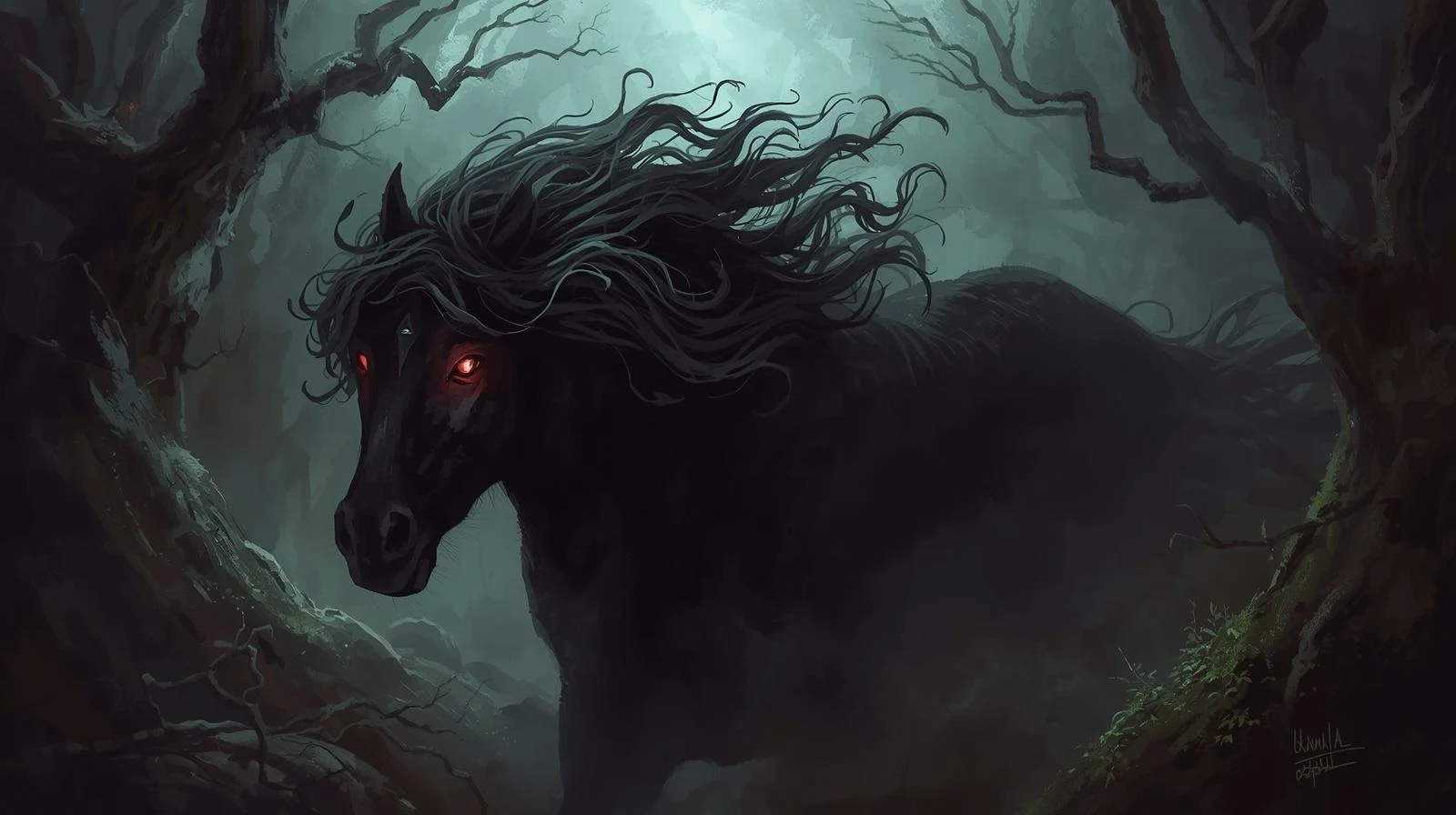
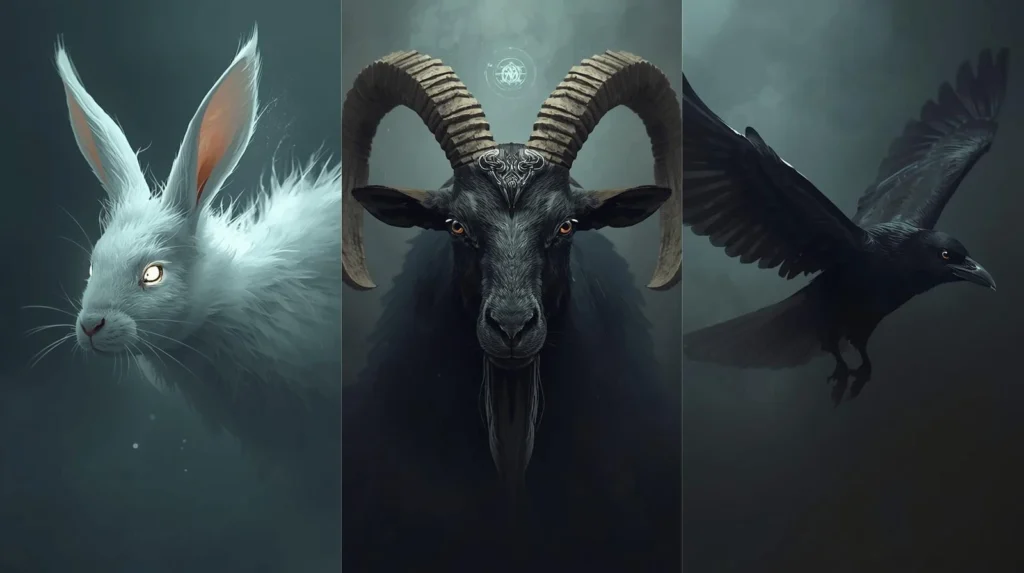
The Púca is a master of transformation. Although it appears in many forms, its most iconic shape is a sleek black horse with glowing golden eyes and a wild flowing mane. Other forms include a giant rabbit, a goat, or a raven.
Despite its animal appearance, the Púca often keeps human traits, most notably the ability to speak. It uses this gift to mislead travellers, issue warnings, or deliver unsettling prophecies.
Púca’s moral ambiguity
The Púca occupies a liminal space in Irish ghost stories. It belongs to a world between categories, neither angel nor demon. Some legends describe it as helpful, assisting farmers with work or warning them of danger.
Other stories present a darker side. In many tales, it carries unsuspecting riders on wild journeys through bogs, briars, and rough countryside. These victims usually return home unharmed, but deeply shaken. The stories reflect the unpredictable nature of the spirit and the thin boundary between the ordinary world and the supernatural.
Samhain and the Púca’s share
The Púca is closely linked to Samhain, the ancient festival marking the end of the harvest season. In Irish tradition, 1 November was often called the Púca’s day. It was believed that on this day the spirit travelled across the countryside, spoiling any crops left unharvested.
To avoid provoking it, farmers followed a custom known as the Púca’s Share. A small part of the harvest was deliberately left in the field as an offering. Anything left after 1 November was considered unsafe to eat because it now belonged to the spirit world.
How did King Brian Boru tame the king?
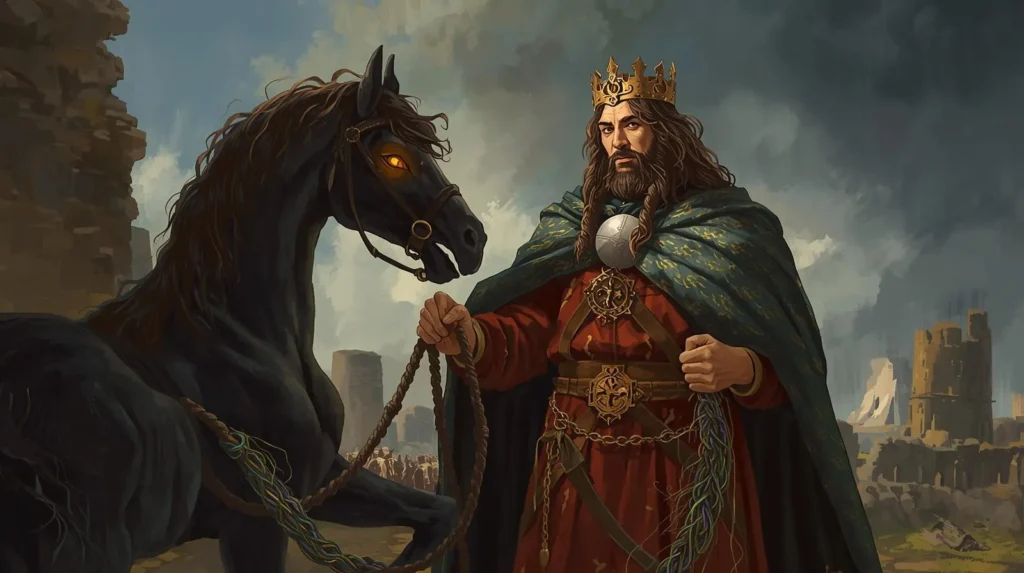
Among the few legends where a human overcomes the spirit, one centres on Brian Boru. According to folklore, he managed to tame a Púca by using a special bridle made with three hairs from the creature’s own tail. He then rode it until the spirit agreed to stop tormenting Christians, except those who were drunk or behaving badly.
Modern legacy and regional variations
The Púca remains active in modern Irish culture. In County Kerry, Puck Fair in Killorglin is often linked in popular discussion with Púca folklore, although the festival’s name officially comes from the Irish word poc, meaning male goat. The fair itself dates back at least to 1613.
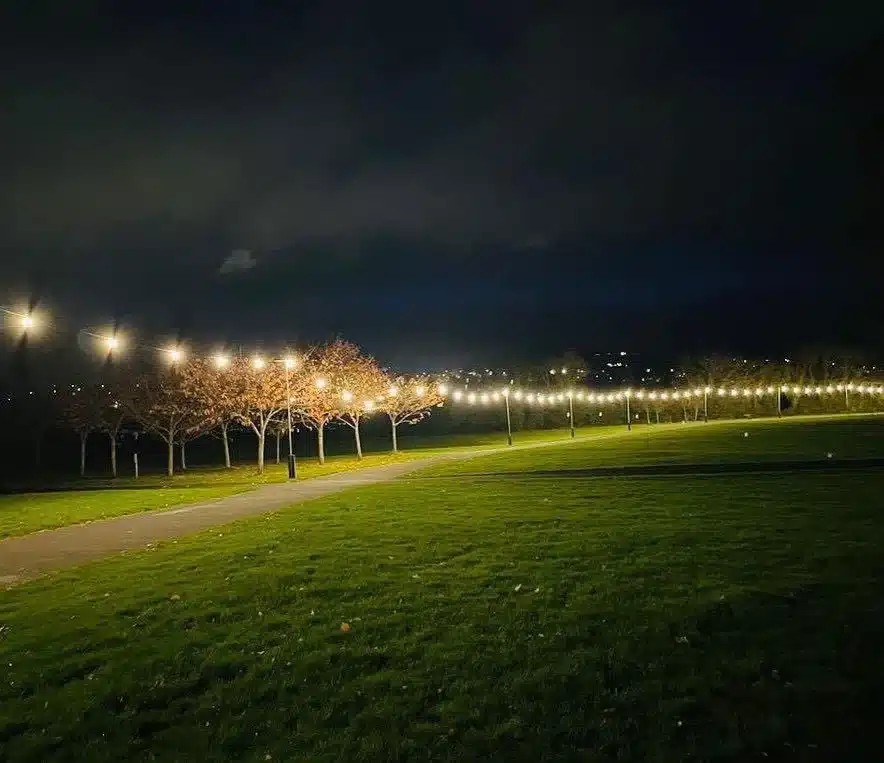
In County Meath, Púca Festival celebrates the connection between the spirit and Samhain through storytelling, music, light installations, and folklore events in Trim and Athboy.
The Púca also entered international popular culture through Harvey, where the invisible companion is described as a Pooka. In recent years, public debate around Púca statues and artwork in Irish towns has shown that the creature still sparks strong reactions.
Why does Púca mythology endures?
The Púca endures because it reflects the Irish landscape itself, beautiful, rough, unpredictable, and sometimes unsettling. It also connects with deeper Celtic symbols. As a symbol of Celtic tradition, Púca mythology reminds us that nature cannot always be controlled and that mystery still holds a place in human life.