
Brian Boru | The High King of Ireland Who Changed Irish History
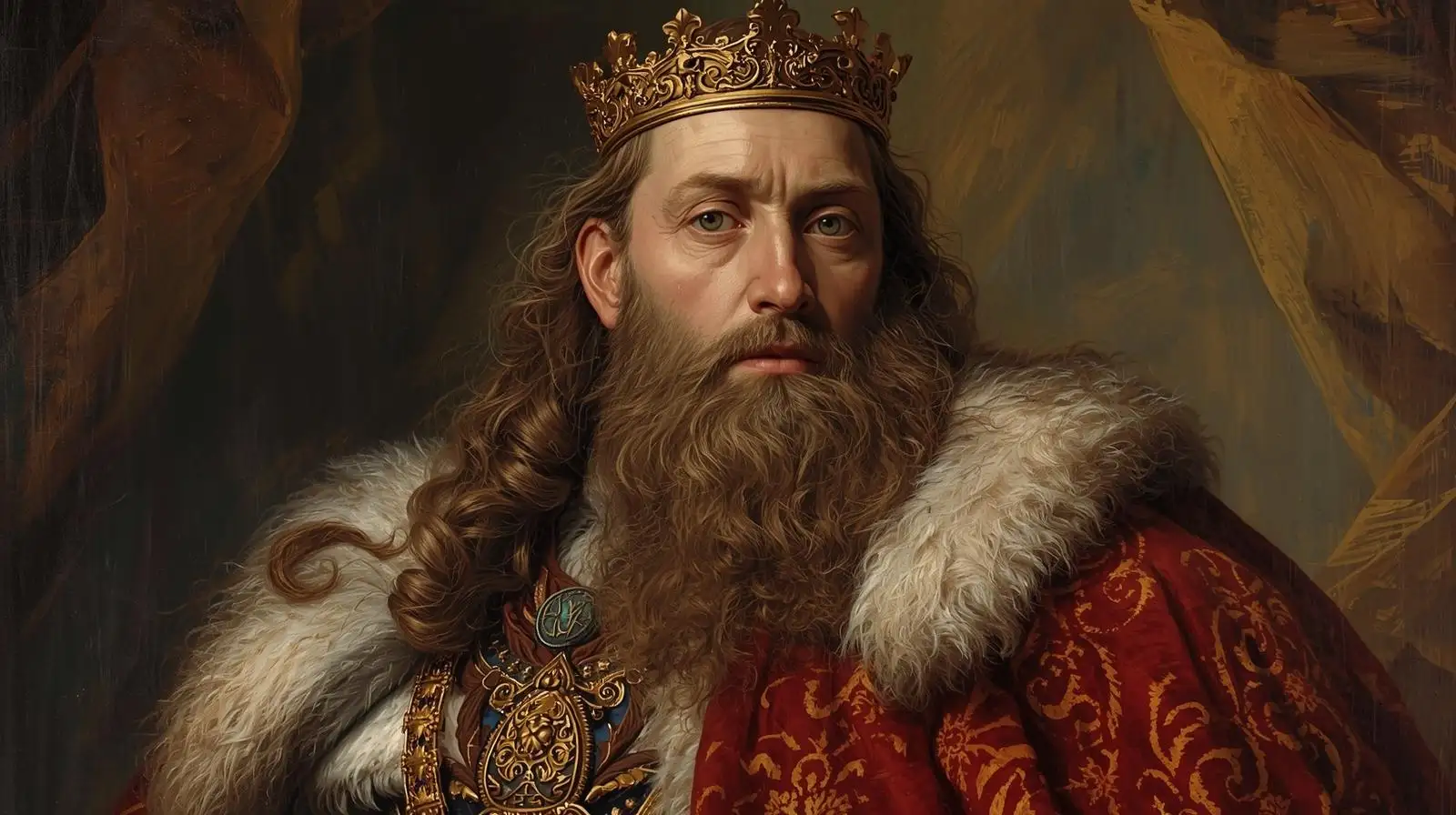
Brian Boru was the most famous member of the Dál gCais dynasty. He was the High King of Ireland from 1002 to 1014. He is famous for having broken the centuries-old rule of Uí Néill over Ireland and leading the Irish army to victory at the Battle of Clontarf.
He is also known for strengthening the practical authority of the Irish kingship. Prior to that, it was a ceremonial title. Unlike his predecessors, Boru effectively levied taxes and supported reforms within the Irish Church. He was also able to balance complex Norse-Gaelic alliances.
His life was the peak of Gaelic political unity in the centuries before the Anglo-Norman invasion, which would forever alter the island.
Ireland Before Brian Boru: A Land of Many Kings
In the 10th century, Ireland was composed of more than 150 small kingdoms (tuatha), frequently at war with each other. The symbolic High Kingship of Ireland was traditionally divided between the Northern and Southern Uí Néill dynasties, which divided the power. This title, however, often carried with it the status of “first among the equals”.
At the same time, Vikings in Ireland had largely shifted from raiding to settlement. By the moment Brian was born, Norse-founded cities such as Dublin, Limerick and Waterford were already economic hubs that influenced local politics significantly. The political landscape was fragmented, and the traditional Irish kingdoms were now finding it difficult to cope with these fortified wealthy Norse enclaves.
Major Irish Kingdoms in the Late 10th Century
- Ailech: The northern stronghold of the Uí Néill.
- Mide (Meath): The seat of the Southern Uí Néill and the Hill of Tara.
- Munster: The southern province, where Brian had his Dál gCais.
- Leinster: This was allied with the Vikings of Dublin against the High Kings.
- Connacht: The western power base.
Early Life and Rise in Munster
Brian was born into a relatively small tribe in Munster in the Dál gCais. His early life was shaped by political conflict and family loss. In 976, Brian was crowned king of Munster after his brother Mahon was killed by rival kings.
Unlike his predecessors, who were tolerant of Norse presence in their territory, Brian was engaged in a sustained military campaign with the Norse of Limerick.
He conquered the local Vikings, and this gave him access to the wealth of the River Shannon trade. This economic strength enabled him to create a large fleet and a regular army, which later made him the undisputed King of Munster. He was a direct threat to the established dominance of the Uí Néill.
How did Brian Boru Become High King of Ireland?
The journey of Brian to the High Kingship was the result of military pressure and political negotiation. He spent several years fighting Máel Sechnaill mac Domnaill, who was the High King at that time.
Being aware that a prolonged war would destabilise the island, the two leaders agreed upon a temporary power-sharing agreement in 997. It divided authority between northern and southern regions.
But that was not the end of Brian and his ambition. By 1002, he was so powerful that Máel Sechnaill submitted to his authority and acknowledged Brian as the High King.
It marked a turning point in the history of the Irish dynasties. Here, for the first time in centuries, a non-Uí Néill king was on the throne, supported by the obedience of the provincial kings.
Brian Boru and the Vikings: Myth vs. History
A common historical myth tells that the main purpose of Brian was to expel the Vikings from Ireland. In reality, the relations were more complex. Brian was a pragmatic ruler because he acknowledged that the Norse-Gaels had a critical role in the Irish economy. He did not wish to drive them out. He just wished to levy them and to use their ships.
His alliances with the Norse-Gaels were common, and he employed Viking mercenaries to wage war against his Gaelic opponents.
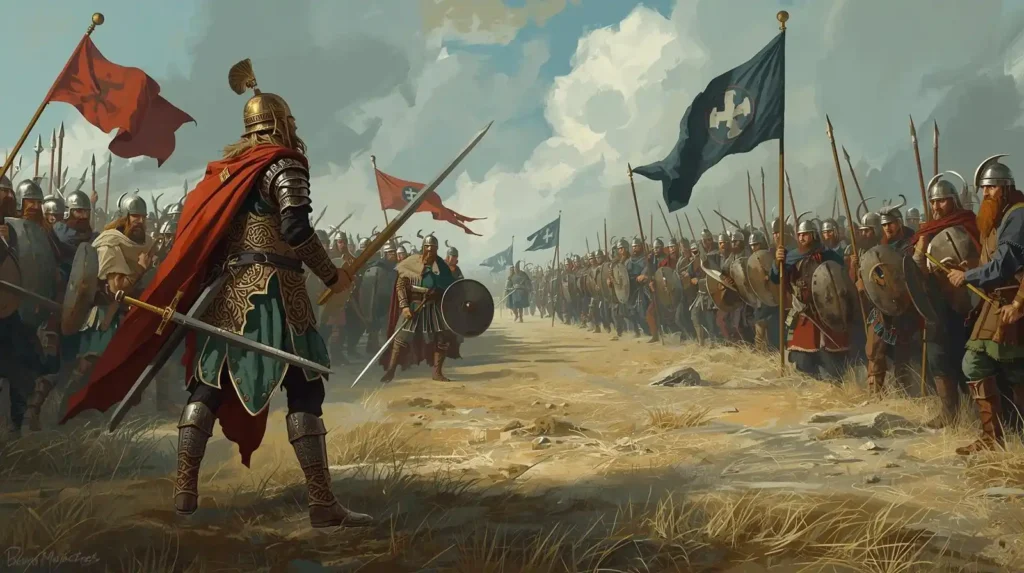
Although he managed to reduce the political independence of the Vikings in Dublin, he left them to be a merchant class. It was not simply a conflict between Irish and foreign forces. The conflicts of this period centred on control of the most lucrative trading ports in the island.
The Battle of Clontarf (1014)
On 23 April 1014, the Battle of Clontarf broke out between the forces of Boru and an alliance of Leinster rebels and Vikings from Dublin and overseas. Although Brian’s army was victorious, the High King was murdered; thus, his vision of a dynasty was terminated. This fight permanently weakened the military power of the Dublin Vikings.
This war started when the King of Leinster, named Mael Mórda mac Murchada, rebelled against the high tax regime of Brian. He summoned up Viking reinforcements from Orkney and the Isle of Man.
| Fact | Detail |
| Date | Good Friday, 1014 |
| Location | Clontarf, near Dublin |
| Estimated Forces | Approximately 7,000 per side, according to later estimates |
| Key Casualties | Brian Boru, his son Murchad, and Mael Mórda |
| Outcome | Decisive Dál gCais victory |
The battle was unusually bloody, and it lasted between dawn and dusk. As the Vikings were pushed into the sea, the price for Ireland was losing its most competent ruler.
Clontarf, now a coastal suburb of Dublin, remains one of the most historically significant sites in the city’s past.
How Did Brian Boru Die?
Brian Boru died when the Battle of Clontarf was in its final stages in 1014. This was in contrast to how a normal warrior dies on the battlefield.
The old king was murdered in his tent while he was praying. A fleeing Viking mercenary named Brodir located the king before killing him and was subsequently captured by the surviving guards of Brian.
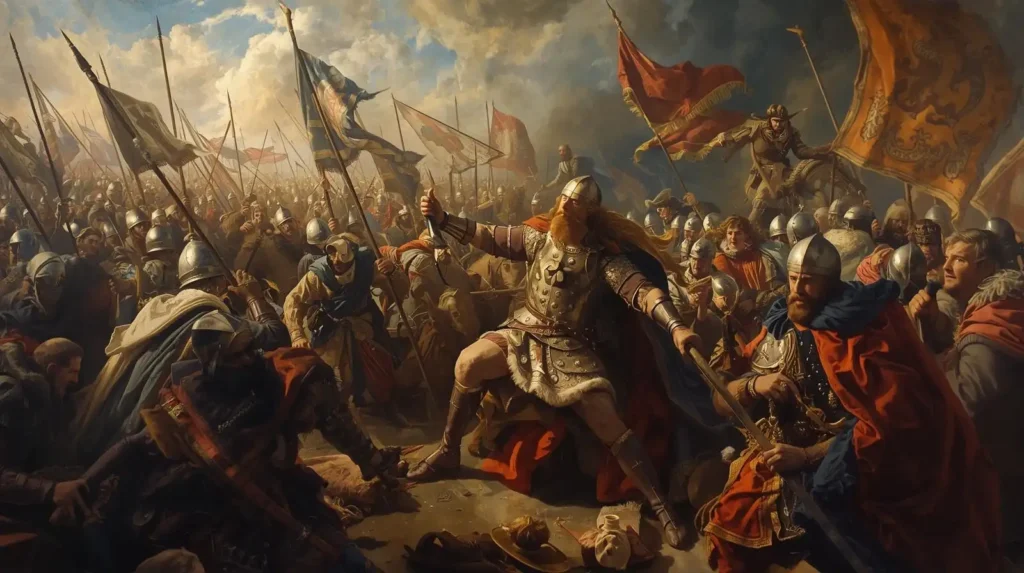
Brian, being about 73 years old at the time, was not able to engage in the active hand-to-hand fighting. Chroniclers perceived his death to be a martyrdom and highlighted the fact that he died on Good Friday.
This assassination attempt in his tent became a central theme in the Irish hagiography. It made him a Christian martyr who lost his life to give freedom to his country.
Church Reform and Governance
Brian was an advanced administrator. He knew that he would not be able to rule Ireland without the approval of the Irish Church. He formally made Armagh the capital city of Ireland in religious matters. In turn, the monks of that city recorded him in the ‘Book of Armagh’ as Imperator Scottorum (Emperor of the Irish).
He used his authority to establish a taxation and tribute system (so named “Boru”, meaning “of the tributes”). This income was redirected to the reconstruction of monasteries and bridges which had been destroyed in the Viking Age. There was a brief Golden Age of stability and construction.
Myth vs. Reality: Was He Really the “True” High King?
Historians continue to argue whether Brian had been a propaganda king or a national king. Much of this is derived through the Cogadh Gáedhel re Gallaibh (The War of the Irish with the Foreigners), which was written many decades later by his descendants to justify their own right to rule.
Although there were previous holders of the title of High King of Ireland, Brian was the first person to legitimise it by administrative centralism.
He was not as much of a legendary giant. Rather, he was a modern, shrewd politician who employed the Viking threat as a weapon to cement the power of his own family.
Over time, his story blended into the wider tradition of Irish myths and legends, where history and folklore often overlap.
Legacy of Brian Boru in Modern Ireland
The legacy of Brian Boru is one of the most robust strands of Irish history. The harp on Irish coinage, a key symbol explained in Irish national symbols, is commonly referred to as the Brian Boru Harp.
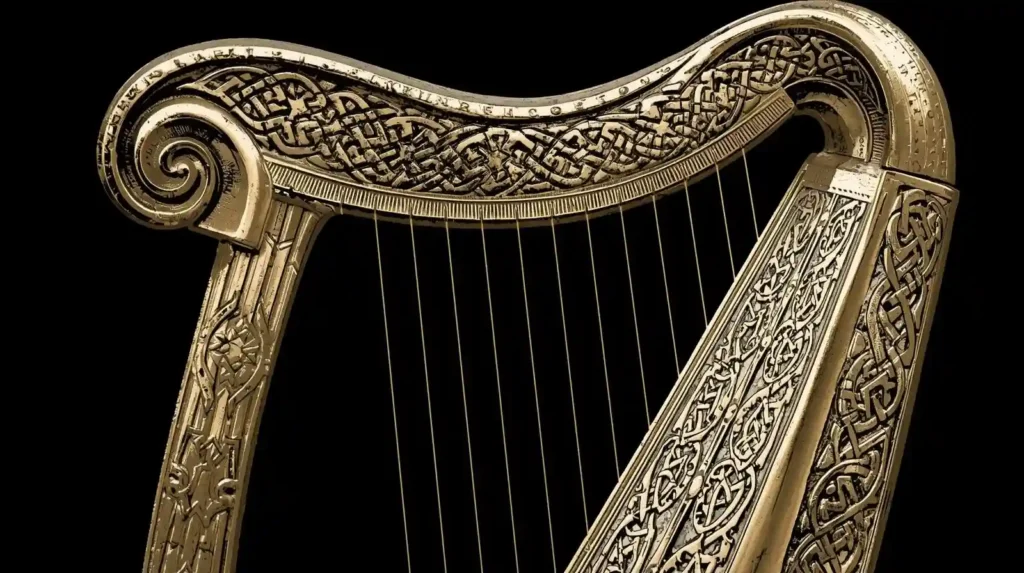
He is still a source of national identity, as he was a symbol of a time when Ireland was united against outside influence.
His funeral at St Patrick’s Cathedral, Armagh, is still a cultural tourist stop. Nowadays, he is remembered as a man who demonstrated that it was possible to have a single Ireland, albeit tragically briefly.
Timeline of Brian Boru’s Life
- 941: Born in Kincora, County Clare.
- 976: After the death of his brother, he becomes King of Munster.
- 997: Parts ways with Mael Sechnaill.
- 1002: Becomes High King of all Ireland.
- 1005: Pays a visit to Armagh, where he is made Emperor of the Irish.
- 1014: Dies at the Battle of Clontarf on 23 April.