
Tír na nÓg Guide, Myth, Oisín and Niamh, Land of Youth
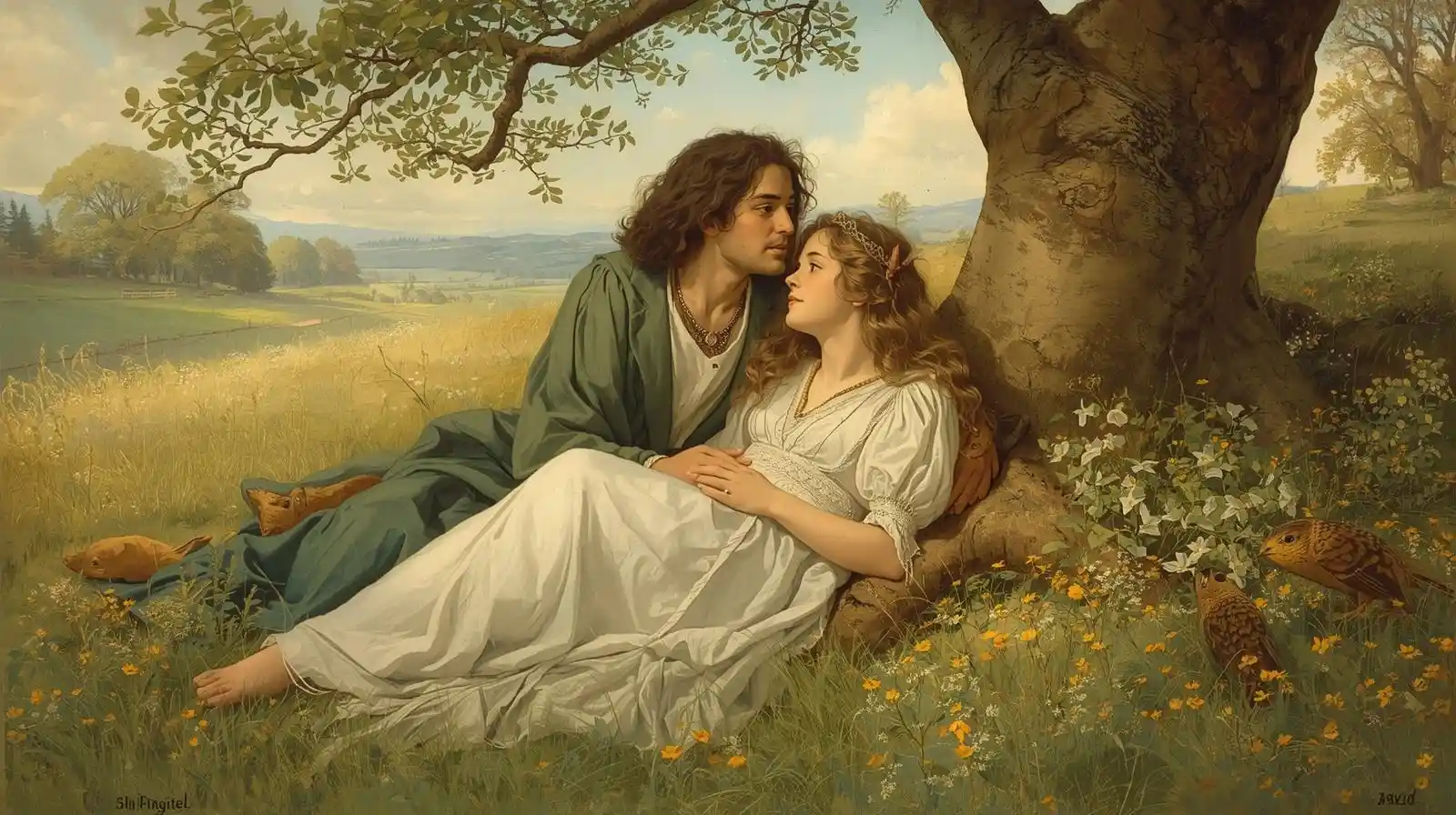
If you have ever seen a scene that feels too beautiful for this world, you already understand the meaning of Tír na nÓg.
Tír na nÓg is literally translated as the Land of the Young or the Land of Youth. It is the most iconic portrayal of the Otherworld in the vast body of Irish folklore, a supernatural world of eternal spring, beauty, and health, alongside many other Irish mythological creatures.
Tír na nÓg can be broken down to say teer-na-nohg. In old literature, you will also find other forms of the name, such as Tir nan Og or Tir na n-Og.It exists outside normal human space and time.
It is commonly referred to as a sunken continent, or an unseen island, far to the west, reachable either by magic, by a dense mist, or by an over-the-sea trip.
Mythology and Origins of Tír na nÓg
The Tír na nÓg creation is closely connected with the Tuatha Dé Danann, the ancient people of god-like origin that lived in Ireland before the modern people arrived. Tuatha Dé Danann lore tells that they were defeated in battle by the Milesians and fled into the sidhe and the shadows of the Otherworld.
Tír na nÓg is not just a heaven of the dead. It is a real, although magical, garden of the eternal. The laws of entropy do not exist in this world. According to numerous scholarly myth sources, including the writings of Lady Gregory, the land is defined by the lack of grief, of illness and of time.
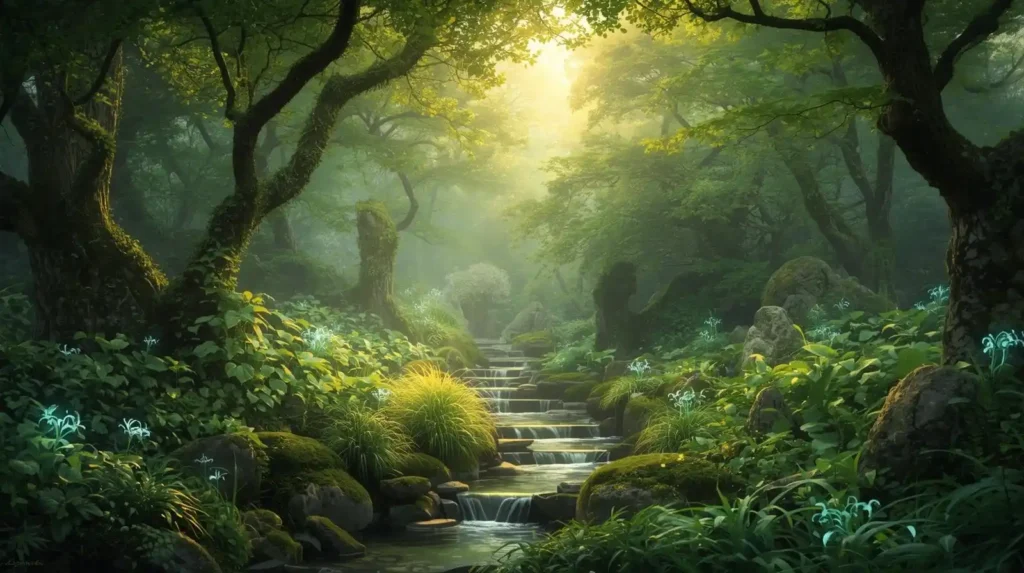
It is used as a representation of a symbolic paradise where the soul, and even the physical body, are able to experience the ultimate Irish aesthetic and spiritual release. It is a place of honey streams, always flowering trees, and no one ever becomes old or tired.
The Legend of Oisín and Niamh
One of the saddest and most known tales of Irish mythological heroes is the story of Oisin and Niamh. It is a heartwarming romance and a warning tale of the essence of time and of the desire for home.
How They Met
This tale commences with the tale of Oisin, a distinguished poet and a warrior of the Fianna, who passed out one day fishing down the sides of Lough Leane. It was a gorgeous woman upon a great white horse that came out of the morning fog.
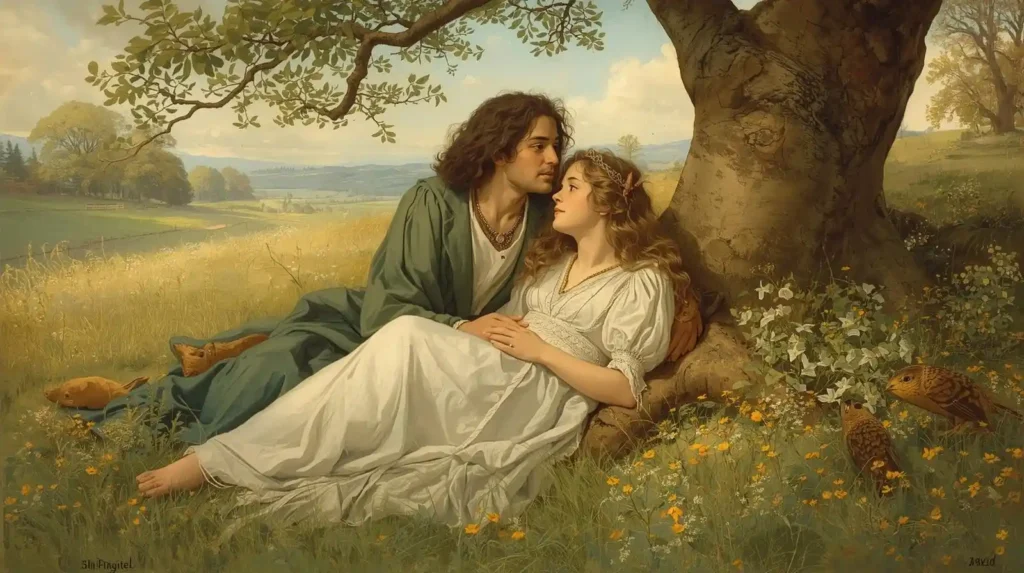
This was the Niamh Chinn Oir (Niamh of the Golden Hair), the daughter of the King of Tír na nÓg. She had heard of Oisin and his manliness and his verse on the other side of the sea.
When Oisin and Niamh fell in love, they came into contact with each other. Niamh invited him to her father’s kingdom where he would live happily, as she guaranteed him.
Journey to Tír na nÓg
Oisin was impressed by her beauty, and he followed her on the white horse. It was a wonderful journey to Tír na nÓg; the horse riding on the surface of the Atlantic Ocean made it seem as though it was the bottom of the earth.
They had witnessed miracles upon their way: a fawn which had no horns and was being chased by a white hound with red ears, a young woman holding a golden apple in her hand.
These were preludes of the spiritual world. Finally, one saw the golden gates of the Land of Youth in the offing, sticking out of the waves to greet them.
Life in the Land of Eternal Youth
Oisin was welcomed as a prince when they were there. Three years was a life of untainted bliss to him. In this Irish myth of everlasting youth, Oisin was going on a hunt, eating and making love with Niamh without the shadows of old age and the pang of defeat.
They had children together, and every day was full of peace. Yet, despite the perfection of Tír na nÓg, some kind of lingering earth-hunger came, and began to tear at the heart of Oisin. He missed his father, Finn Mac Cumhaill, with his brothers-in-arms, Fianna.
The Return and Tragic Ending
Niamh was reluctantly willing to allow him to go back to visit Ireland, and gave him her white horse. She made him a serious threat: that he should never in any way place his feet on the soil of Ireland. The legend takes a tragic turn when Oisín returns home and realises that 300 years have passed in the mortal world.
The Fianna had long since died, and the people were now smaller and weaker. When Oisin was attempting to assist a party of men in pushing a large rock, the girth of Oisín’s saddle snapped. His feet touched the ground, and three centuries caught up with him instantly. He faded into a blind, old, shrivelled man as the white horse ran back to the sea.
Symbolism and Cultural Significance
The Tír na nÓg symbolism and influence on the culture goes much deeper than mere fairy tales. It is the human wish to avoid the fact of death and the destructive power of time. It has been metaphorically applied in Irish literature to refer to the so-called Golden Age of Gaelic culture.
The aspect of a paradise that is so close and so far out of reach is indicative of the Celtic dogma of a veil of thinness between the physical and the spiritual world.
It has inspired many Irish artists and poets, reminding people of the importance of Irish identity, the one that is focused on the beauty and holiness of the natural world.
You can explore more Irish myths and legends that carry similar themes of magic and heroism.
Pronunciation and Gaelic Tips
If you are unsure how to pronounce Tír na nÓg, here is the correct way to say it. You must remember that ‘í’ in Tir and ‘ó’ in nÓg are long vowels.
- Tír rhymes with “clear.”
- na is a short “nuh.”
- nÓg is the same rhyme as vogue or rogue.
- Another typical grammatical rule in Gaelic, which is the “n” preceding Og, means an eclipse.
Such Gaelic pronunciation rules are useful for anyone studying the Fionn Cycle of myths. You may read a little more about the Irish grammar that has made these legends, on our internal language notes page.
Tír na nÓg in Modern Media and Tourism
Tír na nÓg in the media is still flourishing today. It exists in such works as W.B. Yeats to contemporary video games, such as The Witcher and Final Fantasy. The term has been used by folk bands as well as Celtic metal bands in music. More so, the Irish myth nowadays is a major tourist attraction. Tourists come to such destinations as the Ring of Kerry or the Cliffs of Moher in the hope of seeing the so-called western horizon, where the Land of Youth was allegedly located. It is still an element of the Irish brand, mythical, eternal, and forever enchanted.